
Grow with AI / participants
What we did, and what comes next
The whole year works on the right-hand one.
The whole year is here: the Units we already did, today’s and the ones to come. Flip a card to see what it is about.
Today · Unit 03Is this cheating?For anyoneProject ideas Why and how to study, in SpanishLearning with AI Password-protected, in SpanishYour cohort’s projects
The year, from here to June
Each dot is a Unit, and each stretch, a phase. Tap a dot to open that Unit, or the phase name to see its cards.
The four stops of the year
- November Those thirty seconds become a full piece, with the participants’ own voices.
- February Anyone who wants to has something playable, with rules the team wrote itself.
- April You build a tool that solves a real problem at school: not an exercise, something someone uses.
- June What you made is shown to people from outside the classroom.
- AnticipateYou write the prompt by hand, and what you think will come out, before touching a device.
- ActThe prompt runs on the Learning Facilitator’s account and device, projected for the classroom, and the piece comes out.
- ReflectIt is checked against the Unit’s criteria: did what you anticipated come out? Did the prompt get better, or the question?
The three phases align with the Anticipation–Action–Reflection cycle proposed by the OECD, which the OECD itself presents as a general orientation, not a proven method.
The Units, one a week
One card per session, grouped by phase. The stamp says whether we already did it, whether it is today or whether it is coming.
Phase I · Foundations
Unit 00, on one card
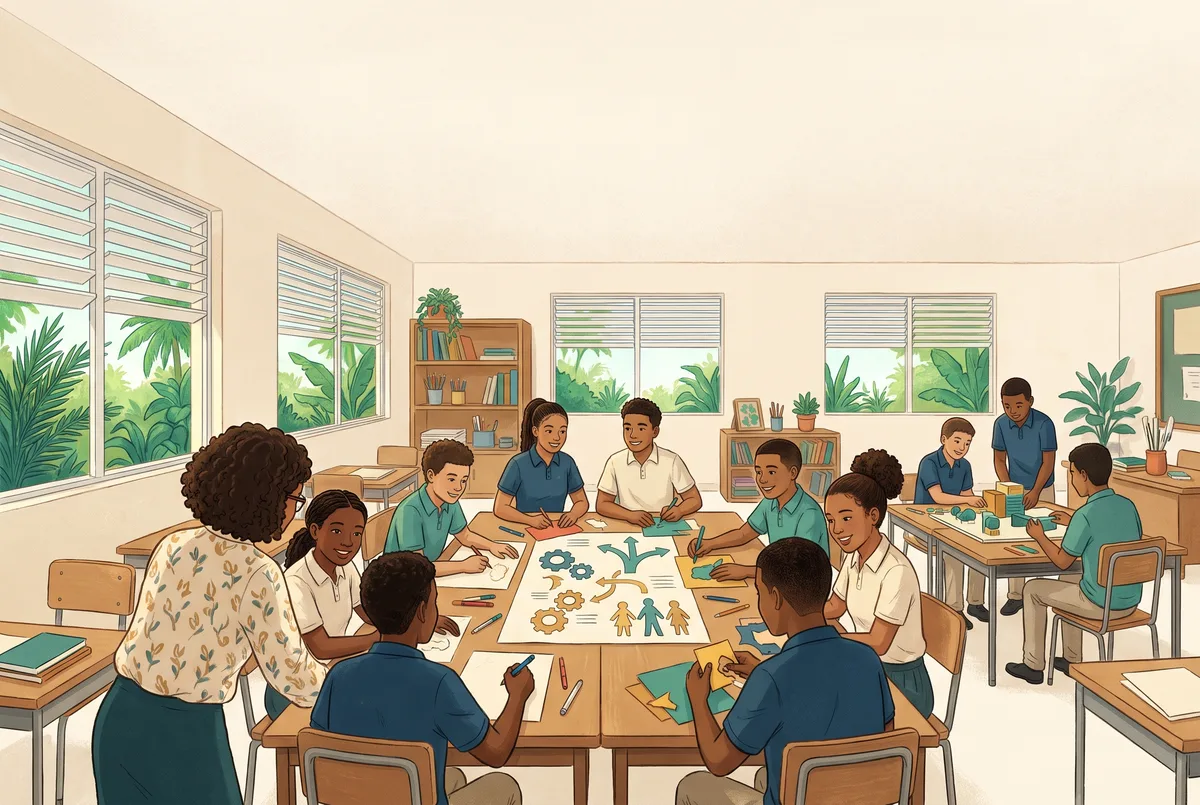
The first session: a conversation, no script. What bothers you about AI? What do you use it for today? Your answers fill one column; the other stays empty, and it can be filled by making something that didn't exist or by learning more and better.
Capability:Creating new value
Unit 01, on one card
Today you propose three possible projects for the year: things you want to exist, that come from your own life and not from what we showed you. You look at them with criteria, get questions, and take them home. The choice comes in Unit 02.
Capability:Creating new value
Unit 02, on one card
You bring your three possible projects and what someone at home said. Today you choose one, alone or in a group. Then the perturbations make it harder, and more yours.
Capability:Creating new value
Unit 03, on one card
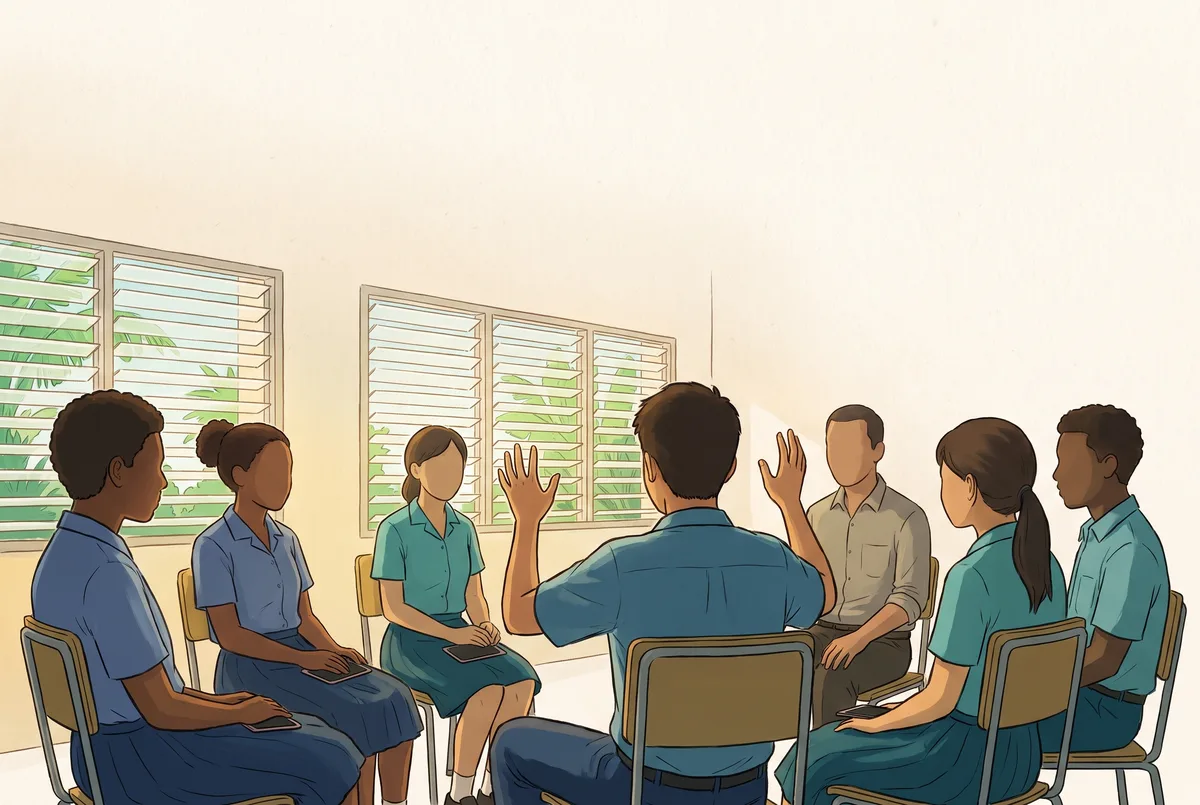
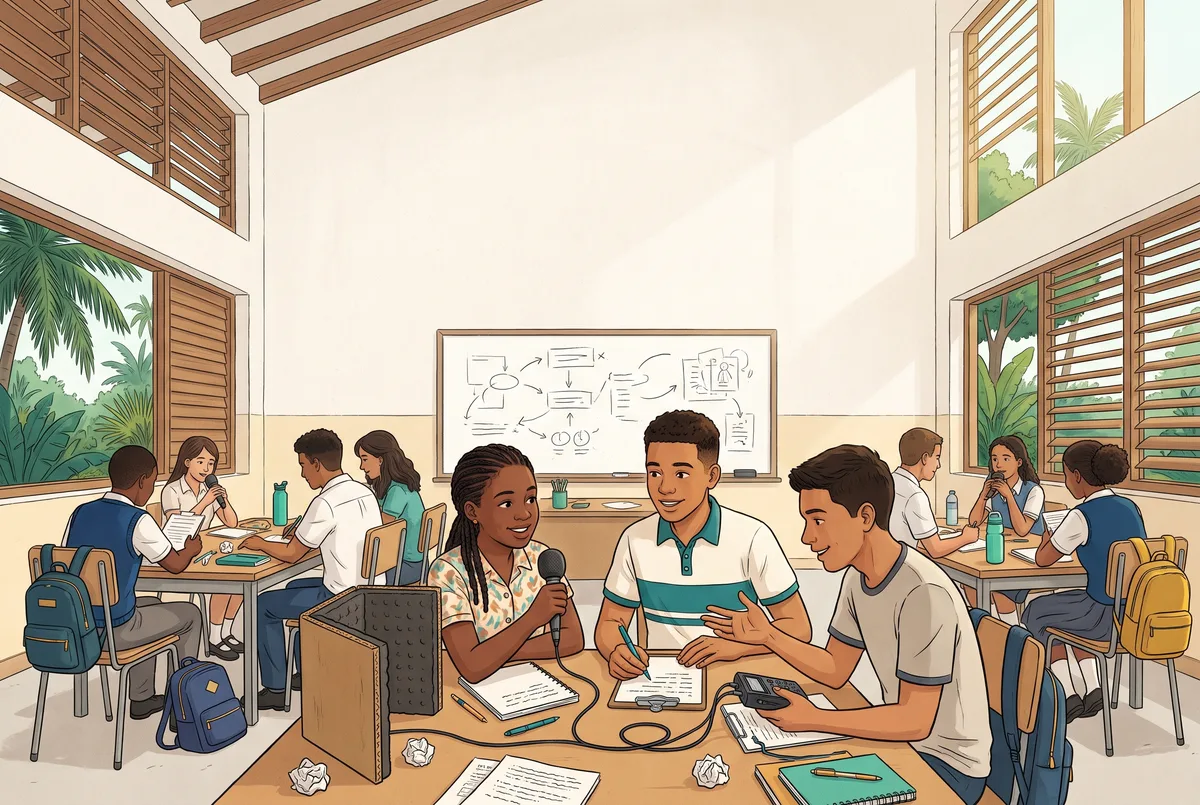
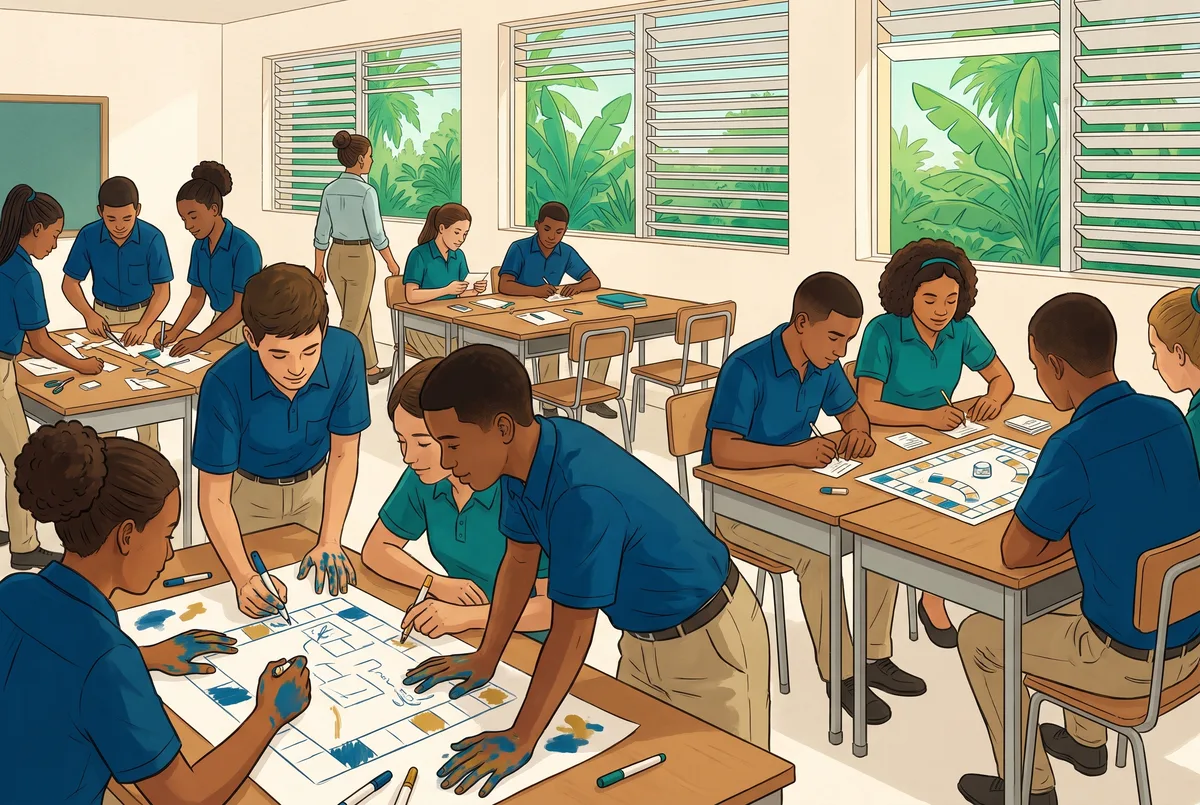
When is using AI cheating? You sort made-up cases, write your rule, defend it in a 60-second podcast script and decide what would be cheating inside your project.
Capability:Reconciling tensions and dilemmas
Unit 04, on one card
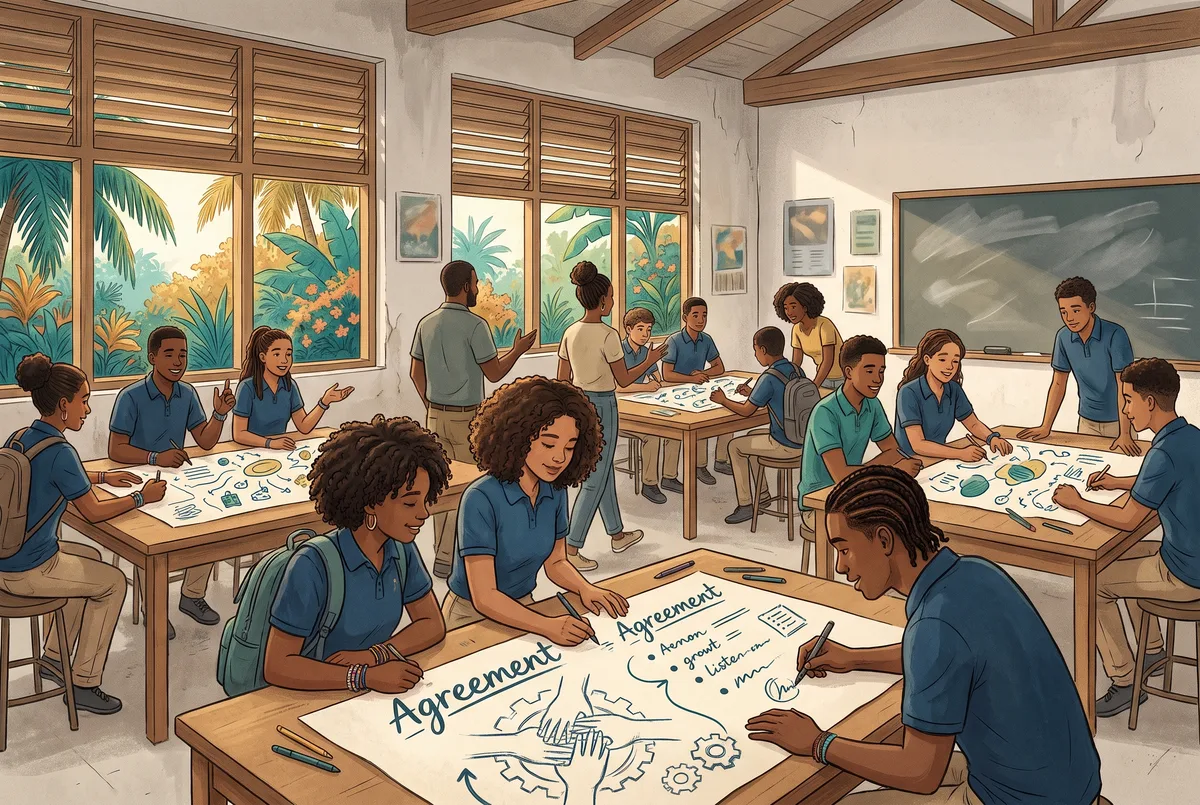
The group writes and signs its own rules for using AI. And your project decides what its first version will be, the November one, with a list of details only you know, and what it will be built with.
Capability:Taking responsibility
Unit 04b, on one card
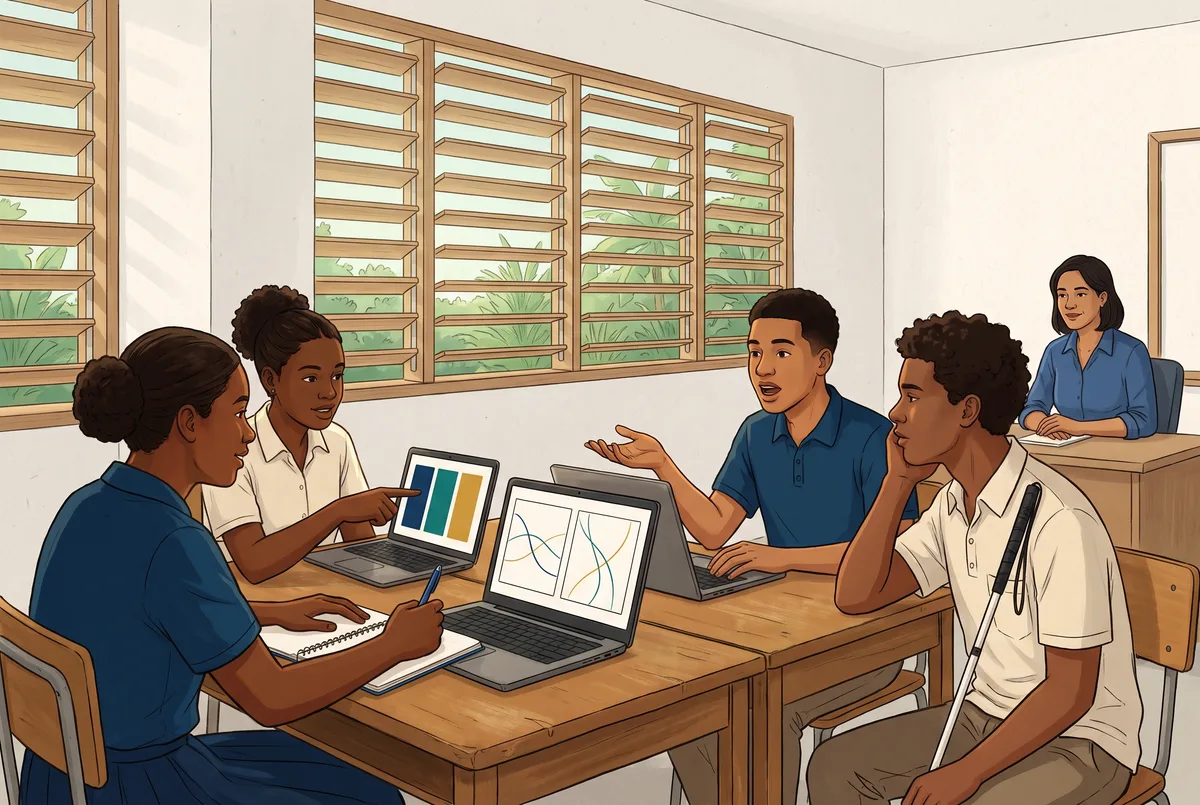
Some AI runs inside a computer, with no internet and no account. You read what your computer can do, choose a model with four criteria, test it against another with the same request and decide, with reasons.
Capability:Taking responsibility
Phase II · Voices
Unit 05, on one card
Your project gets its own words: you write them by hand and the machine only adds what you don't know how to do. The same words, in two forms.
Capability:Creating new value
Unit 06, on one card
You ask the machine about your project's place, topic or people, without giving it anything. You hunt down what it made up, fix it in an infographic, and the fix goes into your project.
Capability:Reconciling tensions and dilemmas
Unit 07, on one card
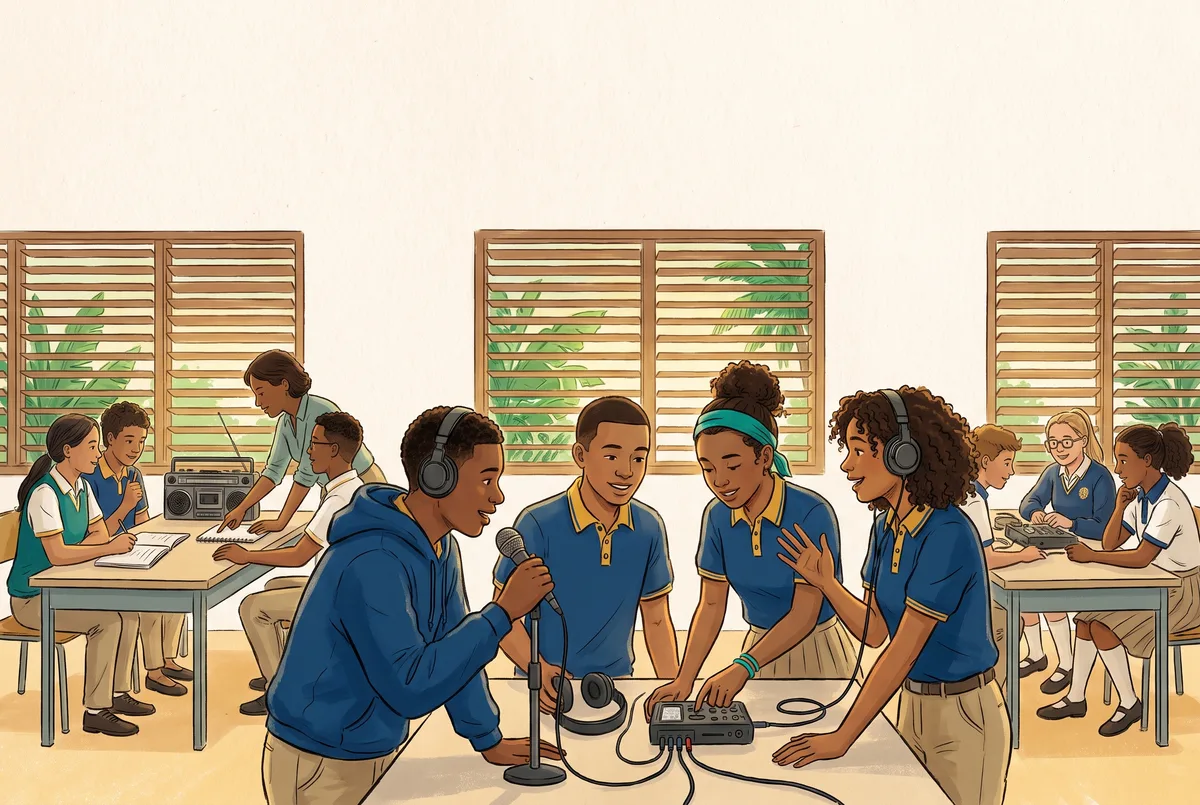
Your project gets a voice: yours, or your team's. You record, listen, change one thing and record again. No machine in the recording.
Capability:Creating new value
Unit 08, on one card
A voice can be imitated. You learn why it fools people, design a card to suggest at home a way to check an urgent call, and write your project's voice rule.
Capability:Taking responsibility
Unit 09, on one card
You look for a question about your project that the machine can't close. You interview it, note why it falls short, answer it yourself, and your answer goes into your project.
Capability:Reconciling tensions and dilemmas
Unit 10, on one card
Everything together: your words, your voice, what you corrected from the machine and whatever your project needs. You put together its first version and learn the hardest craft: deciding what stays.
Capability:Creating new value
Unit 11, on one card
You read, in thirty seconds, the sentence your project was born from, and right after you show its first version. The one that changed most gets the vote, the group reviews its rules and you look toward February.
Capability:Creating new value
Phase III · Playable
Unit 12, on one card
Before your project has a character or a voice that talks to the people using it, you take apart how some apps try to keep you talking to them. And you write rules so yours won't.
Capability:Reconciling tensions and dilemmas · Taking responsibility
Unit 13, on one card
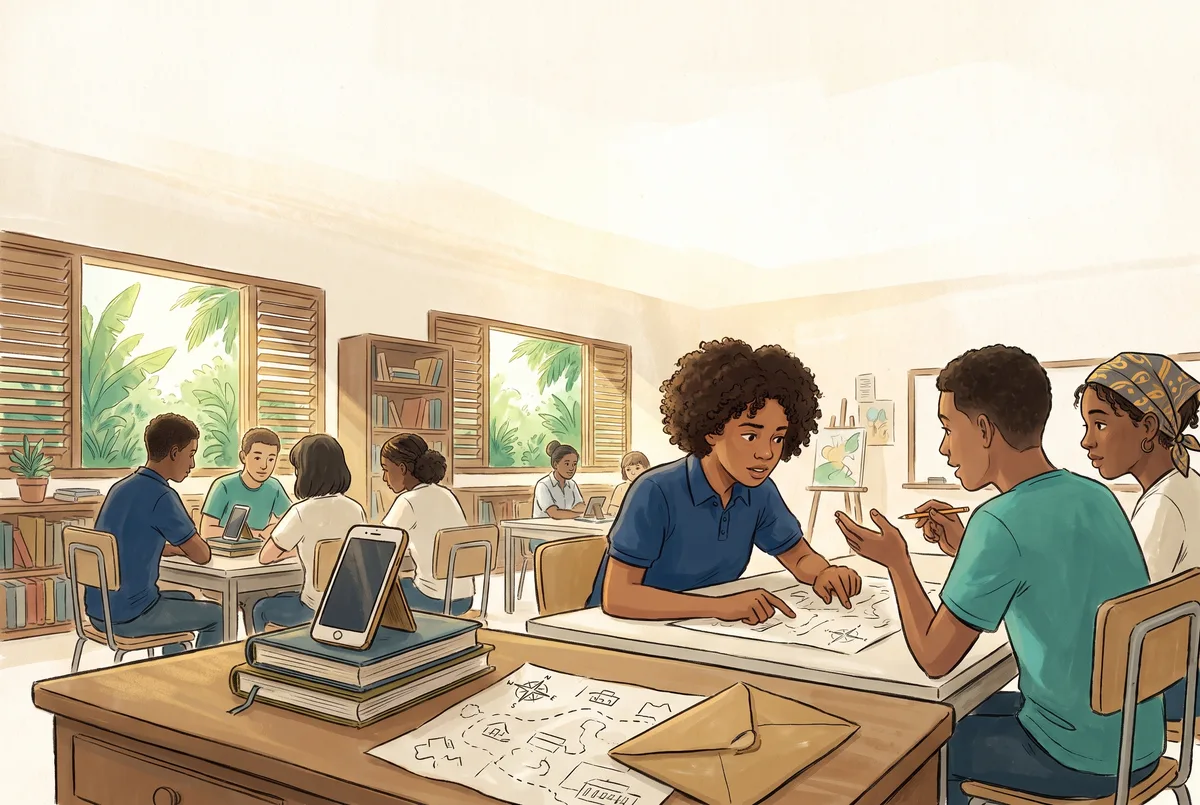
You write three rules —or three steps— so someone else can try your project without asking you anything. All on paper, and someone from another table tries it.
Capability:Creating new value
Unit 14, on one card
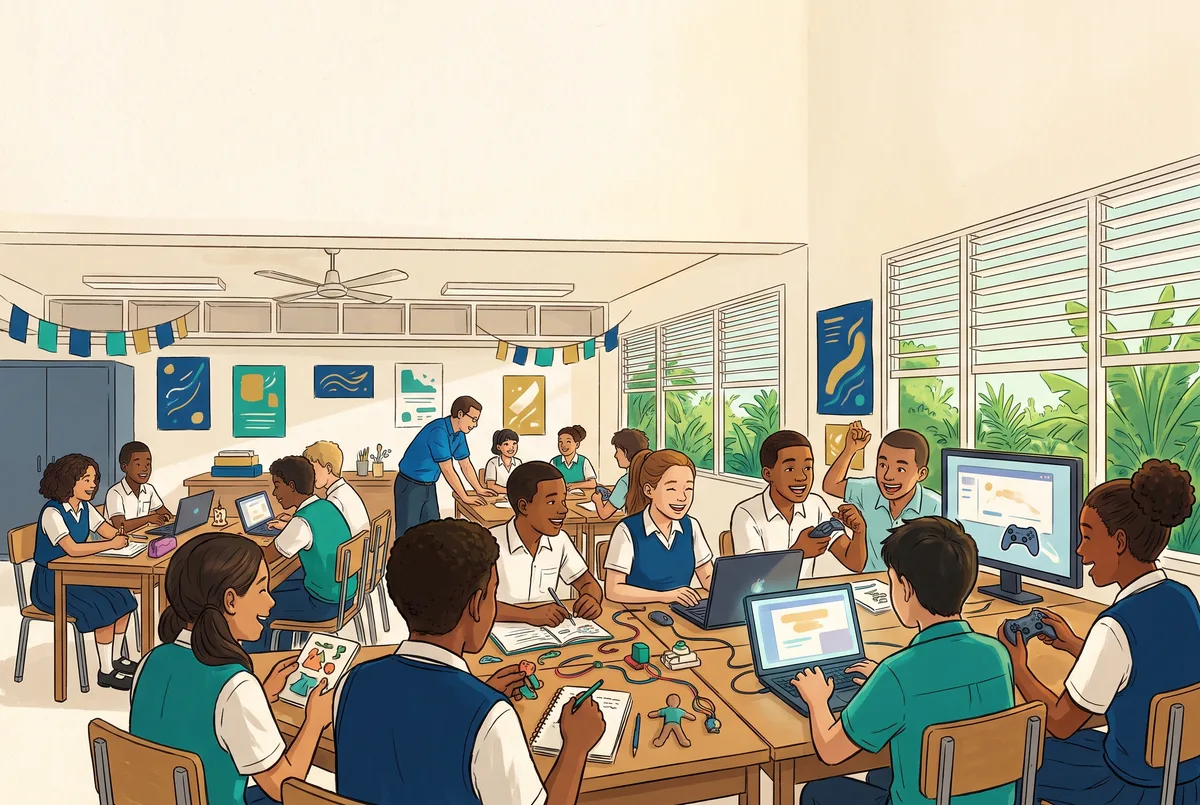
Your project's rules become an instruction for the tool that fits it. Then you check, rule by rule, whether what came out respects what you wrote.
Capability:Creating new value
Unit 15, on one card
Someone from another table tries your project and you see where it gets stuck. You change your rules for a reason. And halfway through, something changes.
Capability:Creating new value
Unit 16, on one card
You give your project characters or an image that belong to no one else, and you write where inspiration ends and taking what isn't yours begins.
Capability:Reconciling tensions and dilemmas
- coming up
Unit 17 · week 18
INT 2 · Playable, version one
Project version one: video game, story, demo or sound piece
Unit 17, on one card
You try projects from other tables, they try yours, all with the same criteria. Then you decide which version of your project reaches February.
Capability:Creating new value
Unit 18, on one card
You ask the machine a question about your project that only your team can answer. And you document why its answer falls short.
Capability:Reconciling tensions and dilemmas
- coming up
Unit 19 · week 20
Something playable, with our rules
Playable version of the project: video game, interactive story, demo or sound piece
Unit 19, on one card
You finish the version of your project someone else can try, play or hear, give it one page of rules and its credits, and present it to the other group.
Capability:Creating new value
Phase IV · Tool
Unit 20, on one card
A 2019 statement says what AI can't do. You put it to the test with what you did in your project, without screens and with your card as evidence.
Capability:Reconciling tensions and dilemmas
Unit 21, on one card
You talk with someone at school who could use your project, listen to what really happens to them and write it in their words, not yours. No screens.
Capability:Taking responsibility
Unit 22, on one card
You add up the generations your project has used since you chose it and weigh them against what it solves, with figures that have a source.
Capability:Reconciling tensions and dilemmas
Unit 23, on one card
You choose a problem for your project and the person who will use it in April, and commit to them. And the group reviews the room agreement, thinking of whoever will use what you make.
Capability:Taking responsibility
- coming up
Unit 24 · week 25
The first prototype you can touch
Interactive demo (or the touchable version of your project)
Unit 24, on one card
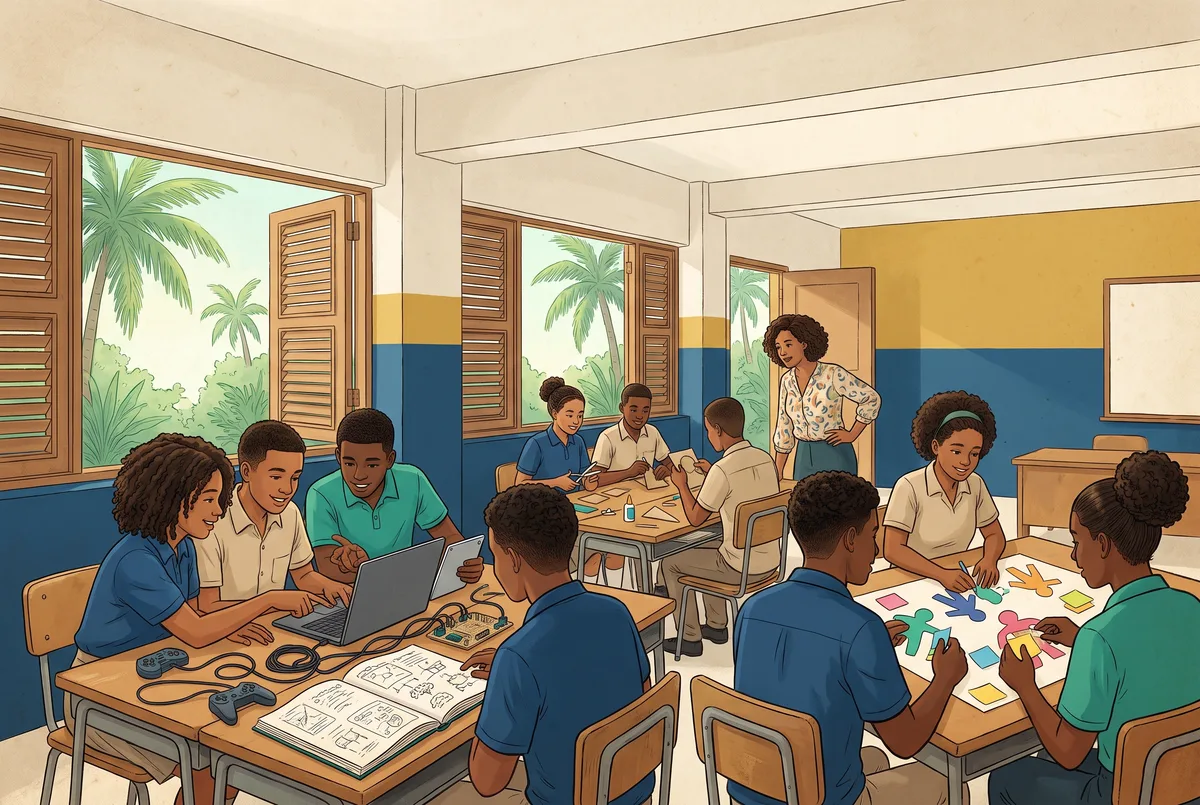
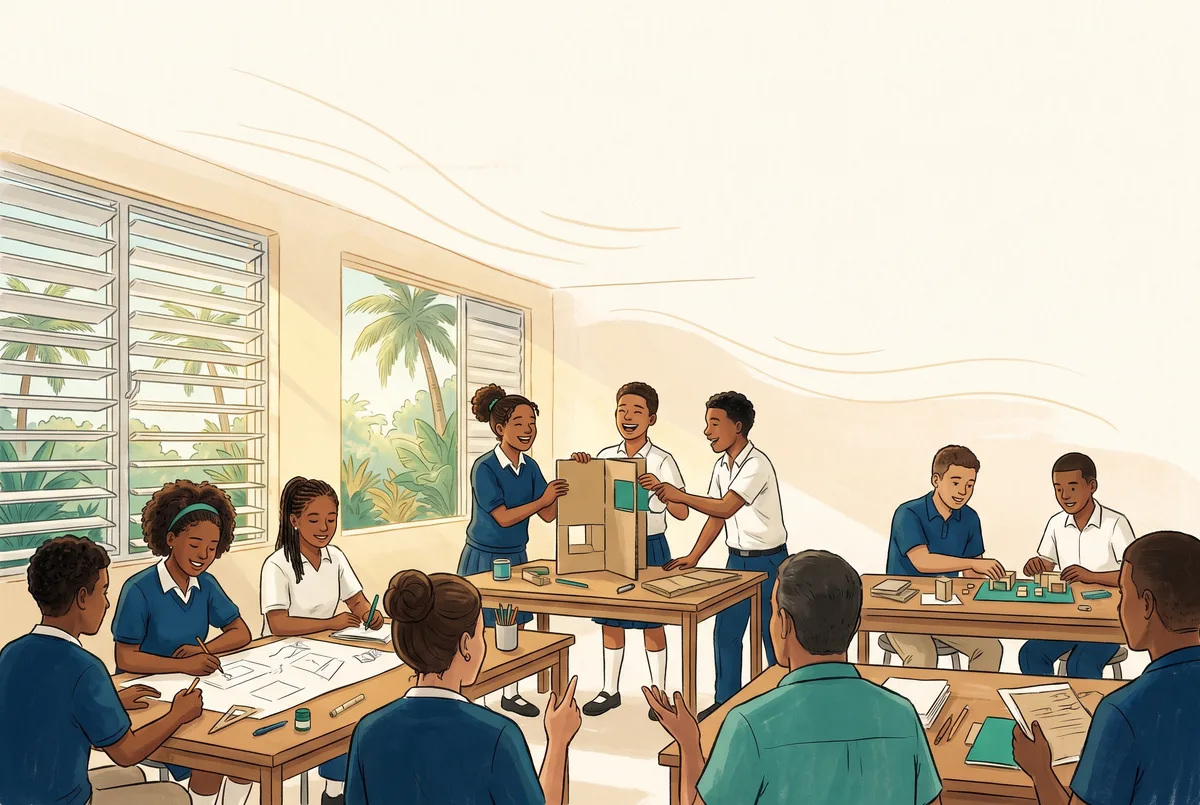
Your project gets its first version that someone outside your team can touch, play or hear without you explaining it: first you draw it by hand, then you make it and check whether it respected the drawing.
Capability:Creating new value
- coming up
Unit 25 · week 26
Used by someone who isn't us
Interactive demo (version 2), or version 2 of your project
Unit 25, on one card
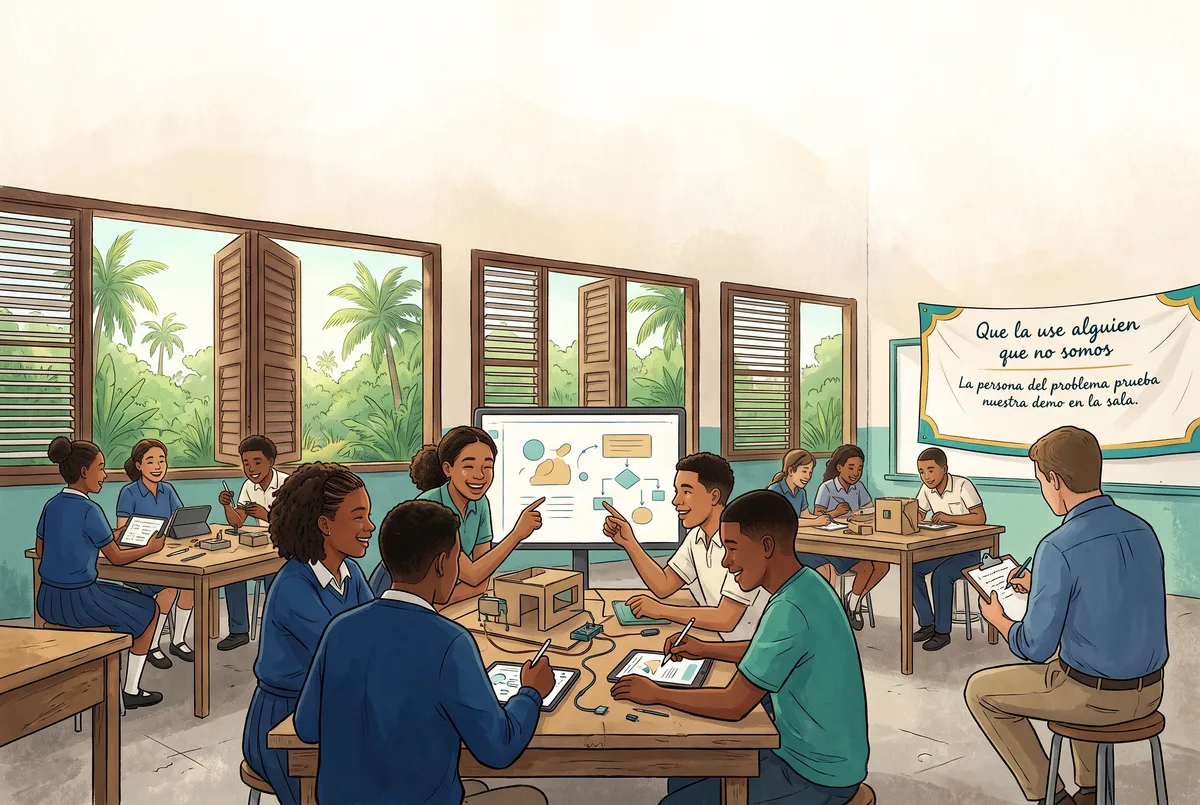
Someone outside your team uses your project’s version in the room. You watch, take notes and explain nothing. Then you change it for what you saw, not for what you wanted to see.
Capability:Taking responsibility
Unit 26, on one card
Third round, now about your project after someone from outside used it: what it can’t solve and what a person still decides. First you answer; then you ask the machine.
Capability:Reconciling tensions and dilemmas
- coming up
Unit 27 · week 28
Something someone uses
Interactive demo (handover), or your project’s handover
Unit 27, on one card
Your project’s April milestone: the version that changed because of what you saw reaches the person who uses it, with a how-to card and a what-to-do-if-it-fails card, and your team decides who maintains it and until when.
Capability:Taking responsibility
Phase V · Showcase
Unit 28, on one card
You go through your project from the three candidates of the first session to April, choose what to show in June and ask permission piece by piece. Nothing gets generated today: things get decided.
Capability:Taking responsibility
Unit 29, on one card
You make an infographic or a short video about how your project was made: the journey, the instruction, what the AI did, what you did and decided, where it failed and what belongs to whom.
Capability:Taking responsibility
Unit 30, on one card
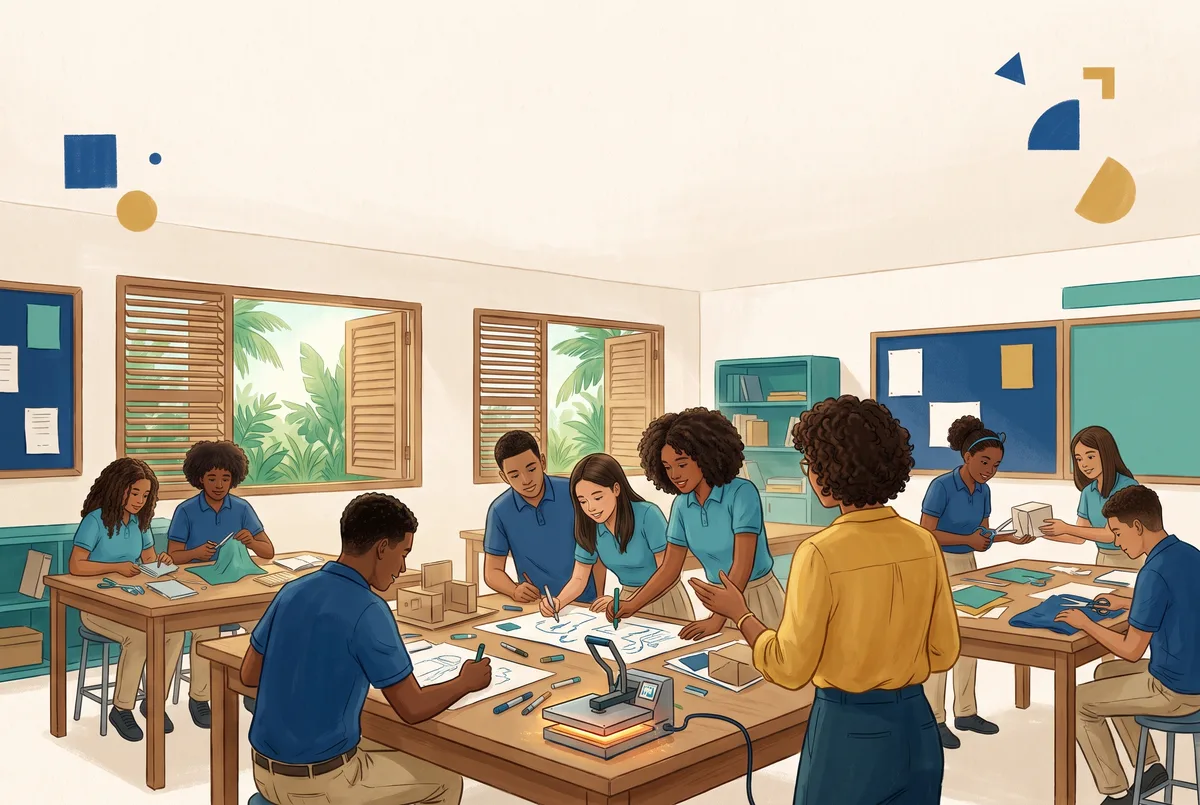
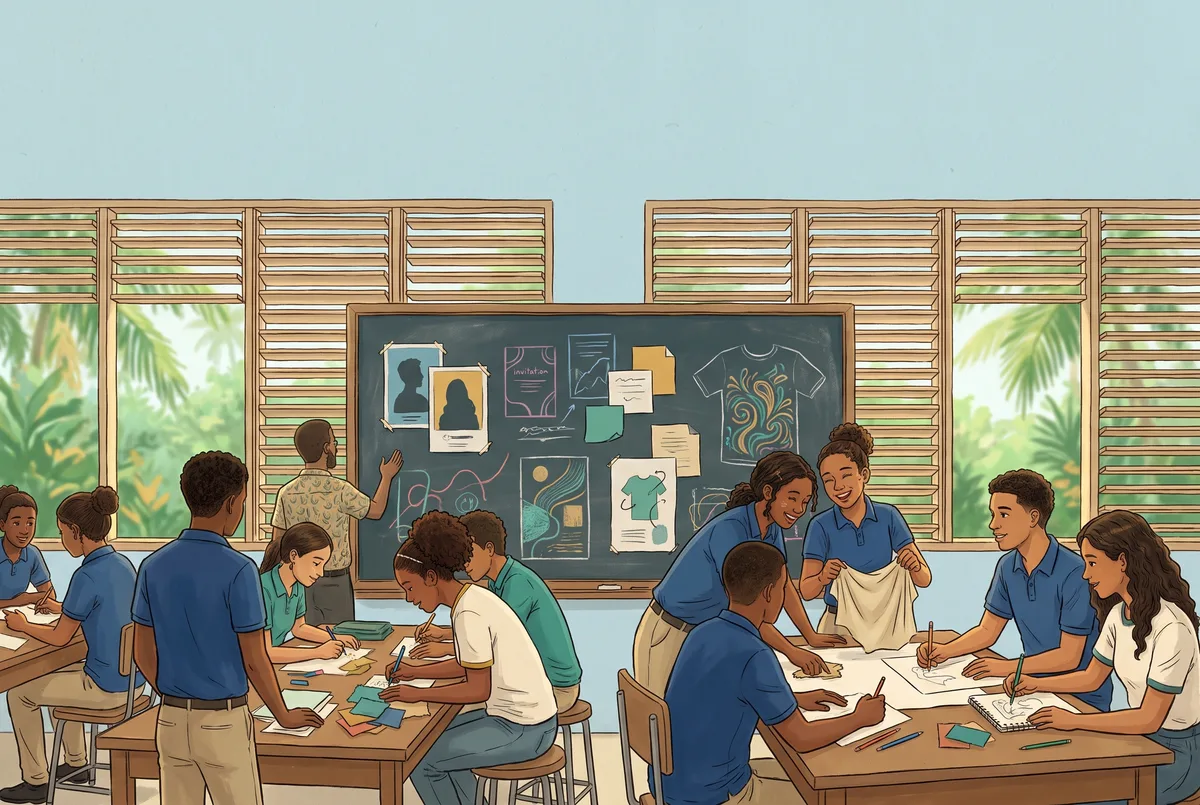
You design the face of the June showcase: a piece of the shared identity —poster, invitation, T-shirt— or the sign for your project’s station. 10th and 11th build one identity, each group in its own session.
Capability:Creating new value
Unit 31, on one card
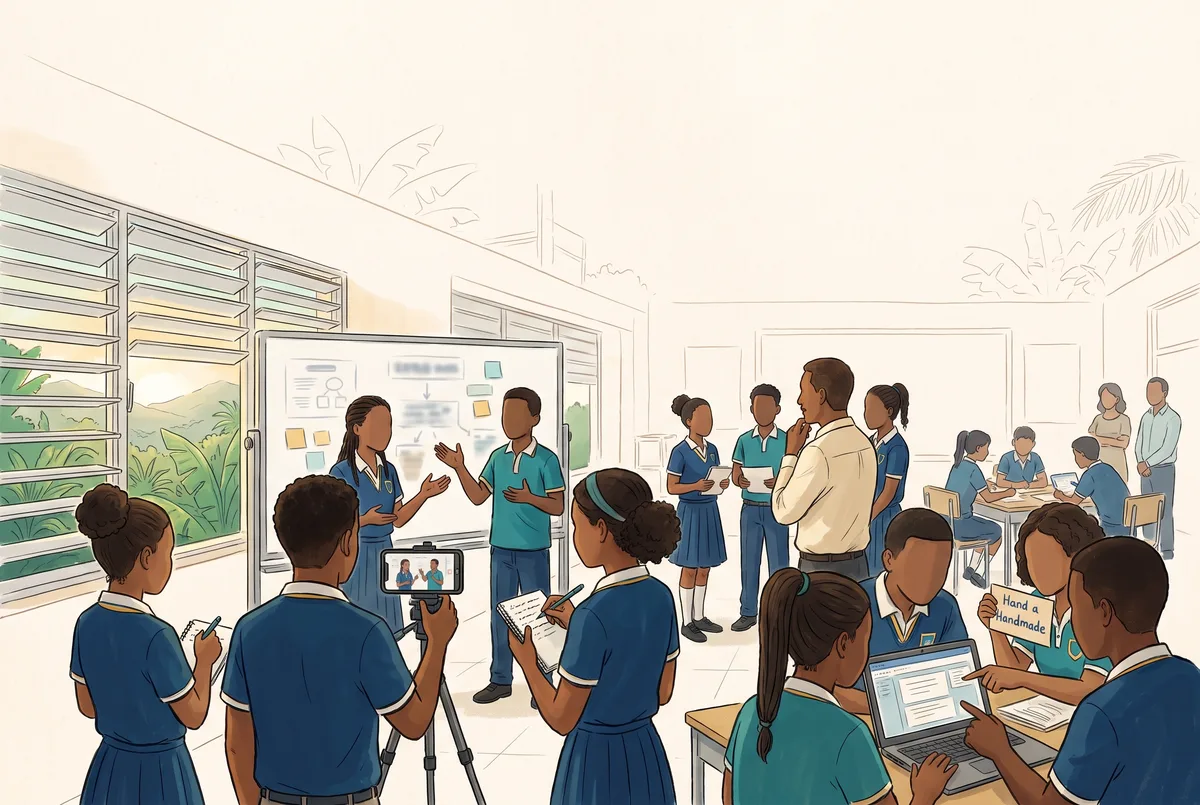
In two minutes you rehearse what your project is, how it got here, where it failed and what belongs to whom, for a small audience that asks questions. You also practice saying “I don’t know” and what comes next.
Capability:Taking responsibility
Unit 32, on one card
Your project’s June milestone: you show it to people from outside the classroom, with its journey and how it was made, and you answer for it. Only what has permission goes out.
Capability:Taking responsibility
Phase VI · Closing
Unit 33, on one card
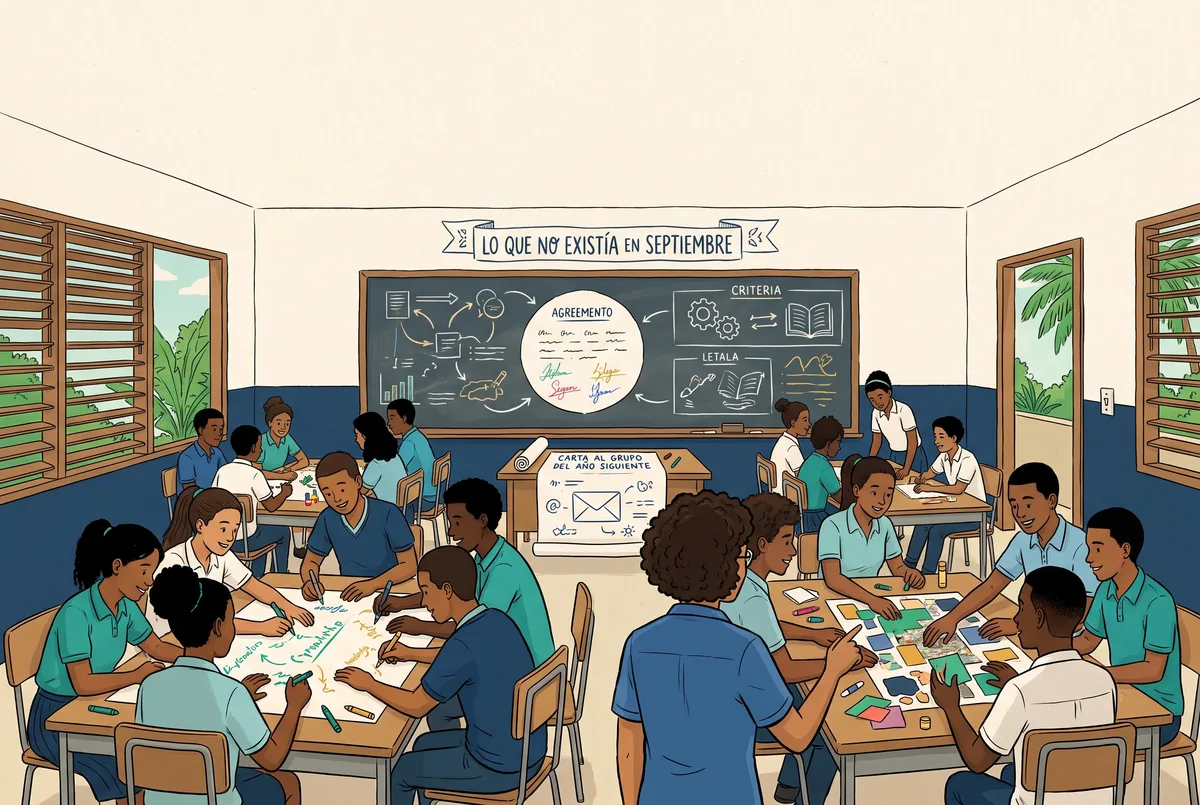
The close: you go through your project from end to end —from the three candidates of the first session to June—, write the last version of “My project was… / Now it’s…”, sign the agreement and leave a letter for whoever starts next year.
Capability:All three: creating, reconciling and taking responsibility
For your next prompt
Before touching a device, the prompt. Here is where to find ideas and how to put yours together.
“What the machine does not have, and will not have, is the detail only you know. … That is why the work is not learning to use it. The work is having something to say.”
The program’s closing line
Comprehensive AI learning designed for educators, by educators. From awareness to mastery.