
Unit 18 · The question AI can’t close (2)
Week 19 · 45 minutes · 10th and 11th grade · every project, alone or in a group.
What you’ll do
Look at these two sentences:
- “Make my project harder.”
- “What should someone using it feel when they get it wrong?”
The first is an instruction: the machine can improve it. The second is a question, and the answer isn’t in the machine: it’s in you, or in your team. Today you’ll write questions like that about your own project, try them with a conversational assistant and document why what it answers falls short.
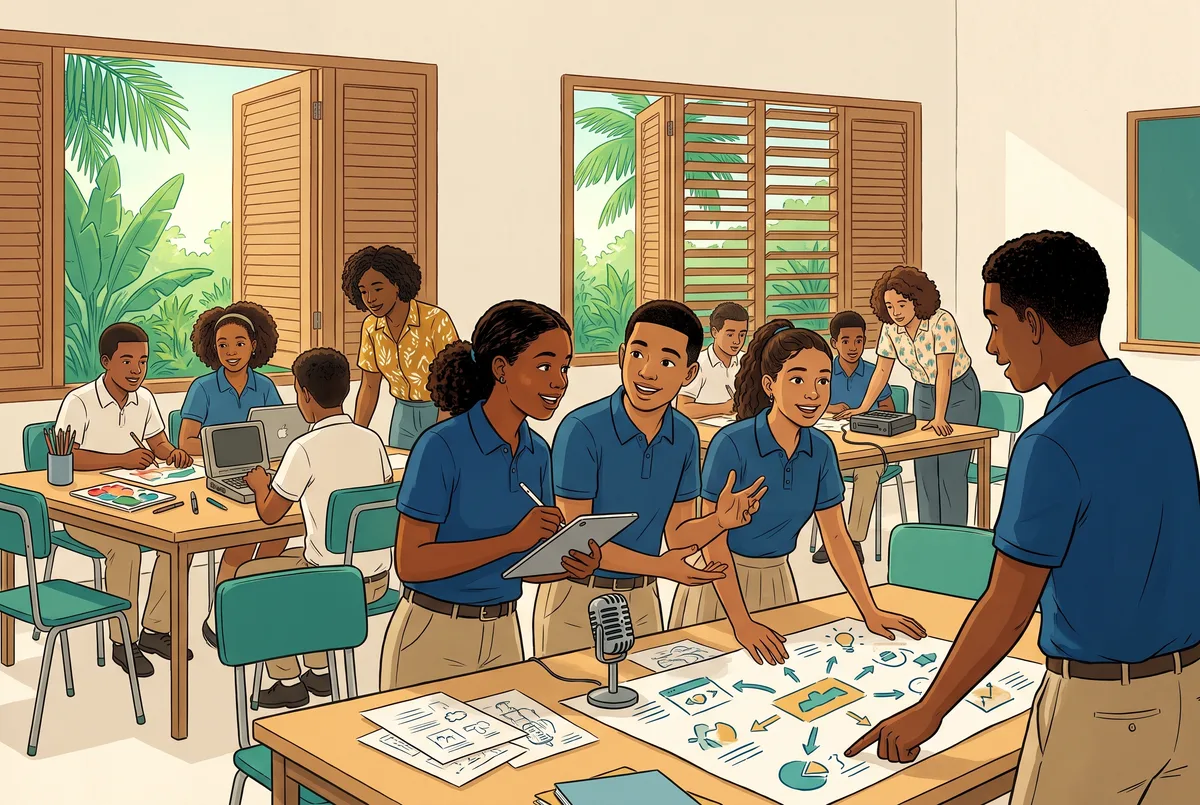
The piece is short: a one-minute podcast, or a one-page infographic, with three things: the question, what the machine said and what you say.
Why it’s worth it
The whole year is about this: the instruction is how you say it to the machine, but the craft is the question and the judgment. If you only learn to ask better, the machine decides for you without you noticing. If you learn to ask what only you can answer, your project stays yours.
How the session goes
- Anticipate. Ten minutes without screens: three design questions about your project (who is it for? what should someone feel when they lose, get it wrong or finish? what must never happen?). You choose one, write your own answer first and then what you think the machine will answer.
- The budget. One question and a single follow-up per project, written on the board. Before asking, it’s checked aloud that the question carries no names, data or situations of anyone.
- Act. Your question runs on the device of the person guiding the session, in turns by table, and the answer is read aloud.
- Reflect. What did it answer? What did it take for granted? What can’t it know? Did the instruction get better, or did the question get better? What did the AI decide here that a person should have decided?
No screens. From your three questions until your question is written on the board, no phone, no computer, no AI: you think, discuss with your team, write your own answer first and decide what you’ll ask the machine, with how many follow-ups and what you won’t give it. Your card comes back when the answer arrives.
The criteria
- C1. The question is about your project, not about projects in general.
- C2. You can say what the machine can’t know about whoever will use, hear or play it.
- C3. Your answer changes something in your project.
If you don’t want to ask a machine
You ask your question to another team and document the same things: what they assumed, what they couldn’t know. Both kinds of answer join the listening just the same.
If your project is without AI
You do the same full session, with the same time and the same criteria. You write your three questions and your own answer first, and anticipate what a team from another table that doesn’t know your project will answer. While the machine’s queue runs, you take your question to them, with the same budget —one question and a single follow-up—, and note what they answered, what they took for granted and what someone looking at your project from outside can’t know. Your answer goes into the podcast or the infographic like the others. In the listening, the question for you is: what did you decide, and why?
Your credits
Your podcast or your infographic makes clear what the machine said and what you said. In a group project, each person notes on their card which part of the answer is theirs.
To keep going
Your answer goes into the last pass on your project next week. If you want to adjust its instruction with what you decided, use the assistant for building your instruction, or look for ideas in the library.
What this is, and what it isn’t
This Unit’s design is original: a design position, not a research finding. It promises no effect. Nothing is graded. The conversation with the assistant is deleted when the session ends. If there’s no signed permission to record voices yet, the podcast is read live or the infographic is made instead; no recording is uploaded to an AI tool.