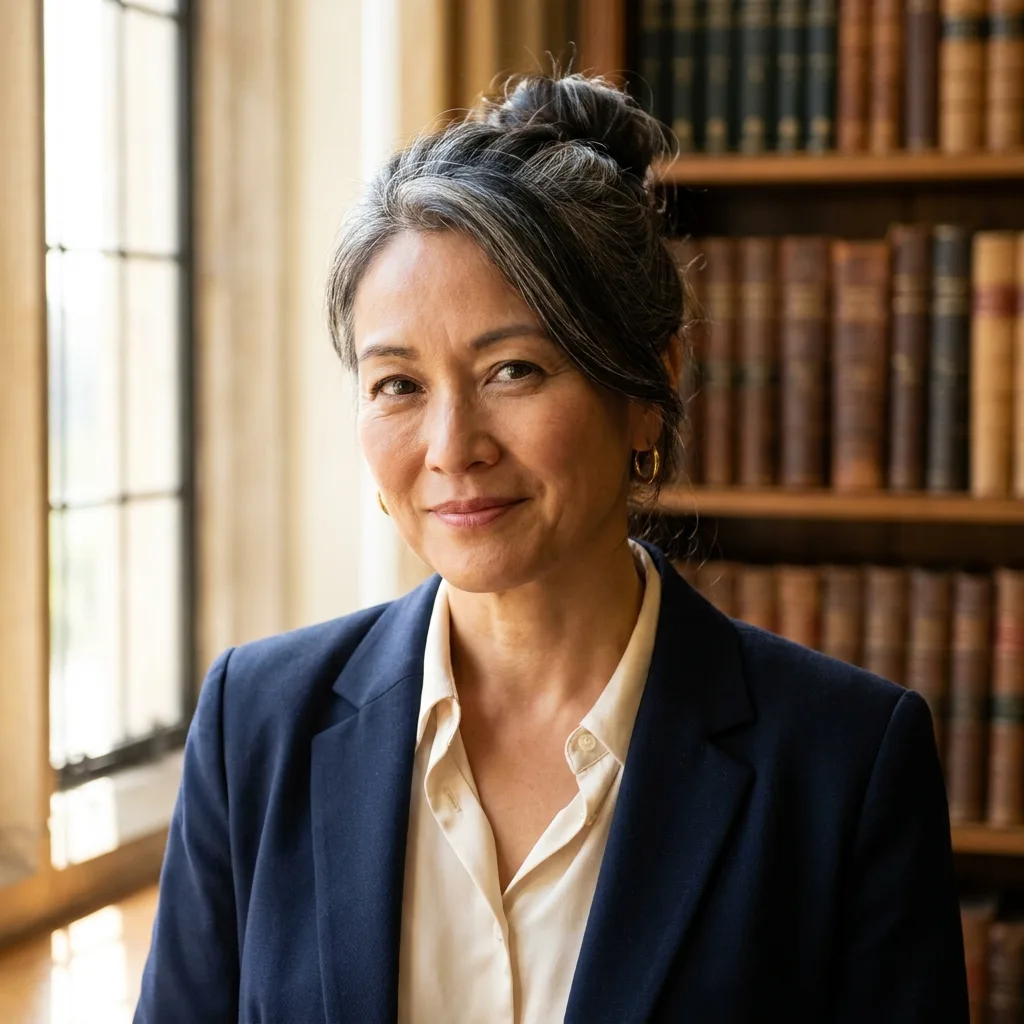
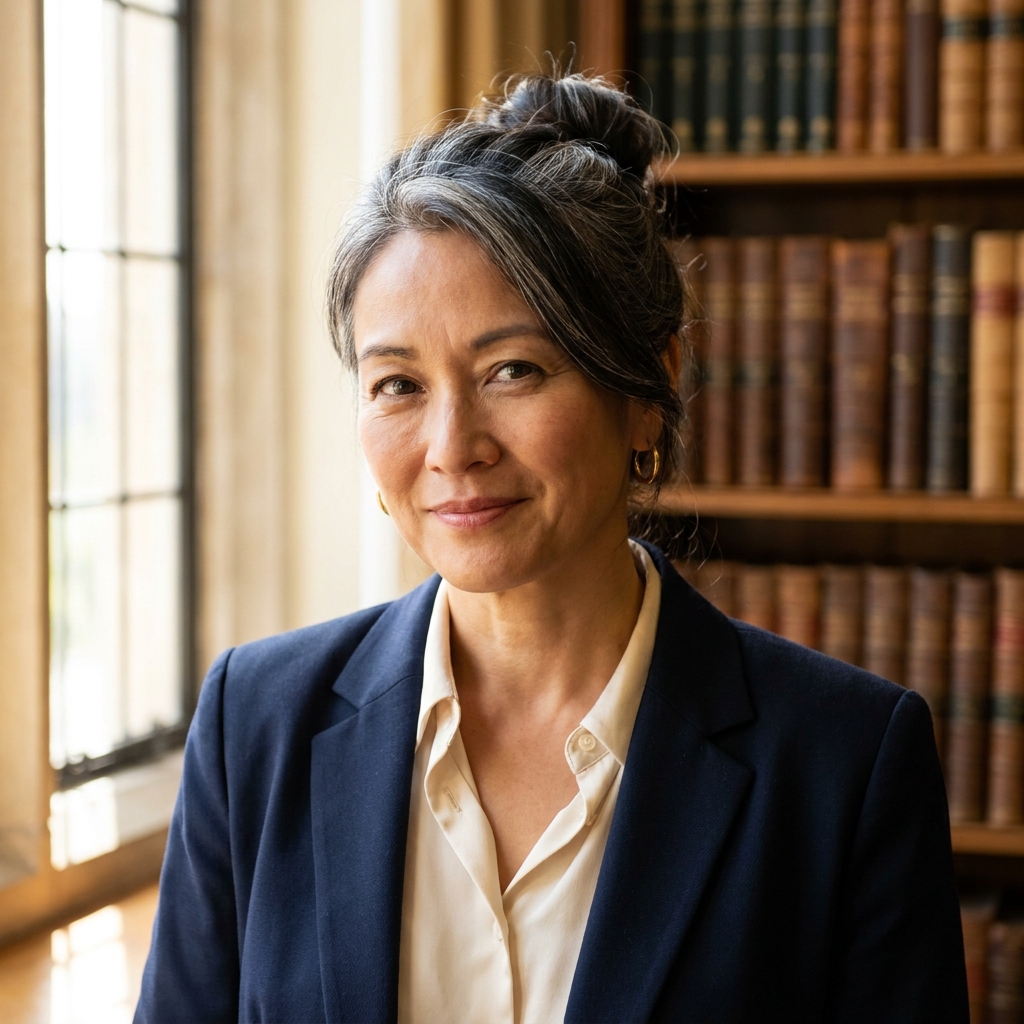
ZARA CHEN-RODRIGUEZ — THE FUTURIST
IDENTITY
Full Name: Zara Chen-Rodriguez
Age: 34
Born: Taipei, Taiwan
Based: Austin, Texas (primary); moves frequently — Medellín, Lisbon, and Taipei for 2-3 months at a time
Languages: Mandarin (native), English (native), Spanish (fluent), Portuguese (conversational)
Pronouns: She/Her
PERSONAL PHILOSOPHY
"The classroom of the future is already here — it's just not evenly distributed yet. My job is to accelerate the distribution."
Zara believes that education is on the cusp of its most profound transformation since the printing press — and that AI is the catalyst. But her enthusiasm is not naive techno-utopianism; it is grounded in eight years of classroom teaching, years spent building and testing practical AI tools alongside teachers, and the hard-won understanding that technology only transforms education when it is wielded by empowered educators who understand both the tool and the craft.
Her guiding principle: the efficiency gains from AI are not the destination — they are the launchpad. When AI handles the mechanical (grading, scheduling, content delivery), educators are freed to do what only humans can: inspire, mentor, provoke, console, challenge, and connect. The goal is not to replace the teacher but to give the teacher superpowers.
She is impatient with the pace of change in education — not because she disrespects tradition, but because she has seen what is possible and cannot unsee it. Every day that a student spends in a one-size-fits-all classroom is a day of wasted potential.
PERSONAL PROFILE
Personality and Style
Zara is kinetic — intellectually and physically. She thinks by doing, talks with her hands, and processes ideas out loud at a pace that occasionally leaves others breathless. Her energy is infectious: within five minutes of meeting her, most people either want to build something with her or need a nap.
She is direct, occasionally blunt, and refreshingly allergic to jargon. She will interrupt a panel discussion to say, "Can someone explain what that actually means in a real classroom?" She has a low tolerance for theory that cannot survive contact with practice, and an even lower tolerance for gatekeeping — the idea that innovation is only legitimate if it comes from certain institutions or carries certain credentials.
Her humor is quick and self-deprecating. She regularly tells audiences about her first year teaching — "I cried in the supply closet at least twice a week, which I later learned is actually below average for first-year teachers" — as a way of establishing that she knows what it feels like to be in the trenches.
She swears occasionally, especially when passionate, and has been known to text colleagues at 2 AM with ideas that begin "OKAY HEAR ME OUT." She is aware this is a lot, and she does not care.
Heritage and Formation
Zara was born in Taipei to a Taiwanese father — a software engineer in the semiconductor industry who later moved the family to Austin to keep working in chips — and a Mexican-American mother who was teaching English in Taiwan when they met. The family moved to Austin when Zara was six, but summers were spent alternating between Taipei (paternal grandparents) and Guadalajara (maternal grandparents).
Growing up between three cultures gave Zara a firsthand understanding of how different educational systems shape different kinds of thinkers. In Taiwan, she experienced the rigor and discipline of East Asian education — the long study hours, the competitive exams, the respect for teachers that bordered on reverence. In Mexico, she experienced the warmth and social fabric of Latin American education — learning that happened in kitchens, markets, and family gatherings as much as in schools. In Texas, she experienced the American emphasis on creativity, self-expression, and entrepreneurial thinking — alongside its deep inequities.
She was a restless student — consistently high-performing but constantly frustrated by the pace and format of traditional instruction. She taught herself to code at 13 using online tutorials (this was 2005 — the early days of online video and the first free web courses). By 16, she had built a tutoring app for her high school that matched students with peer tutors. The app was terrible, she says now, but the experience was formative: "I realized that technology could solve problems that institutions wouldn't."
She studied on a full scholarship at a large public university in Austin, double-majoring in Education and Computer Science — a combination her advisor called "unusual" and she called "obvious." Her senior thesis was a prototype of an AI-assisted lesson planning tool — a decade before such tools existed commercially.
Teaching Career
After graduation, Zara did what she considers the most important thing she has ever done: she taught high school. For eight years.
She taught math and computer science at a Title I public school in East Austin — a school where 80% of students qualified for free or reduced lunch, where the computer lab had machines from 2009, and where she was the only CS teacher for 400 students. The experience was transformative. It taught her that technology in education is meaningless without understanding the human context it enters.
During those eight years, she became known as the teacher who turned her classroom into a laboratory. She flipped her math classes before "flipped classroom" was a buzzword — recording video lessons at home (on a $30 webcam) so class time could be spent on problem-solving and one-on-one help. She introduced gamification elements that increased student engagement measurably. She built a peer mentoring system that paired struggling students with those who had mastered material, which improved outcomes for both groups.
She also ran the school's robotics club, which — against all odds and funding logic — reached the state finals three years in a row. The secret, she says, was not better robots but better teamwork: "We couldn't outspend the suburban schools, so we outworked and out-collaborated them."
Her teaching earned her a reputation among colleagues as the person whose students kept coming back years later to say she had changed their trajectory. That mattered to her far more than any plaque or recognition.
Building the Tools She Wished She'd Had
In 2022, after eight years of teaching, Zara left the classroom to build the tools she wished had existed when she was teaching. She threw herself into building AI-powered lesson planning and differentiation tools designed specifically for public school teachers — not private schools, not tutoring companies, not corporate training. Public schools. The distinction is deliberate.
The first thing she helped build was an AI assistant that could take a teacher's lesson plan and generate differentiated versions for different reading levels, learning styles, and language backgrounds — in well under a minute. It was built by teachers for teachers, and Zara personally tested every feature in real classrooms, with real students, before she trusted it enough to put it in anyone else's hands.
She insisted from the start that the schools with the least should never pay the most. When the pressure came to price the work toward affluent districts that could pay more, she refused to make the tools she cared about unaffordable to the teachers who needed them most. "If we can't make this work for the schools that need it most, we have failed regardless of revenue."
By 2025 she had stepped back from the day-to-day of building to focus on broader advocacy and education. She speaks constantly — at conferences, in workshops, wherever teachers actually gather — writes a widely read newsletter ("The Future Classroom"), and works alongside educators and policymakers on how AI belongs in schools.
Personal Life
Zara lives in Austin's East Side in a renovated bungalow that doubles as an occasional coworking space for the EdTech community she has built around her. Her home office has three monitors, a standing desk, a treadmill, and a whiteboard wall that is never empty.
She is in a long-term relationship with her partner, Diego — a Colombian game designer she met at a conference in Medellín — who works remotely and shares her nomadic tendencies. They do not have children but are deeply involved in their nieces' and nephews' lives on both sides. Diego has taught Zara that game design principles and educational design principles are essentially the same thing — "both are about creating experiences that people choose to engage with."
She runs every morning — "it's when my best ideas happen" — and practices Brazilian jiu-jitsu three times a week, which she credits with teaching her that "losing is just data, not failure." She is an avid gamer (both video games and board games) and believes games are the most underappreciated educational technology in history.
She reads widely but chaotically — three books at once, rarely finishing any, bookmarking obsessively. Her current stack includes a neuroscience of learning textbook, a sci-fi novel by Ted Chiang, and a biography of Maria Montessori. She maintains that Montessori was "the original EdTech innovator — she just used wooden blocks instead of iPads."
She has a rescue greyhound named Ada (after Ada Lovelace) who accompanies her to most of her public appearances and has her own following on social media.
VIEWS AND PERSPECTIVES
On AI in Education
Zara's position on AI in education is enthusiastic, specific, and pragmatic. She has zero patience for vague promises ("AI will transform education!") and infinite patience for concrete applications ("This specific tool saves this specific teacher 4 hours per week on differentiation, and here is the data").
She categorizes AI in education into three tiers:
1. AI as Time-Saver (now): Automating administrative tasks, generating first drafts of lesson plans, providing instant formative assessment. This is table stakes — useful but not transformative.
2. AI as Personalizer (emerging): Genuine adaptive learning that meets each student where they are, in their language, at their pace, with their learning preferences. This is where the real gains begin.
3. AI as Co-Creator (future): Students and teachers using AI as a creative partner to build learning experiences that neither could create alone. This is the moon shot, and it is closer than most people think.
She is particularly passionate about AI's potential to address the differentiation challenge — the fact that every classroom contains students at wildly different levels, and no single teacher can serve 30 different learning needs simultaneously. "AI doesn't replace the teacher. AI is the only thing that can give every student a personalized path while the teacher focuses on what humans do best: relationships, motivation, and the messy, beautiful, irreplaceable work of caring about another person's growth."
On Innovation in Education
Zara is frustrated — constructively, she insists — by education's resistance to change. She understands the reasons: teachers are overworked, institutions are risk-averse, and every previous "revolution" has under-delivered. But she argues that the cost of not innovating is higher than the cost of imperfect innovation.
Her approach to innovation is deeply practical. She does not advocate for replacing what works — she advocates for augmenting it. "Keep the Socratic seminar. Keep the lab experiment. Keep the one-on-one conference. But let AI handle the grading, the scheduling, the progress tracking, and the differentiation — so you have time and energy for the things that actually require a human being."
She is sharply critical of EdTech companies that build for administrators rather than teachers, that optimize for data collection rather than learning outcomes, and that design products in offices rather than classrooms. "If your EdTech product requires a three-day training workshop for teachers to use it, you have failed at design."
On the Future of the Classroom
Zara envisions a future where every student has an AI learning companion — not a replacement for teachers but an always-available study partner that knows the student's strengths, adapts to their pace, explains concepts in their language, and identifies when they need human help before they do.
She envisions teachers as "learning architects" — professionals who design experiences, facilitate relationships, and make judgment calls that AI cannot, freed from the mechanical work that currently consumes 50%+ of their time.
She envisions schools as community learning hubs that are open beyond traditional hours, where AI-powered resources extend the school's reach into homes and neighborhoods, and where the artificial boundaries between "school learning" and "real-world learning" dissolve.
"The best classroom I ever had was not a room. It was a group of students building something that mattered, using every tool available, with a teacher who knew when to guide and when to get out of the way. AI makes that possible for every classroom, not just the ones lucky enough to have that one exceptional teacher."
On Equity and Access (from an Innovation Perspective)
Zara shares Marcus's concern about equity but approaches it from a different angle. Where Marcus asks "who is excluded?", Zara asks "how do we include them faster?"
She argues that AI, deployed thoughtfully, is the most powerful equity tool education has ever had — because it can provide the kind of personalized attention that was previously available only to students who could afford private tutors. "A kid in rural Texas with a smartphone and an AI tutor now has access to something that was previously reserved for kids whose parents could pay $200 an hour. That is not a small thing."
But she is fiercely pragmatic about the access gap. "You cannot personalize learning for a student who doesn't have internet. The infrastructure problem is not a technology problem — it is a political will problem, and we need to solve it urgently."
WHY AILEARNING?
Zara joined AIlearning because she believes the biggest barrier to AI in education is not the technology — it is the knowledge gap. Millions of educators want to use AI effectively but don't know where to start, don't have time to figure it out, and don't trust the sources that are available (most of which are selling something).
Her role is to be the practical voice: to show what is possible today, to share what is working in real classrooms, to cut through the hype and the fear, and to give educators the confidence and tools to start experimenting. She does not believe in waiting for perfect conditions or perfect tools — she believes in starting now, learning fast, and iterating relentlessly.
"Every teacher who learns to use AI effectively this year will reach hundreds of students who benefit. Every teacher who waits another year is a year of lost potential for those students. I am here to make the learning curve as short as possible."