
Unit 06 · The seasons test
Week 7 of the program · 45 minutes · 10th and 11th grade · every project, alone or in a group.
What you’re going to do
You put the machine to the test with something your project knows first-hand. You choose what:
- the place where your project lives (suggested for 10th);
- the people it’s for, or someone like you who thinks what your project stands for (suggested for 11th);
- the topic of your project: a sport, a trade, a kind of music, a question.
First, without screens, you describe it from memory: ten features. Then the machine is asked the same thing, with no context at all. And you hunt down what it made up. If your topic doesn’t lend itself to this, your table tests a place everyone knows, without naming it.
Why it’s worth it
The machine talks very confidently about places and people it doesn’t know. If you learn to see what it invents, what it assumes and what it doesn’t know, it can’t slip anything past you. And what you correct makes your project truer.
How the session goes
- Anticipate. Ten features on paper, from memory, and what you think the machine will say. Before asking it, the budget goes on the board and a check out loud: the instruction doesn’t carry the name of the school, the neighborhood or anyone.
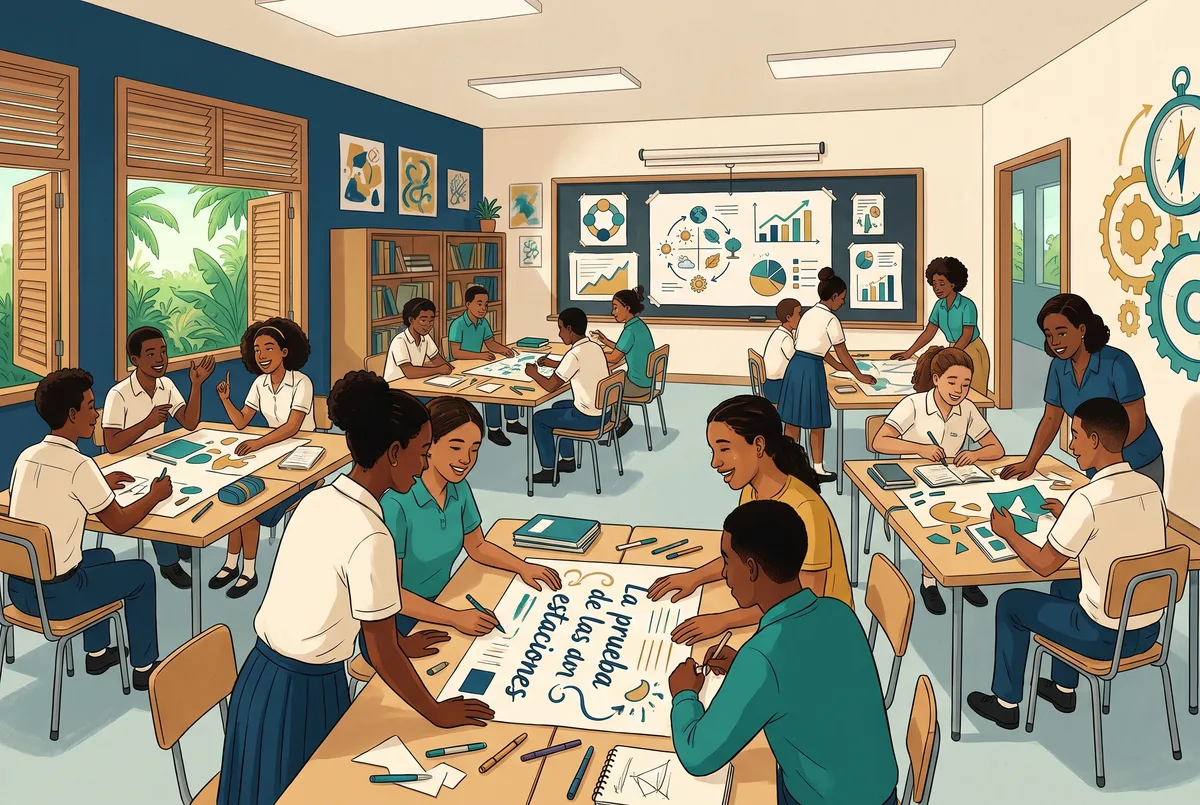
- Act. The person guiding the session asks the question, one per table, and the answer is read aloud. What it gets right is surprising. Then the audit in three columns: invented · assumed · doesn’t know. And a one-page infographic, by hand: “what the machine believes” versus “what it is”.
- Your project. On your card: the correction only you can make, and where it goes into your November version.
- Reflect. Two infographics, read aloud, against the criteria. “What did the AI decide here that a person should have decided?”
- No screens. The ten features and your hypothesis are written with no phone, computer or AI, and that’s also where you decide how many instructions will be made and what they will never carry. Your sheet is the yardstick you then audit the machine with.
The criteria, as questions
- C1. Does everything the machine said have its label: invented, assumed or doesn’t know?
- C2. Does each correction come from what you know, and not from some other outside source? (11th: and do you avoid swapping one stereotype for another?)
- C3. Does the correction go into your project, and can you say where?
What you decide
One generation per table, text only; an image only if the project is visual and the table can justify it. It’s counted on the board. The audit and the correction are yours: the machine only guesses.
If your project is without AI
You run the same test, with the same criteria, on a source without AI that generalizes about your place, your people or your topic: a leaflet or a guide, an encyclopedia entry, an article, a textbook, a stock photo bank, or what someone from another table who doesn’t know it says from memory. First your ten traits; then the source, read aloud; and the same audit: made up · assumed · doesn’t know. If you prefer, you can audit what the machine answers your table instead, without using it yourself: you decide. In the listening, the question for you is: what did you decide, and why?
For inspiration
- What only lives here — an infographic so someone from outside understands why something from here matters.
Careful
We only work with what the machine says here, in the room: no outside figures. If the machine comes out with a hurtful stereotype, it’s cut off, named and analyzed for what it is. Nobody in the group is the example. No faces of real people are generated.
This is a plan: the Unit hasn’t run yet.