

Unit 23 · The problem, chosen
Integration Unit · 45 minutes · 10th and 11th grade · every project, alone or in a group · no generation.
What you’ll do
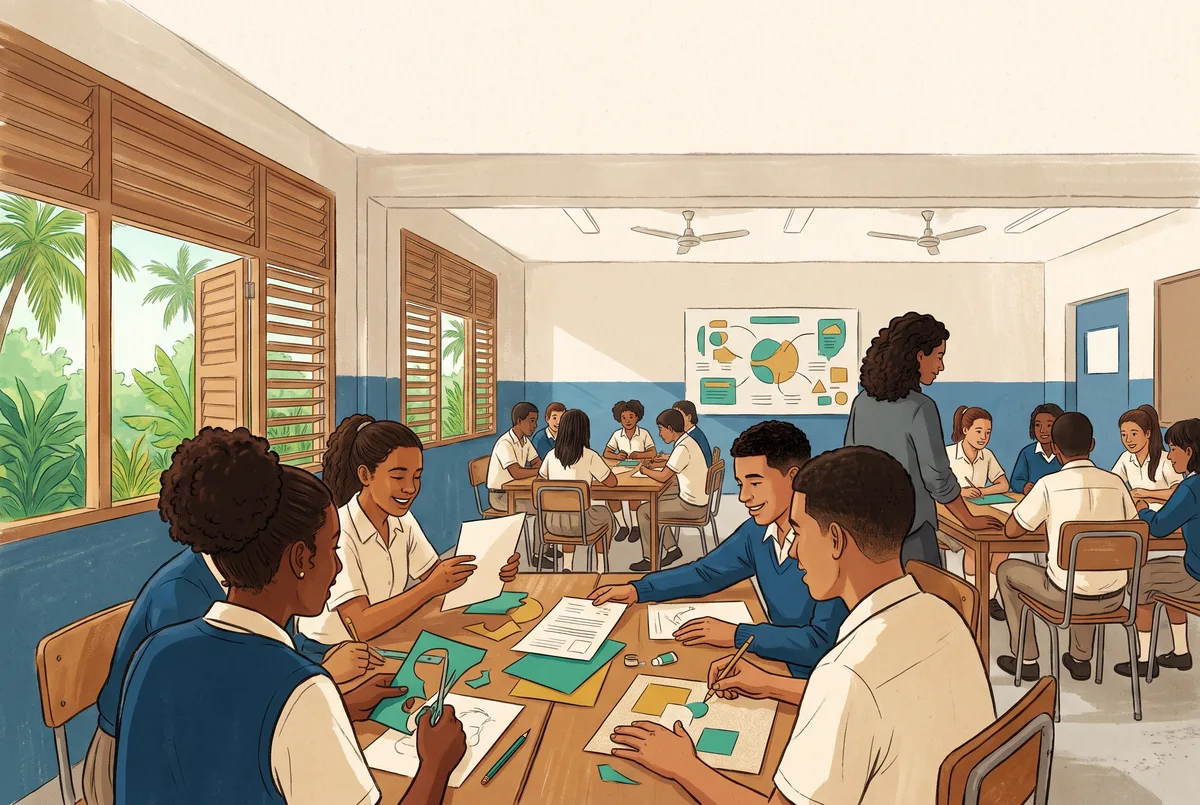
At your table, you present the problem you heard in Unit 21, the idea on paper and the cost weighing from Unit 22. Then you choose one problem, just one, and write the final version of the card: who your project is for, which part you’ll solve and which part you won’t. From here to April, your project works for that person.
Why it’s worth it
Choosing is committing. A project someone will really use asks something of you that an exercise doesn’t: to take charge if it fails. That’s why today the room agreement is also reviewed for the second time, with a new question: what do we owe whoever uses what we make?
How the session goes
- Anticipate. You write “What I think they’ll ask me”.
- Act. One minute of presentation per project, at your table, and one question from the table. Then someone from each table tells the group the problems at their table, one sentence each: if two projects solve the problem of the same person, it shows here.
- No screens. From here until the agreement is signed, no phone, no computer and no AI. First, ten minutes to choose and write the final card, and to update your card: your part, what you decide and the division of work for April —what the AI will do (or your technique, if your project is without AI), what you’ll do, what you’ll decide—.
- The agreement. It’s read aloud, reviewed with the new question, voted on by knocking on the table and signed again.
- Reflect. The two-column board: is your problem after “the same, faster” or “more, better, beyond”? Which part of your plan shouldn’t be done by a tool, but by a person? Two lines to close: who you’ll answer to and what you still don’t know about their problem.
The criteria
- C1. The problem is still in the person’s words.
- C2. It says which part your project solves and which part it doesn’t.
- C3. You know what you owe that person if your project fails.
Your team, reviewed
If another project solves the problem of the same person, you can join, if everyone wants to. If your group wants to split, that’s possible too. It’s always talked through with the person guiding the session, and nobody is left without their part or without what they decide.
If the real person behind your project isn’t at the school, you still choose someone at the school like them for the April test, and write what would change if the real person tried it. If your project is about AI, you choose who you’ll show what you researched to, and what they need to know. If your project is without AI, your final card carries your materials and time budget from Unit 22 instead of generations, and at the close the question for you is: what did you decide, and why?
What doesn’t change
The card carries the person’s role, never their name. The room agreement is reviewed, but safeguarding isn’t voted on: the group decides how the tools are used, not whether people are protected. And the group can add which data no project will ask of whoever uses it.
To look at first
- Go back over A tool someone at school really uses in the library: that’s where you’re headed.
- The library assistant comes back in the next Unit, when you draw your screen —or your piece— by hand and then ask for it.
What this is, and what it isn’t
This Unit’s design is original: a design position, not a research finding. It promises no effect. Nothing is graded. Nothing gets generated today.