

Unit 21 · Someone else’s problem
Tool phase · 45 minutes · 10th and 11th grade · every project, alone or in a group · no screens.
What you’ll do
In April, someone who isn’t on your team will use your project, and your project will change because of what you see. It all starts today, and it starts by listening. Some adults from the school will come to the room (or leave their problem in writing). You talk for five minutes with one of them —the one who could use your project, or someone like them— and write a problem card: what happens to them, when, what they’ve already tried. In their words.
Your project doesn’t have to be a tool
You listen to the problem according to what your project is:
- A tool or an app: what that person can’t manage to do.
- A sound piece or a story: what they need the piece to do for them: keep them company, explain, remind.
- A game: when and with whom they’d play it, and what bores them about what they already play.
- A project about AI: what worries them about it, or what they don’t know.
If the person who would use your project isn’t at the school, you still talk with a volunteer about their problem, as listening practice, and you also write three questions you’d ask the real person behind your project.
Why it’s worth it
It’s very easy to invent a problem for someone that you know how to solve. The hard part, and the valuable one, is understanding the problem the other person really has. A card that says “needs an app” says nothing. One that tells what happens to them and when does.
How the session goes
- Anticipate. A badly written card and the same card well written are read aloud. You prepare three open questions about what that person lives —not about your project— and note “What I think they’ll tell me”.
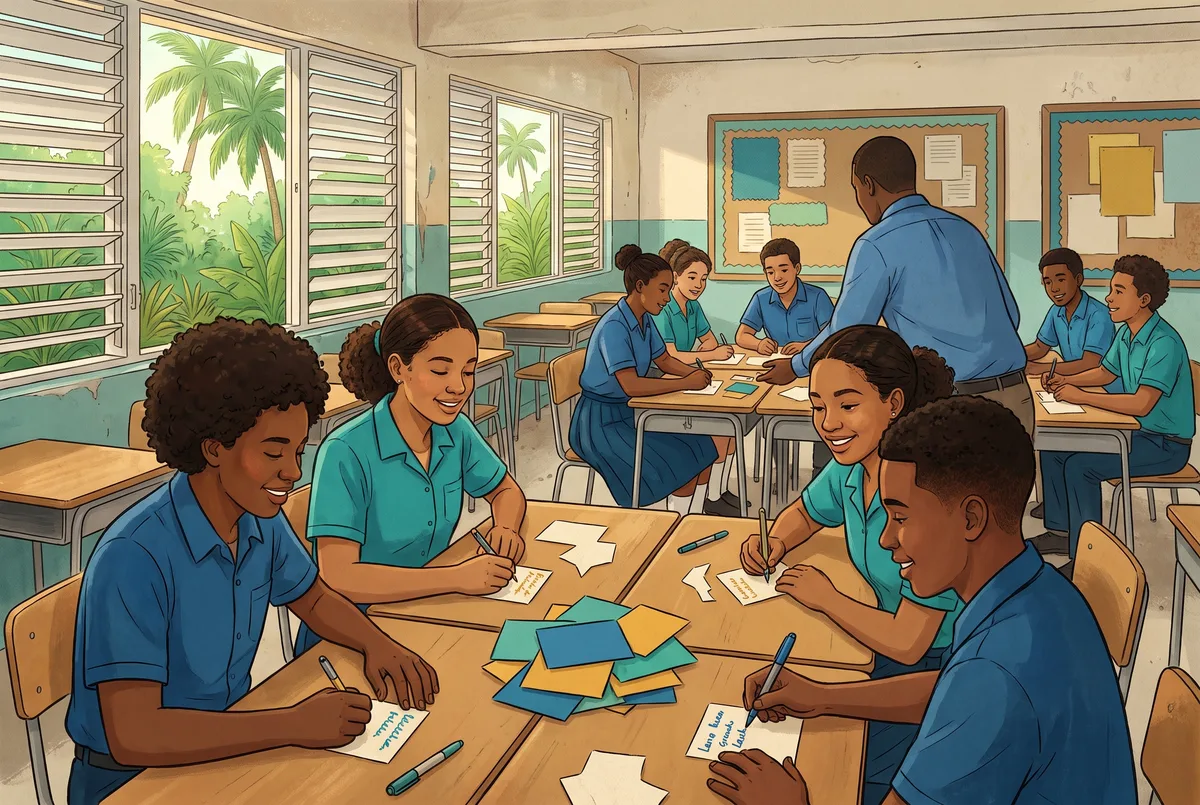
- Act. The conversation, in turns; while you wait, you rehearse your questions aloud with your table. Then, ten minutes without screens to write the card and draw on paper which part of that problem your project would solve.
- Reflect. You read your card to the group and the group asks: “did the person say this, or did you?”. Did what you anticipated happen? And today’s question: what did you decide that the person who’ll use it should have decided?
No screens. From the card until the group hears it, no phone, no computer and no AI: you write, draw, discuss and decide which part of the problem a tool would do, which part your team and what the person who’ll use it decides. That drawing comes back in Unit 24, when the machine arrives. If your project is without AI, the “tool” in your drawing is your technique, and in Unit 24 you build with it.
The criteria
- C1. The problem is in the person’s words, in quotation marks.
- C2. It says when it happens and what has already been tried.
- C3. Your idea solves part of that problem, and not another one you like better.
Rules for the conversation
The card carries the person’s role, never their name. You don’t ask about problems of coexistence or discipline, or about anything that identifies someone. Nothing is recorded. An adult from the school is in the room while there are visitors. In a group project, each person asks at least one question and notes on their card what they heard.
To look at first
- A tool someone at school really uses: how a project someone else will use gets started.
- The library assistant is for later: nothing gets generated today.
What this is, and what it isn’t
This Unit’s design is original: a design position, not a research finding. It promises no effect. Nothing is graded. Your card stays in your project’s folder, without anyone’s name.