

Unit 26 · The question AI can’t close (3)
Week 27 · 45 minutes · 10th and 11th grade · your project, alone or in a group · as we planned it.
What you’ll do
You’ve done this twice already. Today the question is about your project, now that someone from outside has used it: what can’t it solve? What is still decided by a flesh-and-blood person? Your team makes a short podcast where the machine answers, you answer, and the difference can be heard.
This Unit is for everyone. If your project is without AI, the question is what someone looking at it from outside can’t know about it. If it’s about AI, it’s the question your project asks AI. And if your project hasn’t been used yet, you ask about the person who is going to use it.
Why it’s worth it
Someone has already used what you made. Now it’s your turn to say, honestly, where it ends. Whoever knows the limits of their project can hand it over without promising too much. And that list is exactly what the person using it will need when something fails.
How the session goes
- Anticipate. Phones face down. You write your question by hand and your own answer, before asking anything. You note what you think the machine will answer. Today’s budget is small and counted on the board: one question and up to two follow-ups per project, text only. Before running it, you check aloud that your question carries no one’s data.
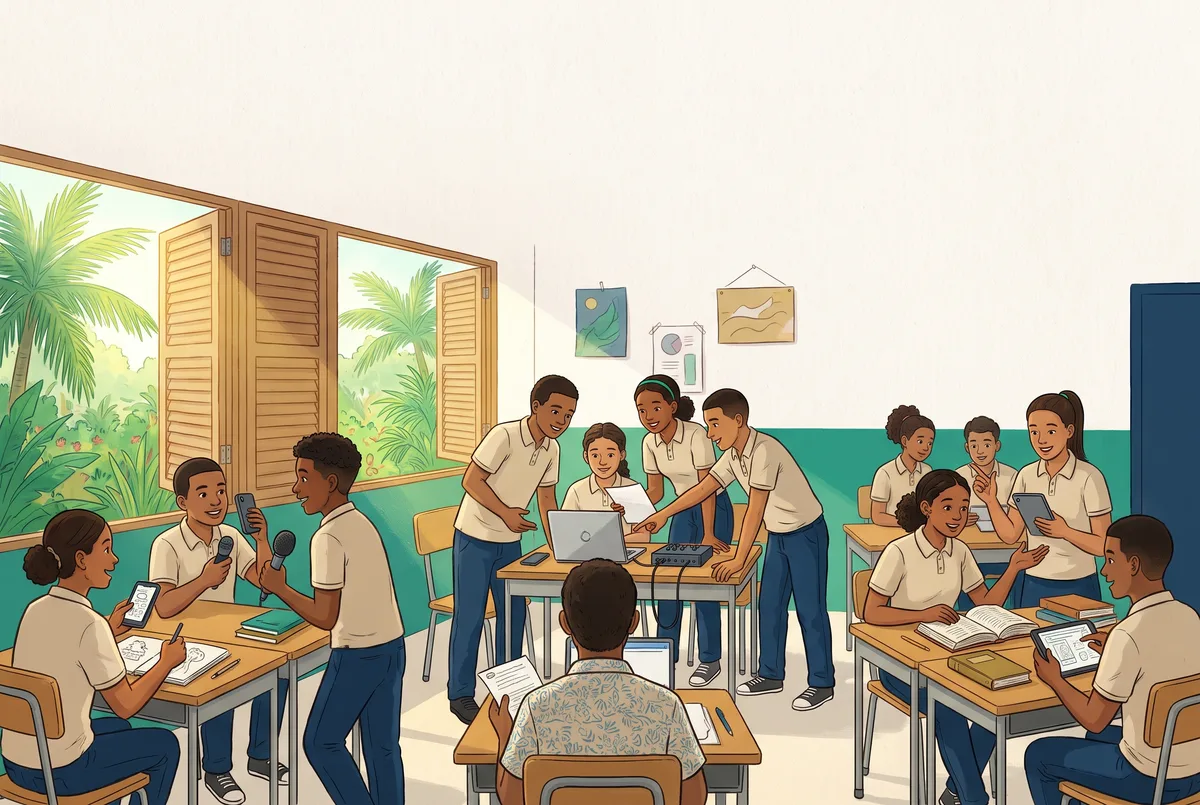
- Act. Your question goes to a conversational assistant on the class screen, and the answer is read aloud. Then you put together a 60- to 90-second script: the machine, you, and why your answer is yours. It’s read aloud or recorded on the class device.
- Reflect. The podcasts are heard at each table, and some for the whole room. The question of the day weighs more than ever: did the instruction get better, or did the question get better?
No screens. The first eleven minutes happen with no phone, no computer and no AI: you think, write or dictate your question and your own answer, and decide with your team which exact question goes to the machine, how many follow-ups you spend and that it carries nobody’s data. That card is what comes back later.
What the AI decides, and what you decide
After listening, you reread the “what I decide” column on your card and set it next to what the machine said it could decide. What did the AI decide here that a person should have decided? If something shows up, it goes back to your column. If you work alone, someone at your table can read the machine’s lines in your podcast; in a group, each person says one part they decided.
One team interviews another team that answers the way a machine would, one that doesn’t know who used the project. If you conclude that your question didn’t need a machine, that’s a result too.
If your project is without AI. You do the whole Unit on your own path, with the same time: your question goes not to a machine but to another voice that doesn’t know the person who used your project —the team at another table, answering only with what it can know from outside, or a source you choose—, with the same budget of one question and two follow-ups. Your podcast puts that voice next to yours, and your “what I decide” column is put to the test just the same: what did you decide, and why?
The criteria, as questions
- C1. Did you name something concrete that your project doesn’t solve?
- C2. Did you say who still decides it (a role, never a name)? (In 11th: and why should it stay that way?)
- C3. Can you hear the difference between asking better and asking deeper? (In 11th: could someone who trusts the tool completely listen to you without feeling foolish?)
To get ready
Go over last week’s observation sheet: the line “what we couldn’t fix” is your best starting point. If you want to rehearse the question, use the assistant for creating or explore the library.
On your way out, your two lines —what your project doesn’t solve and who decides it— are the draft of next week’s “what to do if it fails” card.