

Unit 17 · INT 2 · Playable, version one
Week 18 · 45 minutes · 10th and 11th grade · every project, alone or in a group · integration Unit · no generation.
What you’ll do
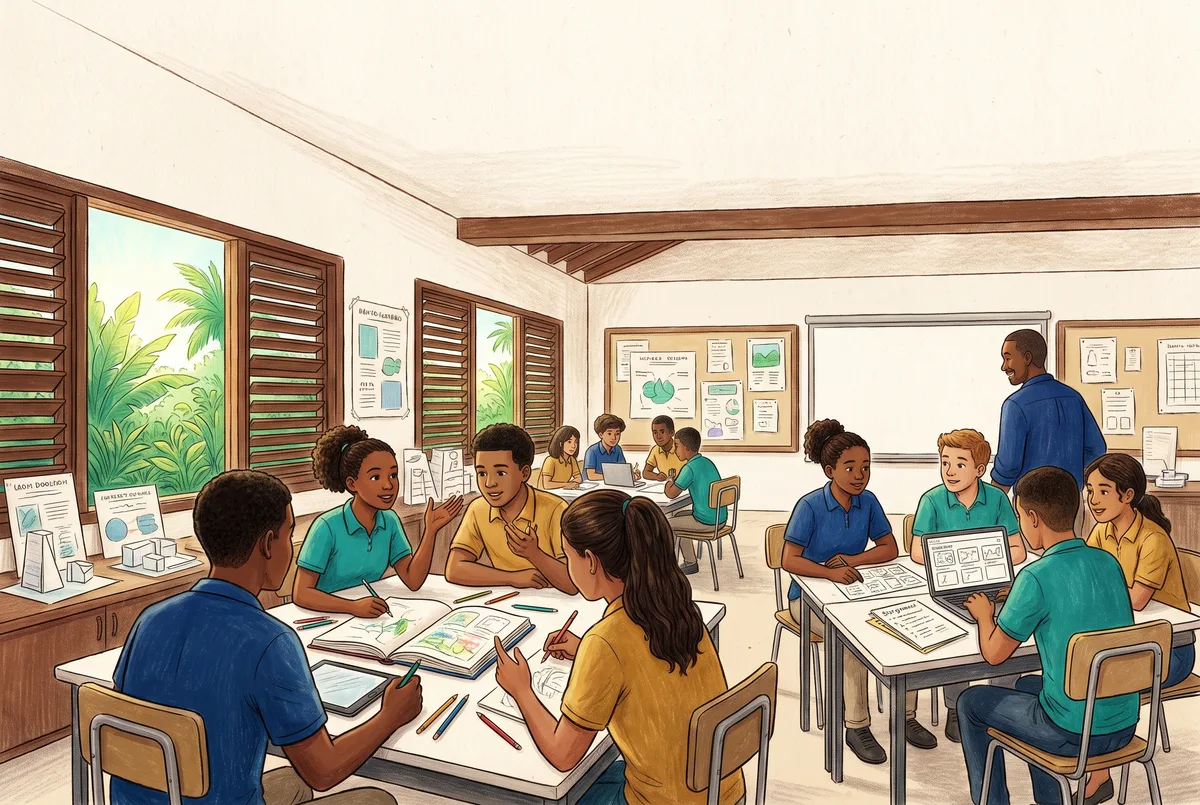
Nothing new gets made today: things get tried. Each project puts its version one on the table —on screen, on paper or in sound— and someone from another table tries it. You do the same with other people’s projects: not all of them, three or four, in two-minute turns. Everyone looks with the same three criteria.
At the end, you decide which version of your project reaches February: one someone else can play, use, go through or hear. It doesn’t have to be a game.
Why it’s worth it
Judging your own work is hard. Judging other people’s with care is hard too. Doing it with shared criteria, and not with “I liked it” or “I didn’t”, is what turns an opinion into something useful. What someone else sees in your project and you don’t is worth gold.
How the session goes
- Anticipate. You write what you think they’ll say about your project.
- Act. Two rounds of trying by tables, with a table change in between. Two-minute turns, volume low. If someone tries your project on screen, you describe to them what can be seen, without explaining how to use it. For each project you try, one sentence that starts with C1, C2 or C3.
- Reflect. From here to the end of the Horizon, no screens: one minute of silence, then you read what was said about your project and compare it with what you anticipated. Did the instruction get better, or did the question get better? With your card in hand: what did the AI decide here that a person should have decided? If your project is without AI: what did you decide, and why?
- A line just for you. The person guiding the session hands you, folded, how they read your way of working. You answer on the back: did they read you right?
- Horizon. Still with no screens, you decide the path to February: which version gets there and in what form —on screen, on paper or in sound— and what the tool will do in it, or, if your project is without AI, which technique you’ll make it with.
The criteria
- C1. It can be tried —played, used, heard— without anyone explaining it.
- C2. What’s your own in the project is in how it works and in its characters or its image.
- C3. There’s a reason to come back: to play it, use it, hear it.
The paths to February
They all reach the same milestone, with the same criteria: a game; an interactive illustrated story; a demo or tool with your own rules; a sound piece someone else hears and joins in; a simulation; or the paper version, if you conclude your project is better that way. If your project is without AI, about AI, or takes the route of simulating it, getting closer or understanding it, it reaches the same milestone in its own form, with the same rounds and the same attention. And if your project turns out better without AI, that’s a result too.
Your team can change too. If another project is so close to yours that you want to join, or if your group wants to split, today you talk it through with the person guiding the session. Nobody is left out of a group they wanted, or kept in one they don’t want.
To keep going
If you change path, in the library you can build the first instruction for your interactive story, your demo or your piece with the assistant.
What this is, and what it isn’t
This Unit’s design is original: a design position, not a research finding. It promises no effect. Nothing is graded: not even the folded line you’re handed, which is just for you. Nothing leaves the room without written consent for that piece.