

Team practice · with AI
Practice scenarios
Situations from the school, to talk through as a team. No answer is graded: there are courses of action, and what the law protects in each one — with the article cited.
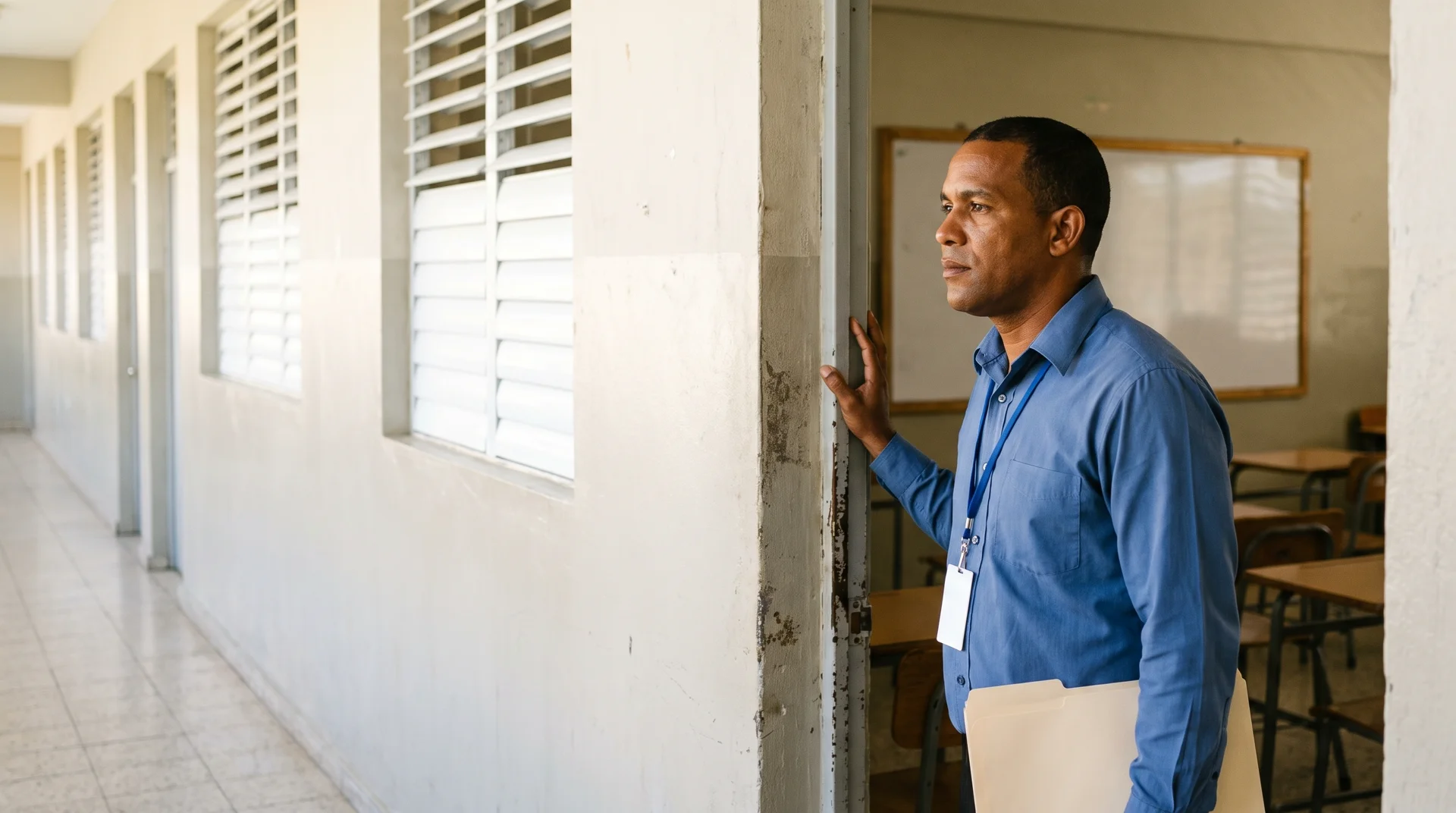
For educators
Educators
During break, from the walkway, you see three second-year secondary students surrounding a classmate near the court.
At the end of class, a fifth-grade primary student takes longer than usual to pack up her things.
You share a shift with a colleague the students like.
In the school staff’s WhatsApp group, a colleague shares a photo of a first-year secondary student asleep in class, mouth open, with a mocking comment.
You teach at a public school and this week you failed a fourth-year secondary student in your subject.
A third-grade primary student arrives on Monday with a visible bruise on his forearm and another near his neck.
For school leadership
School leadership
You lead a primary school. Three families, separately, report the same thing to you about a teacher with many years of experience and good academic results: when a student has not done the homework, she makes him stand in front of the class while she comments on his work out loud with lines like “this is what happens when nobody at home pays you any mind”, and on two occasions she has kept whole groups in without break because of a few students. One boy has started saying his stomach hurts every morning so as not to come. When you discuss it with her, the teacher seems surprised: “that’s how I learned, and my students are the best in the district.” There is no report of physical contact. The families are expecting an answer from you this week.
Three tablets disappeared from the computer lab of your secondary school over the weekend.
Your school is dealing with a serious complaint against a member of staff, already referred to the competent authorities.
An unsigned letter turns up in your school’s complaints box.
For the school
The school
While preparing the annual accreditation, your school’s management team does a simple inventory: where does students’ information live? The result surprises everyone.
A mid-sized private school is facing the worst week in its history: a coach hired two years ago has been named over serious acts against a student, committed during the school’s own sports activities.
For students
Students
As school lets out, a fight breaks out between two classmates of yours.
You are 15. A classmate adds you to a new group and, with no warning, someone sends an intimate photo of a girl from another class. The messages come in a chain: “hahaha”, “send it to the other group”, “who’s got more?”. You recognise the girl: she is quiet, she hardly talks to anyone. Someone types her full name and her Instagram handle “so people can ask her”. You did not ask to be there, you did not ask to see that, and now the image is on your phone, in a chat where twenty people are deciding in real time what to do with another person’s dignity. The group expects you to go along with it. What you do in the next few minutes matters more than it looks.
For families
Families
In the WhatsApp group of parents from your daughter’s class, one mother writes indignantly: “I was told on very good authority that the maths teacher fails the students who don’t go to his paid private classes.
Your 11-year-old son plays online with his classmates almost every afternoon.
Español — The Spanish version is the reference text — the legal verification described in the audit report was carried out on it.
Audit report — the independent legal review of this material, with the errors we found and corrected (page in Spanish).
Comprehensive AI learning designed for educators, by educators. From awareness to mastery.