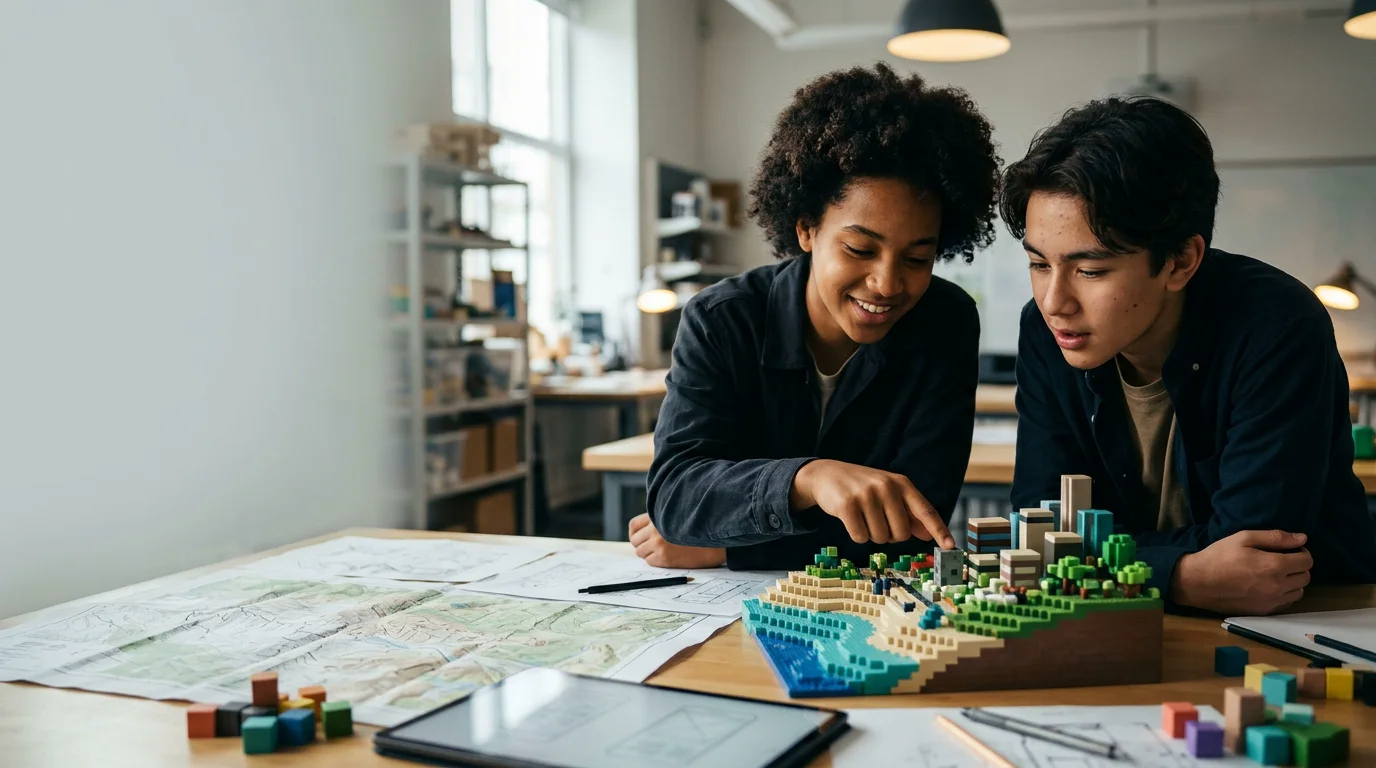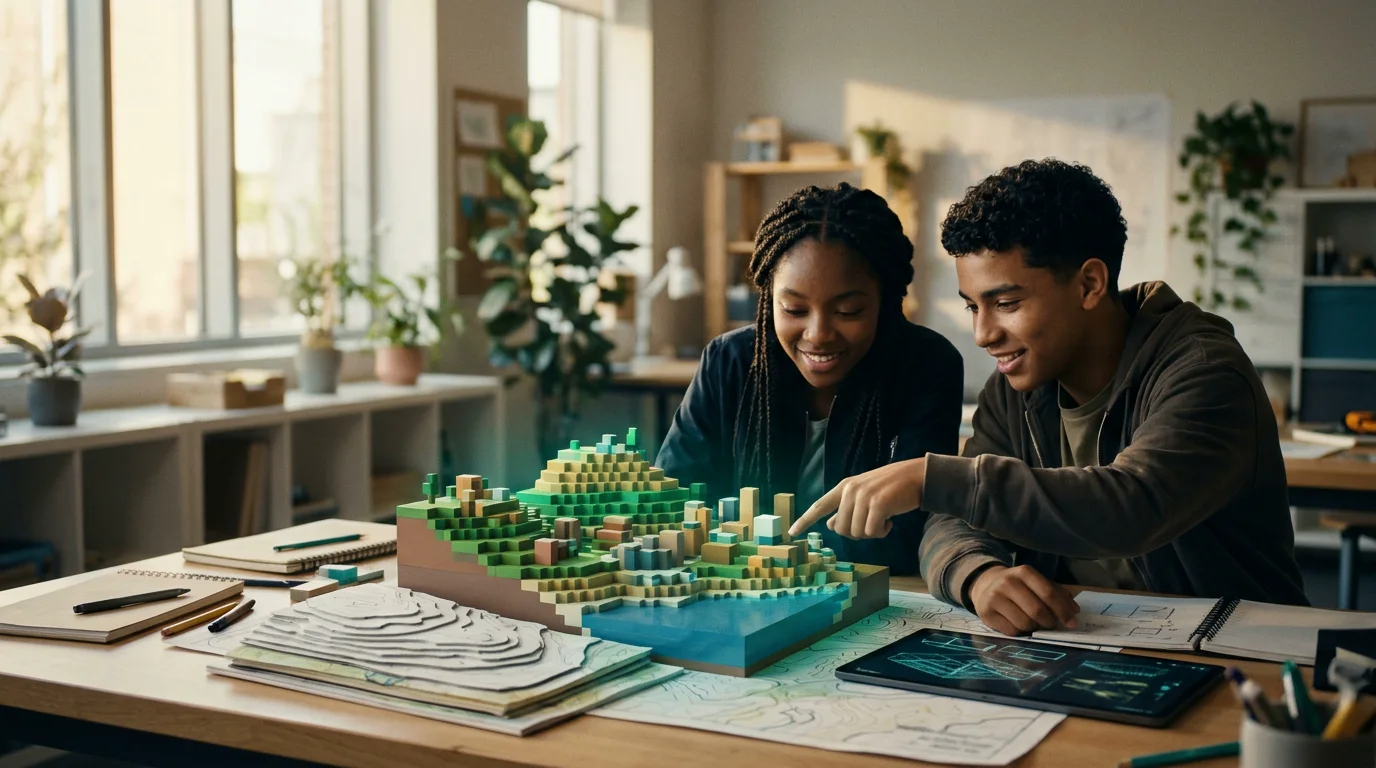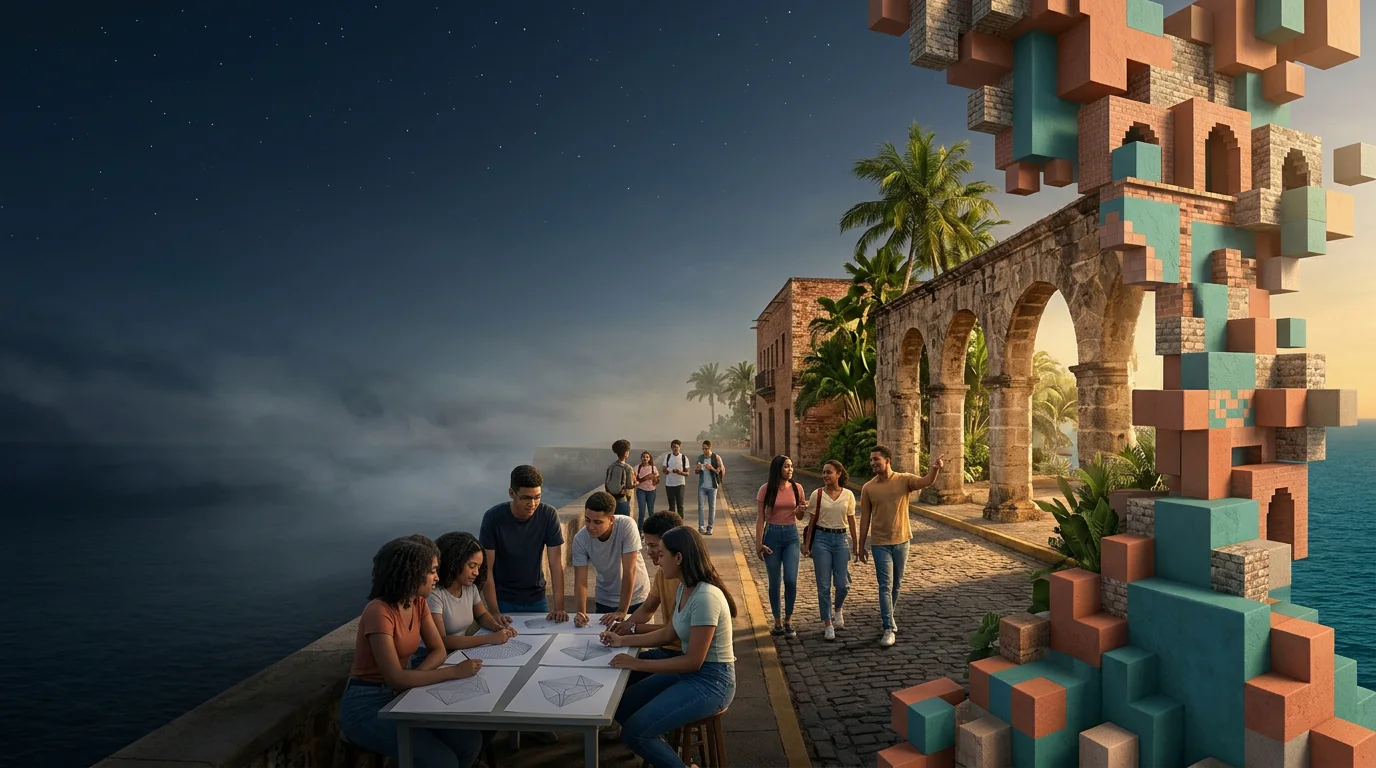

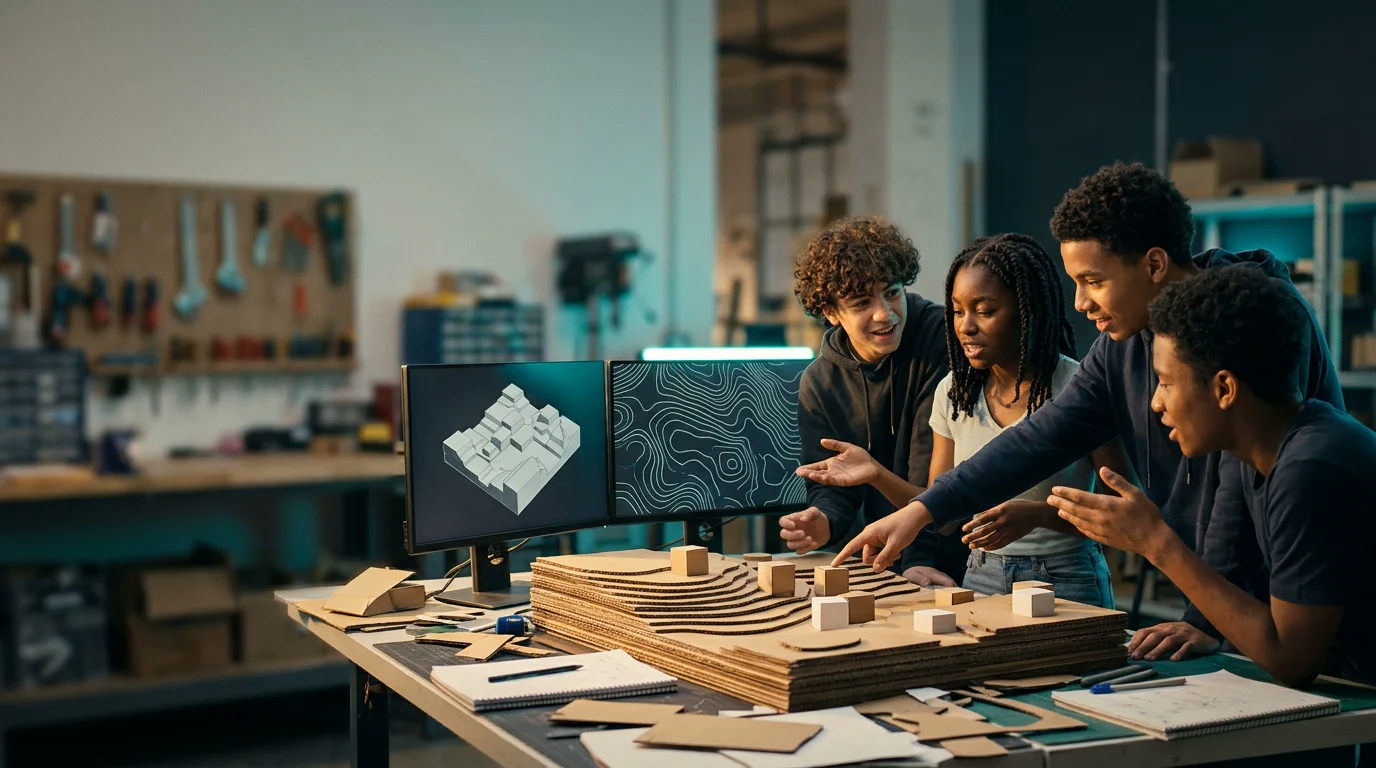
Participants collaborating around Minecraft Education screens, planning architectural solutions with generative AI.
Participant Request · Extension Track

aiLearning Challenge · Fall Edition

Minecraft Education Extension: Build the Solution Live

Born from the initiative of participating teams who asked to model challenges spatially: an official track that unites generative AI, real-world civic data, and block-by-block collaborative world-building. Teams prepare their base environment and construct their solution live during the Challenge.

Introduction to the Minecraft Education Extension for the aiLearning Challenge Fall Edition.

Pedagogical Rationale

From Abstract Prompts to Testable 3D Realities

Tackling complex civic, environmental, and infrastructure challenges requires more than composing text prompts or designing slides. Minecraft Education provides a tactile spatial testbed where AI-assisted research confronts physical geometry, scale, human flow, and structural constraints.

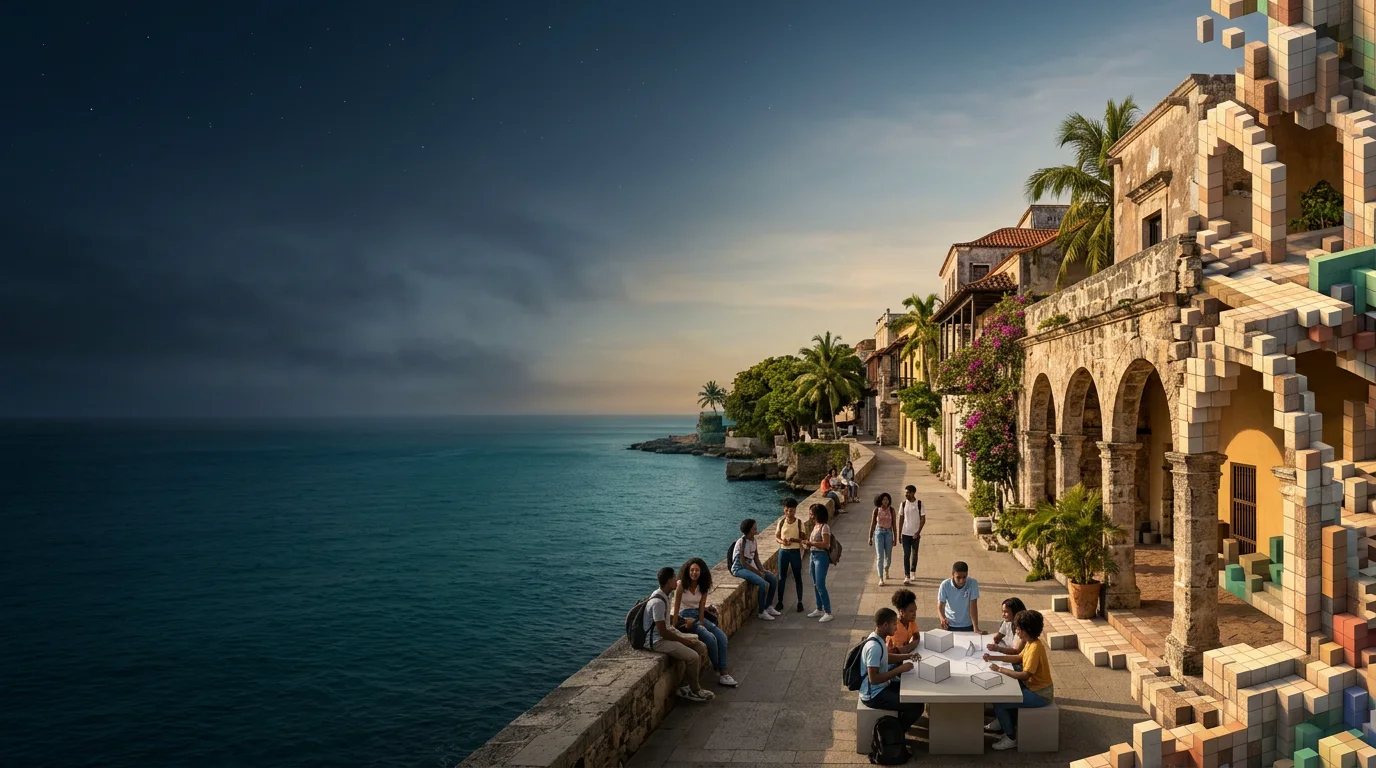
Learners in a creative AI workshop collaborating on 3D Minecraft builds.
Participants collaborating in real time: combining generative AI prompts, civic datasets, and Minecraft Education world-building.

From Abstract Words to Testable Spaces

In a text chat or slide presentation, declaring an urban flood barrier, a solar microgrid, or a walkable transit corridor is deceptively effortless. Spatial modeling immediately exposes what verbal claims can conceal: topographical elevation changes, drainage vectors, foundation clearance, pedestrian walkability, and architectural scale. When learners build in three dimensions, every hypothesis is subjected to tangible geometry and spatial logic.
Abstract assertions turn into navigable prototypes that can be inspected, traversed, and stress-tested.

Productive Friction & Shared Ownership

In alignment with Smoother's principle of desirable difficulty (productive friction), collaborative world-building transforms problem-solving from passive screen-watching into active negotiation. Rather than a single participant typing prompts in isolation, placing every block inside a shared multi-user canvas demands continuous coordination, spatial consensus, and team role distribution. Every teammate leaves their mark on the physical structure, creating genuine shared ownership of the solution.

Collaboration evolves from passive document reviews into synchronized, high-engagement craftsmanship.

Creative AI Meets Real-World Grounding

AI is never a shortcut that replaces human discernment; it serves as a cognitive amplifier. Teams use AI models to analyze complex geospatial datasets, evaluate municipal zoning frameworks, suggest bioclimatic building configurations, and write automation scripts for autonomous builder agents. The human team retains full creative control, critical evaluation, and ethical responsibility while constructing a living prototype defended live before the jury.

AI accelerates research and structural synthesis; human learners govern design, ethics, and live execution.

Application Domains

Six Environments for Real and Imagined Impact

Whether reconstructing an existing neighborhood to resolve an urgent civic challenge or architecting a speculative testbed for future systems, the extension accommodates diverse project domains.

Cities, Neighborhoods & Historic Districts

Cities, Neighborhoods & Historic Districts

Urban planning, public accessibility, walkability, and heritage conservation in historic centers such as Santo Domingo's Ciudad Colonial.

  • Pedestrianization and traffic-calming interventions in dense urban cores
  • Heritage preservation and adaptive reuse of colonial streetscapes
  • Inclusive public plazas with universal accessibility and urban canopy shade
Coasts, Beaches & Riverbanks

Coasts, Beaches & Riverbanks

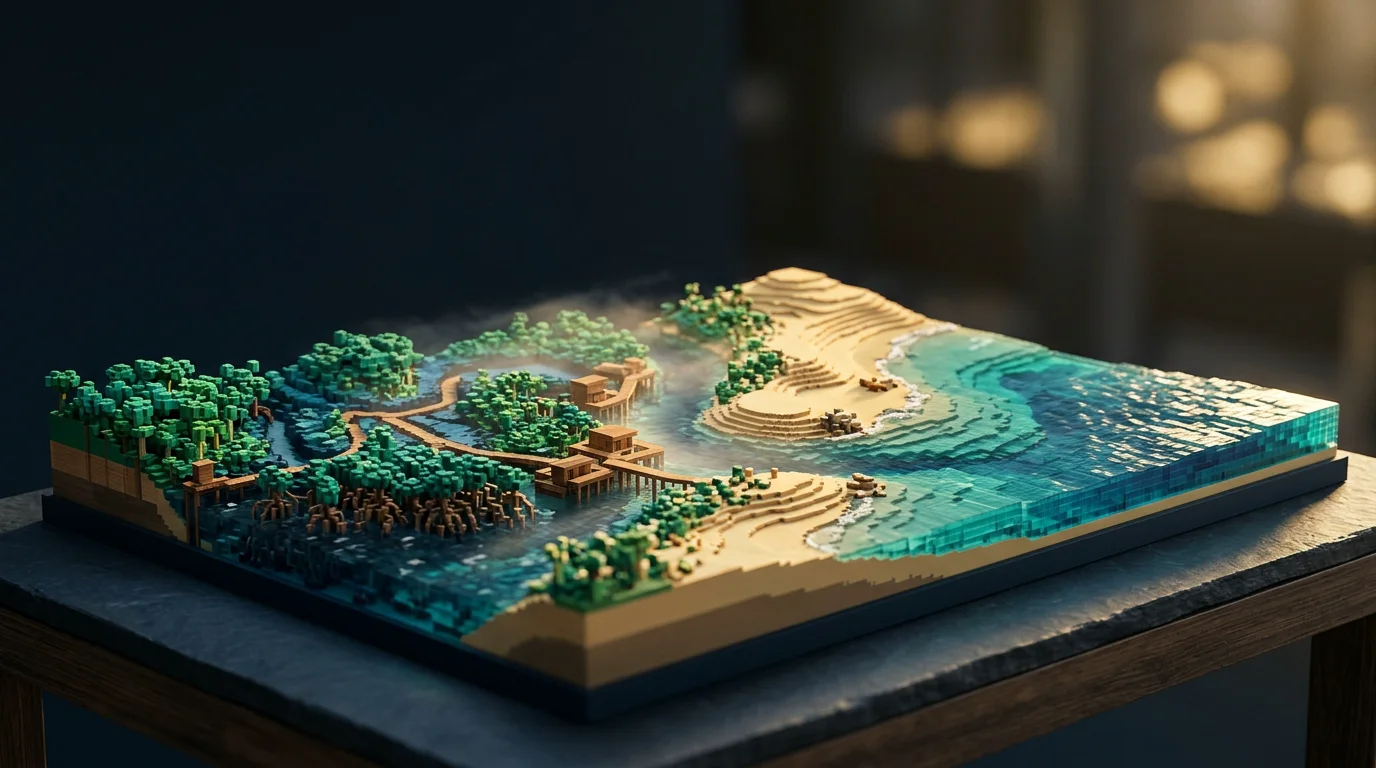
Mitigating coastal erosion, marine ecosystem degradation, and river basin vulnerability through nature-based engineering solutions.

  • Mangrove restoration and living breakwaters against storm surges
  • Riverbank stabilization and bio-filtration along urban waterways
  • Sustainable beachfront infrastructure minimizing marine habitat disruption
Schools & Learning Campuses

Schools & Learning Campuses

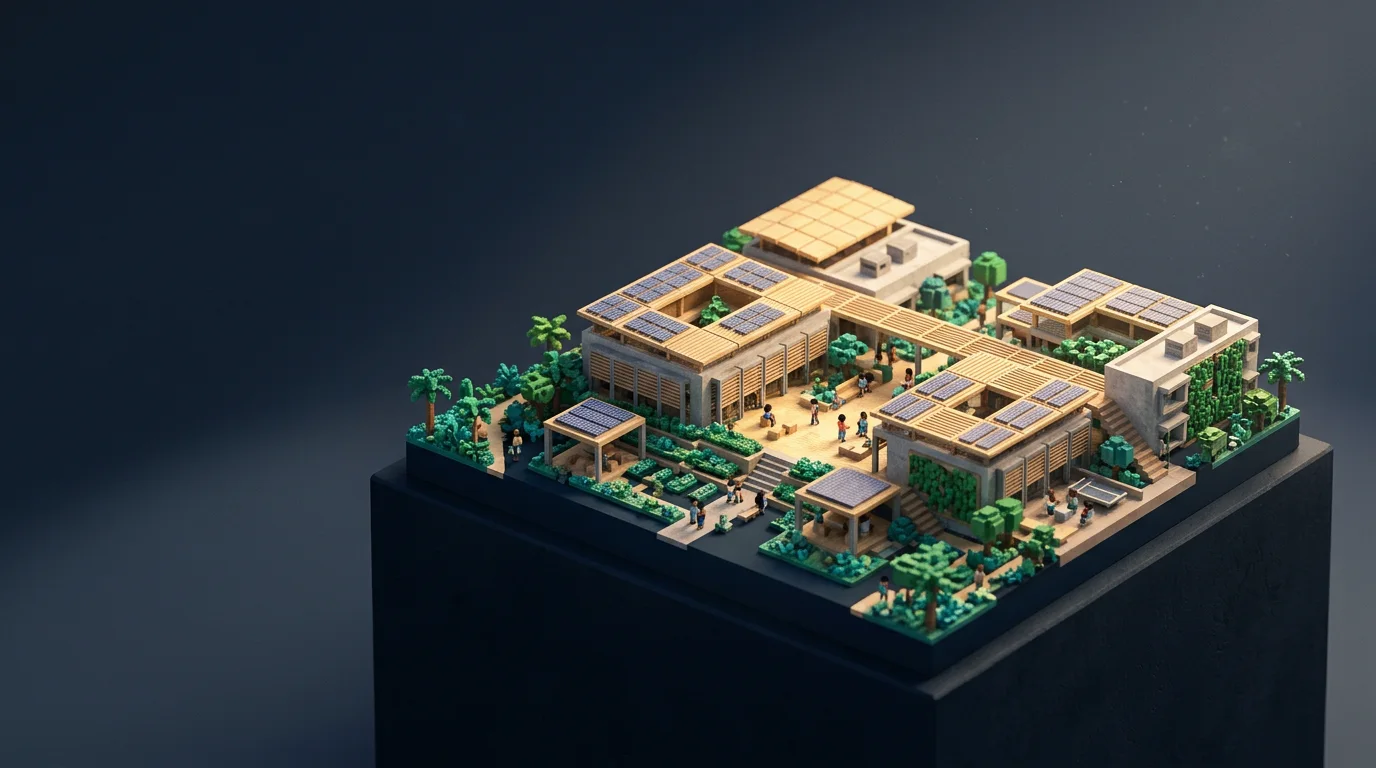
Designing future-ready, safe, and bioclimatic educational environments that foster community wellbeing and universal access.

  • Bioclimatic campus architecture maximizing cross-ventilation and daylight
  • Inclusive recreational spaces accommodating diverse sensory and mobility needs
  • Protected school arrival zones and traffic-separated pedestrian paths
Roads, Corridors & Traffic Dynamics

Roads, Corridors & Traffic Dynamics

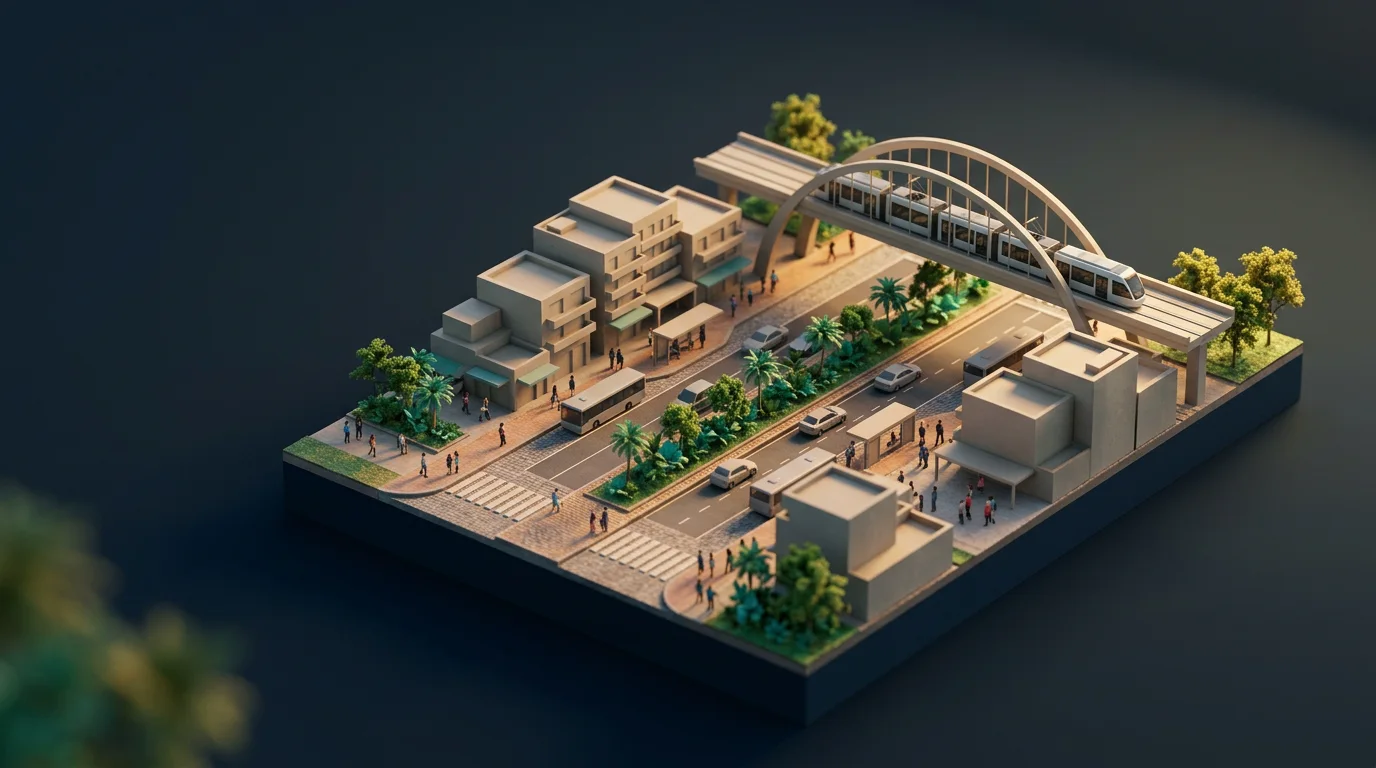
Reimagining urban transit corridors to resolve congestion bottlenecks, safeguard pedestrians, and prioritize public transit equity.

  • Dedicated multimodal corridors integrating rapid transit, bicycles, and walkways
  • Intersection geometric redesigns eliminating pedestrian conflict points
  • Priority emergency vehicle bypass routes for medical and disaster response
Sustainability & Resource Systems

Sustainability & Resource Systems

Closed-loop circular systems for rainwater harvesting, clean energy microgrids, and urban heat island mitigation.

  • Decentralized rainwater collection and graywater bio-filtration networks
  • Solar-canopy microgrids with storage for community centers and emergency hubs
  • Urban tree canopy grids and vegetative green roofs reducing ambient heat
Imagined Worlds as Testbeds

Imagined Worlds as Testbeds

Purpose-built speculative environments when testing complex systemic challenges unconstrained by existing legacy infrastructure.

  • Off-grid resilient settlements responding to extreme climate shifts
  • Closed-loop resource management simulations for isolated ecosystems
  • Novel circular economic models simulated through custom agent interactions

Methodology & Preparation

Recreating Real-World Environments with AI and Open Data

Participating teams receive comprehensive step-by-step guidance on combining generative AI with geographic and municipal open data to model real locations with fidelity.

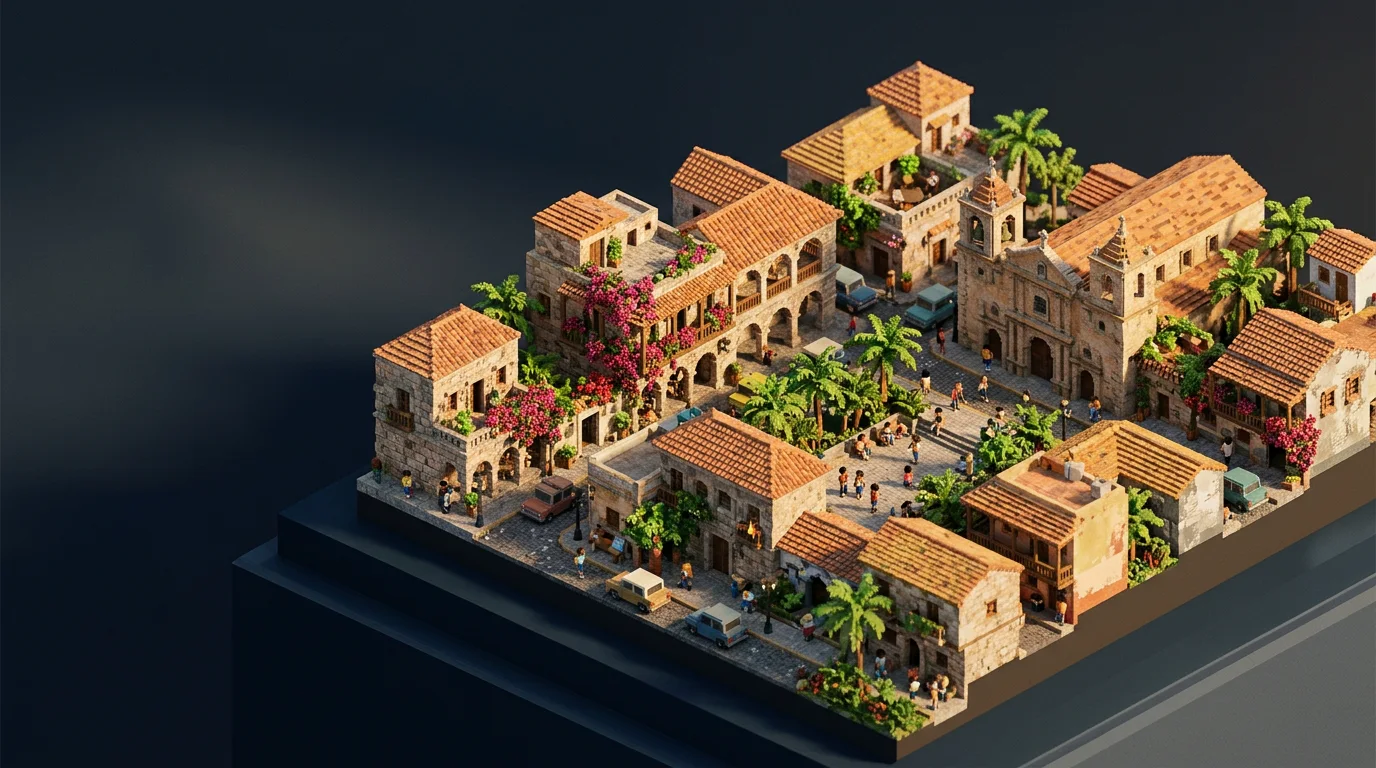
A detailed 3D Minecraft recreation of an urban and coastal environment based on open geographic data.
From open civic data to an interactive 3D canvas: modeling real topography and infrastructure before Challenge day.
01

Sourcing Civic & Geospatial Data

Teams assemble satellite imagery, topographical elevation contours, municipal GIS layers, open street grids, and historical survey maps of their target locality.

Guidance outlines reputable open data portals, legal standards, and coordinate extraction for locations across the Dominican Republic and the wider region.

02

AI-Assisted Spatial Translation

Applying structured prompt sequences to convert real geographic dimensions and terrain slopes into block-scale dimensional tables and material palettes.

Generative models assist teams in converting metric measurements to Minecraft block scales, identifying appropriate voxel textures, and structuring builder scripts.

03

Terraforming the Base Canvas

Constructing the baseline topography, existing waterways, road layouts, and existing buildings in Minecraft Education prior to the event.

Teams can use MakeCode or Python automation agents to lay repetitive elevation contours, ensuring an authentic physical foundation before Challenge day.

04

Ready for the Sealed Brief

Teams arrive at the live event with their clean base world ready, awaiting the sealed brief that dictates their live intervention.

The base world must strictly represent the existing reality as it stands today; no planned solutions or modifications may be placed beforehand.

Integrity & Fair Play

Bring Your World. Build the Solution Live.

Competition integrity relies on a transparent boundary between context preparation and live solution generation. The world is the context; the intervention is the solution.

Microsoft makes Minecraft Education available to registered teams starting November 15, 2026 to prepare and calibrate their base worlds.
Permitted · Pre-Event Preparation

Pre-Existing Base Worlds

Teams are encouraged to model and verify the physical reality of their chosen environment in advance.

  • Accurate 1:1 or scaled recreations of real neighborhoods, school campuses, coastal strips, or riverbanks as they currently exist today.
  • Consolidated base infrastructure: terrain elevation, street contours, existing structures, and waterways.
  • Importing and calibrating the world in Minecraft Education starting November 15, 2026.
  • Rehearsing camera exploration paths and preparing oral defense documentation for the jury.
Not Permitted · Live-Build Rule

Pre-Made Solutions & Interventions

No solution intervention may be designed, pre-built, or placed prior to opening the sealed brief.

  • Pre-building solution elements (no new flood barriers, transit bridges, community facilities, or solar arrays placed in advance).
  • Importing pre-saved schematics or automated scripts designed to deploy pre-packaged solutions.
  • Bypassing the Human-First Window: teams must complete initial problem formulation and debate without AI on Challenge morning.
  • Modifying base environments to address speculative challenge topics before the official sealed brief is unveiled on Saturday 5 December 2026.

Official Curriculum

Curated Minecraft AI Foundations & Learning Pathways

Prepare your team using official educational pathways developed by Minecraft Education and Microsoft, covering AI literacy, computational thinking, and agent programming.

Core Literacy

Minecraft AI Foundations and Literacy

Comprehensive introduction to artificial intelligence, machine learning principles, neural concepts, and responsible AI ethics inside Minecraft Education.

Explore AI Foundations
Agent Coding

Minecraft Hour of AI: The First Night

Hands-on guided experience introducing algorithmic logic and problem-solving through agent coding to protect communities and build resilience.

Start The First Night
Generative AI

Minecraft Hour of AI: Generation AI

Interactive lesson exploring generative AI patterns, dataset bias, prompt formulation, and responsible creation using intelligent assistants.

Launch Generation AI

Get Involved

Ready to Build Solutions That Stand in Three Dimensions?

Join the Fall Edition of the aiLearning Challenge. Bring your team, prepare your base world, and demonstrate the power of collaborative human ingenuity amplified by AI.

Comprehensive AI learning designed for educators, by educators. From awareness to mastery.