
It is not a competition
Nothing here is judged, scored or ranked. These projects do not enter the Challenge and are not compared with the teams that compete. They are shown because they are worth seeing.
aiLearning Challenge
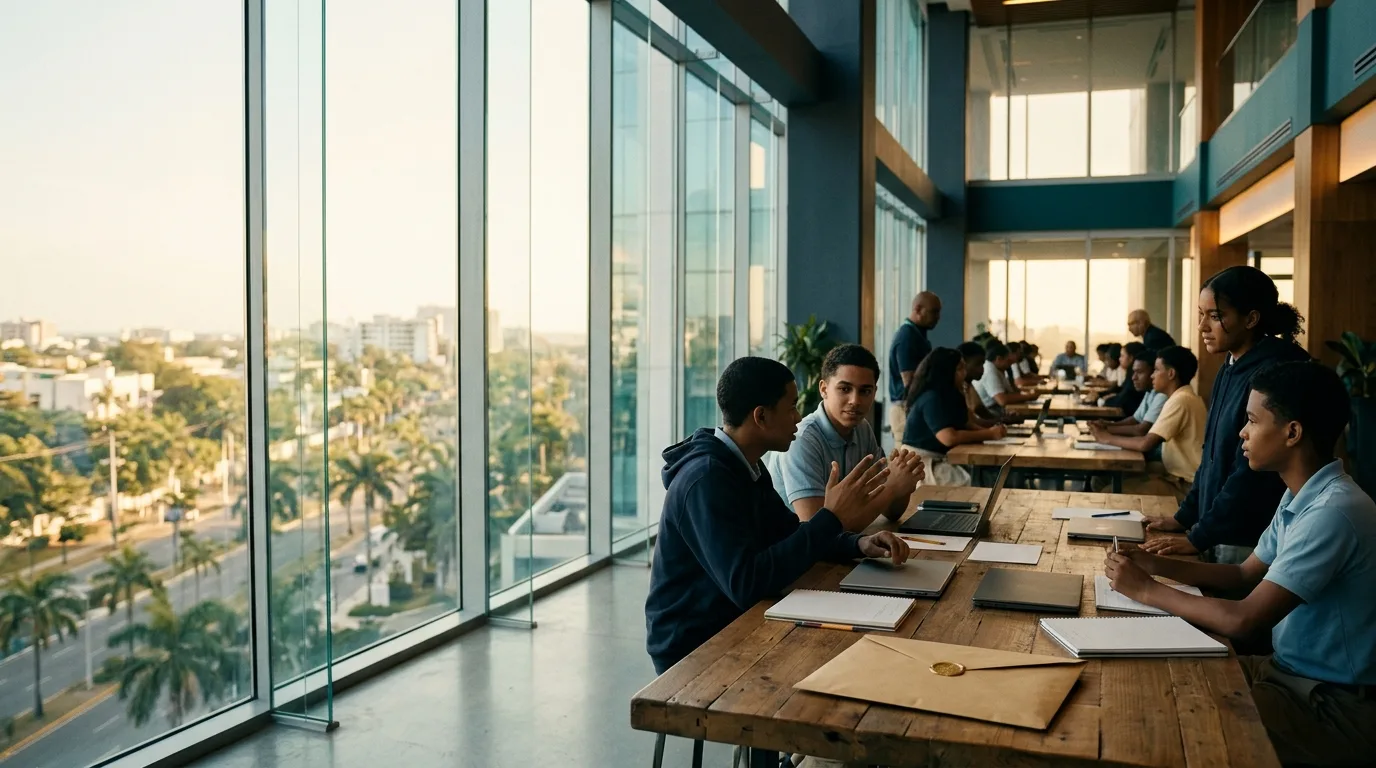
One day, one sealed brief, finalists who have earned their place — and judges in the room who will ask them how they decided.
The shape of the day is fixed; the brief is not. Nobody sees it before the clock starts — including the educators.
 01
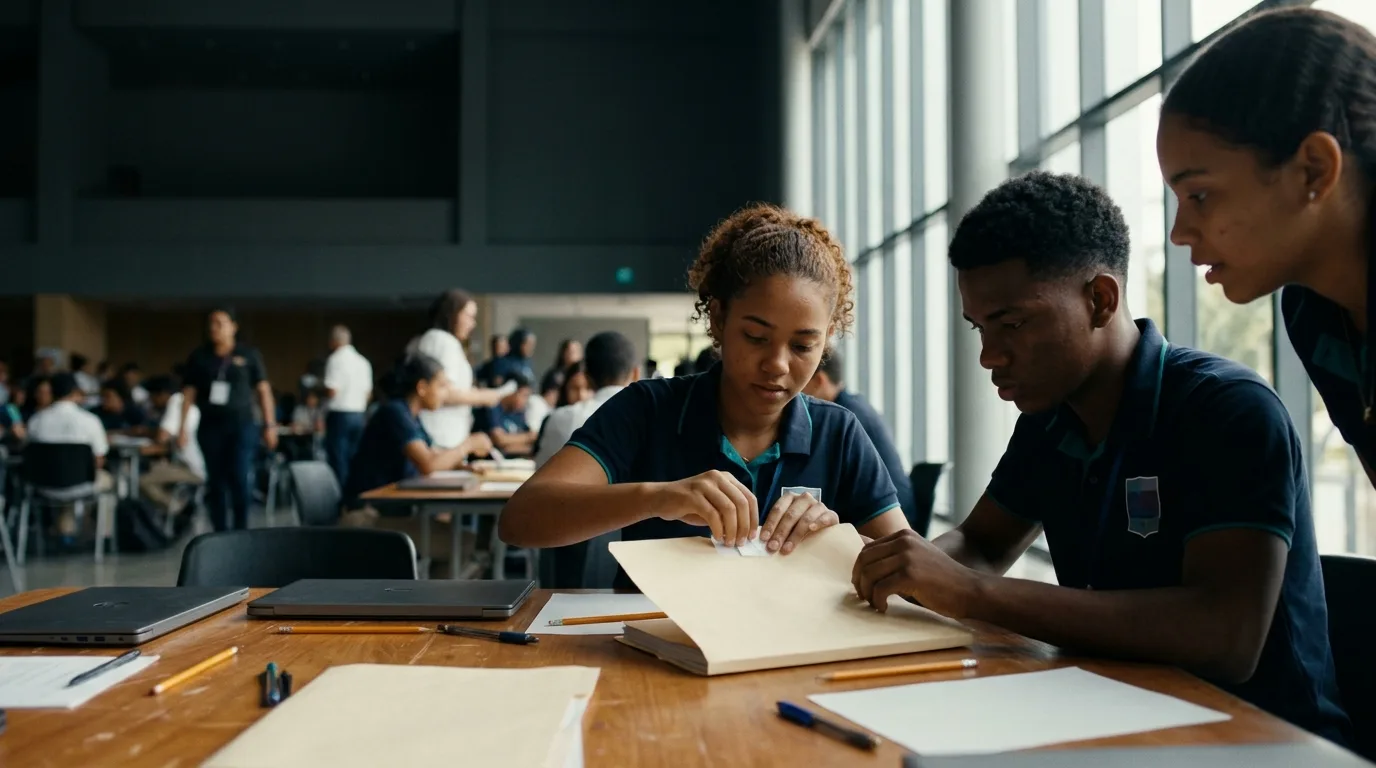
Open, ambiguous, anchored in a real context. Deliberately open enough that two teams can read it in two legitimate ways.
 02
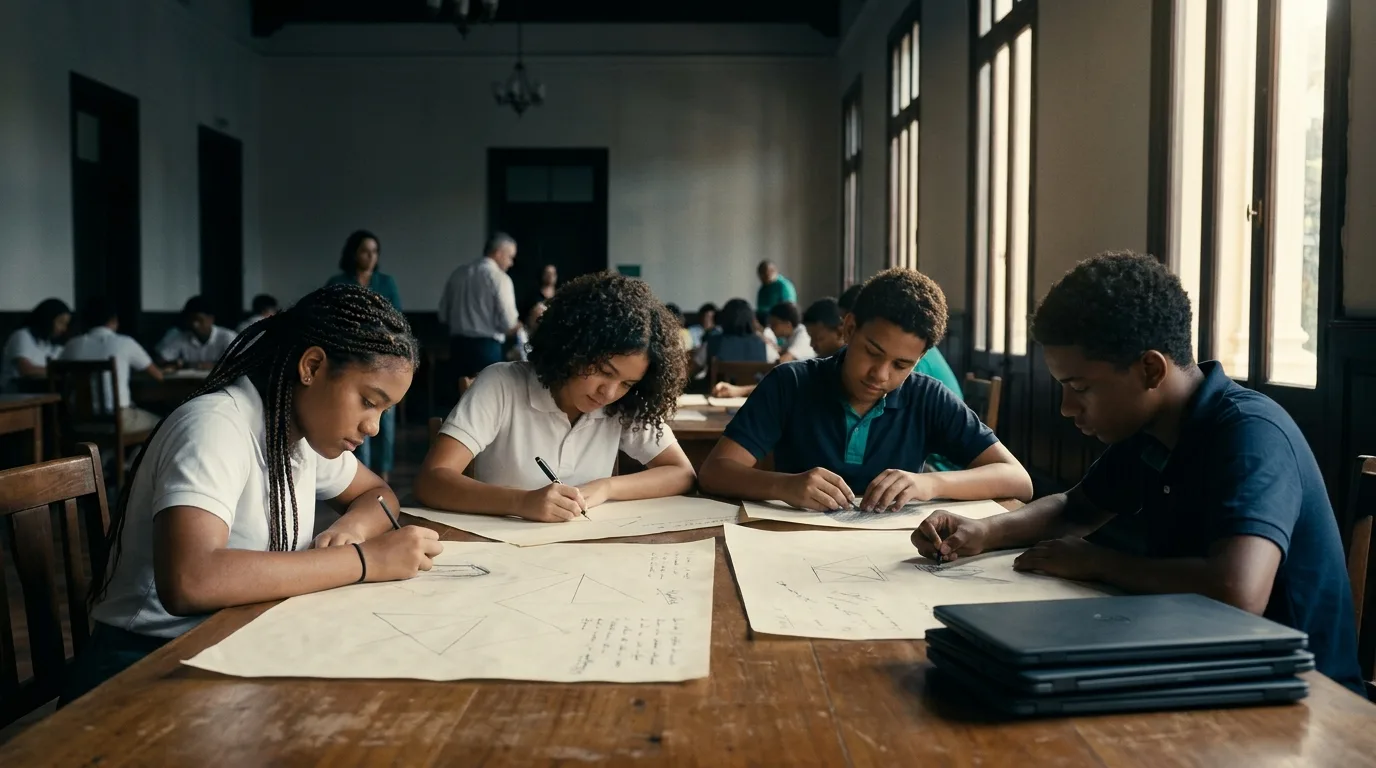
Each person thinks, writes or sketches alone before any tool is opened. Those pages are kept. It is where a team finds out what it actually thinks.
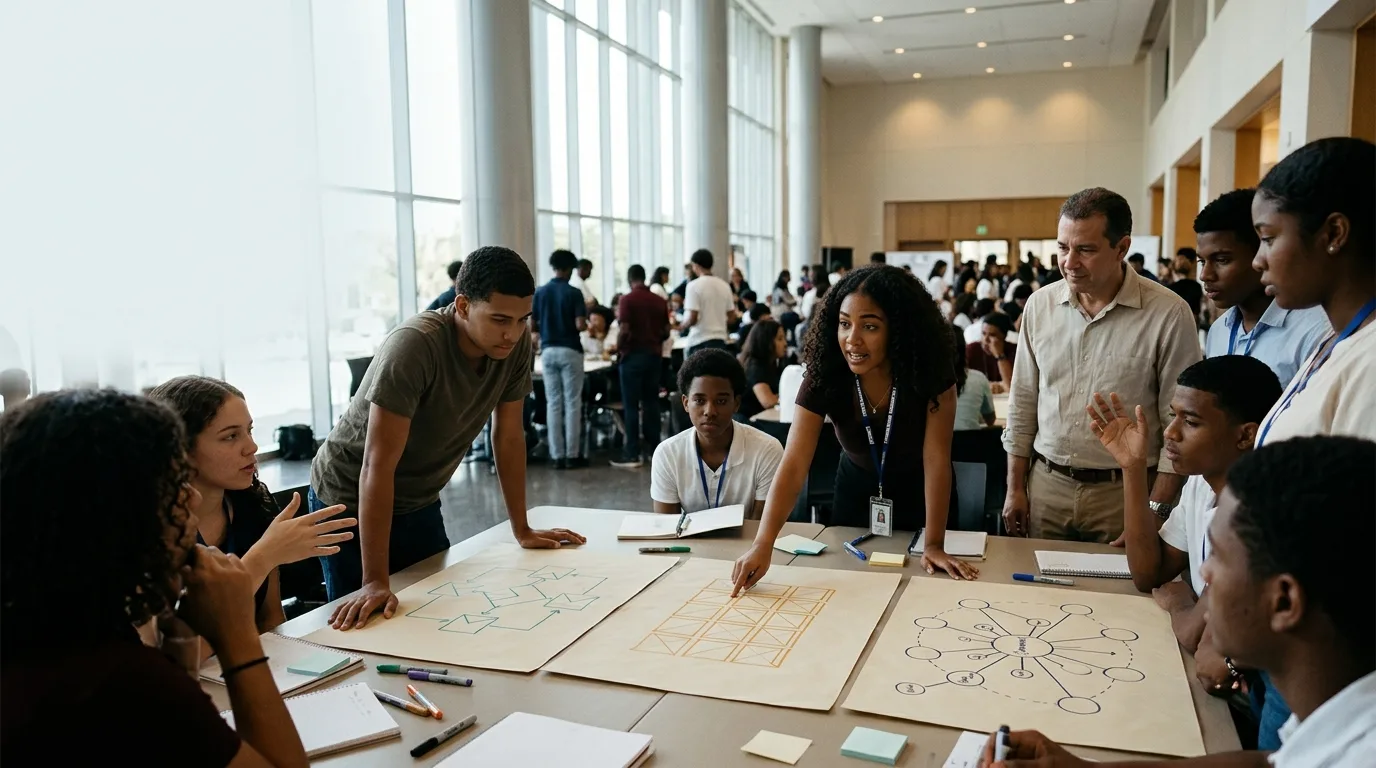 03
Not three variants of one idea — three approaches that optimise for different things, each with its reason. The final concept has to be chosen from a possibility space, not accepted from the first plausible answer.
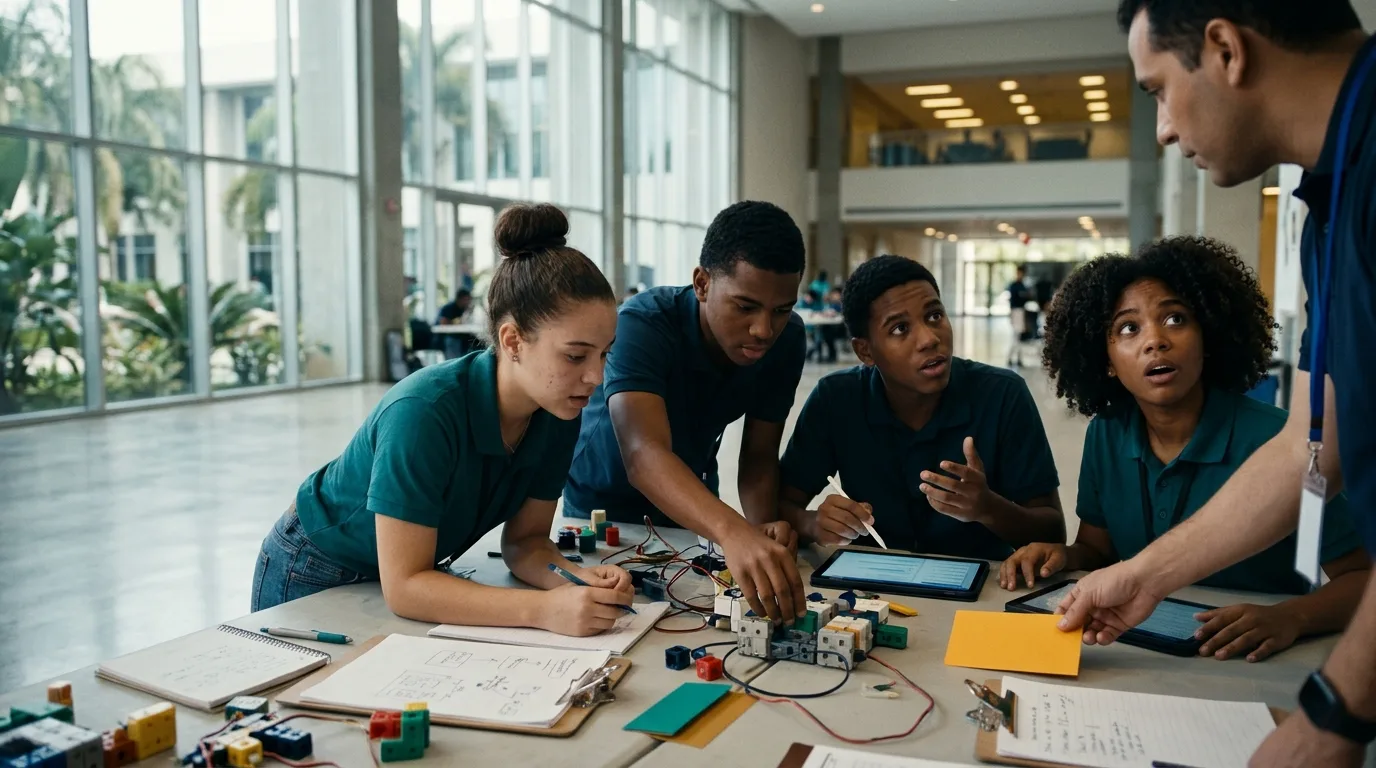 04
A twist, a new constraint, information that was not there at the start — delivered to every team at the same moment. Teams that only generated something will struggle here, because they do not understand what they built.
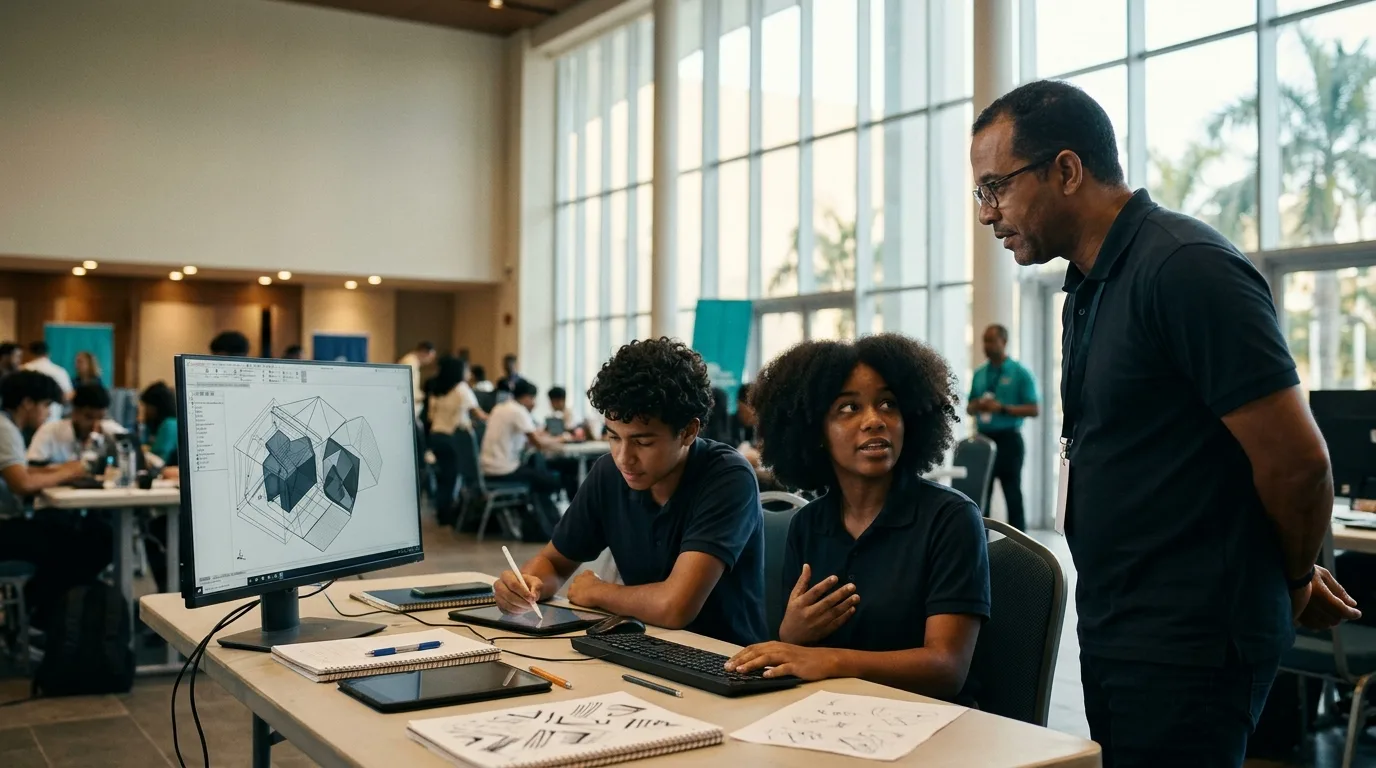 05
Equal consultation for every team. A mentor may ask anything and may not type, draw or decide.
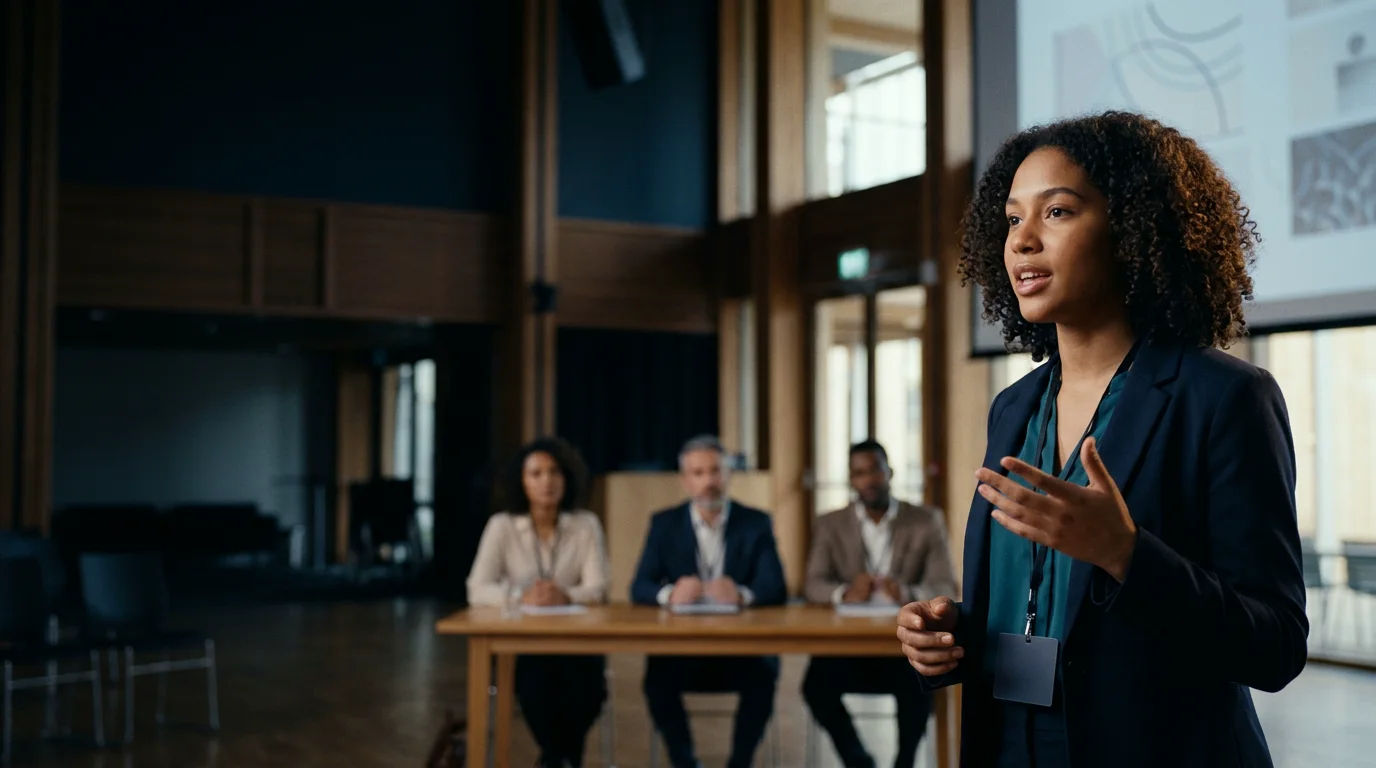 06
Teams show what they made and answer the judges. A team that cannot explain its decisions did not make them. This is a gate, not a score.
Half an hour after lunch belongs to teams that are not competing. Students, teams, schools and their educators show a project of their own built with AI — about five minutes each, in their own space at the venue.
Nothing here is judged, scored or ranked. These projects do not enter the Challenge and are not compared with the teams that compete. They are shown because they are worth seeing.
Enough to show what it does and how AI helped build it. The window holds a handful of projects, so the space is requested in advance.
A table, a screen, a power socket, floor space — tell us what your project needs and it is ready when you arrive.
A student team with its educator, a school, a Learning Facilitator or a mentor. Teams that are competing may not: that day their build is sealed until the Live Defense.
The request carries the project or team name, the school, how many of you there are and an adult's e-mail address — never a minor's name, initials or address. The school knows who is behind the team; this site does not need to.
The shape of the day is fixed and it is the same for every team. The brief is not: nobody sees it until the clock starts.
| Time | Runs | Block |
|---|---|---|
| 9:00 | 30 min | Arrival and check-in Teams check in. Teams working in Minecraft Education hand in their base canvas and its snapshot from 8:30. |
| 9:30 | 15 min | Opening The rules of the room, and the mode declaration: AI-Assisted, Natural Intelligence or Mixed. It is recorded and it holds for the whole day. |
| 9:45 | 45 min | Phase 0 · Analyse, understand, formulate The sealed brief opens. No AI: each team states the problem in its own words and names what it does not know and what it is assuming. Those pages are kept. |
| 10:30 | 45 min | Phase 1 · Review, validate, improve Divergence Gate: three approaches that optimise for different things, not three versions of one idea. Process Gate: the team declares which framework it will work with, and why that one. |
| 11:15 | 15 min | Break The challenge clock stops. |
| 11:30 | 45 min | Phase 2 · Build the work plan Foundations, workflow, milestones and visible deliverables. |
| 12:15 | 45 min | Phase 3 · Build (first half) Mentor Marketplace: the same consultation for every team. A mentor may ask anything, and may not type, draw or decide. |
| 13:00 | 30 min | Lunch The challenge clock stops. |
| 13:30 | 30 min | Guest Showcase Teams that are not competing show what they have built with AI: about five minutes each, in their own space at the venue. The space is requested in advance. |
| 14:00 | 45 min | Phase 3 · Build (second half) The perturbation arrives, at the same moment for every team: a turn, a new constraint, or information that was not there at the start. |
| 14:45 | 45 min | Phase 4 · Communicate with understanding A three-minute Live Defense per team, devices off. Everyone speaks, not one spokesperson. |
| 15:30 | 15 min | Jury deliberation Teams are out of the room. |
| 15:45 | 15 min | Close The day closes with every team in the room. |
The order does not move. A block may run a few minutes long in the room and is recovered in the next one: what is fixed is the sequence, not the exact minute.
The finalists are not everyone who signed up. They arrive through three stages, and the preparation is open and free to any school that asks for it.
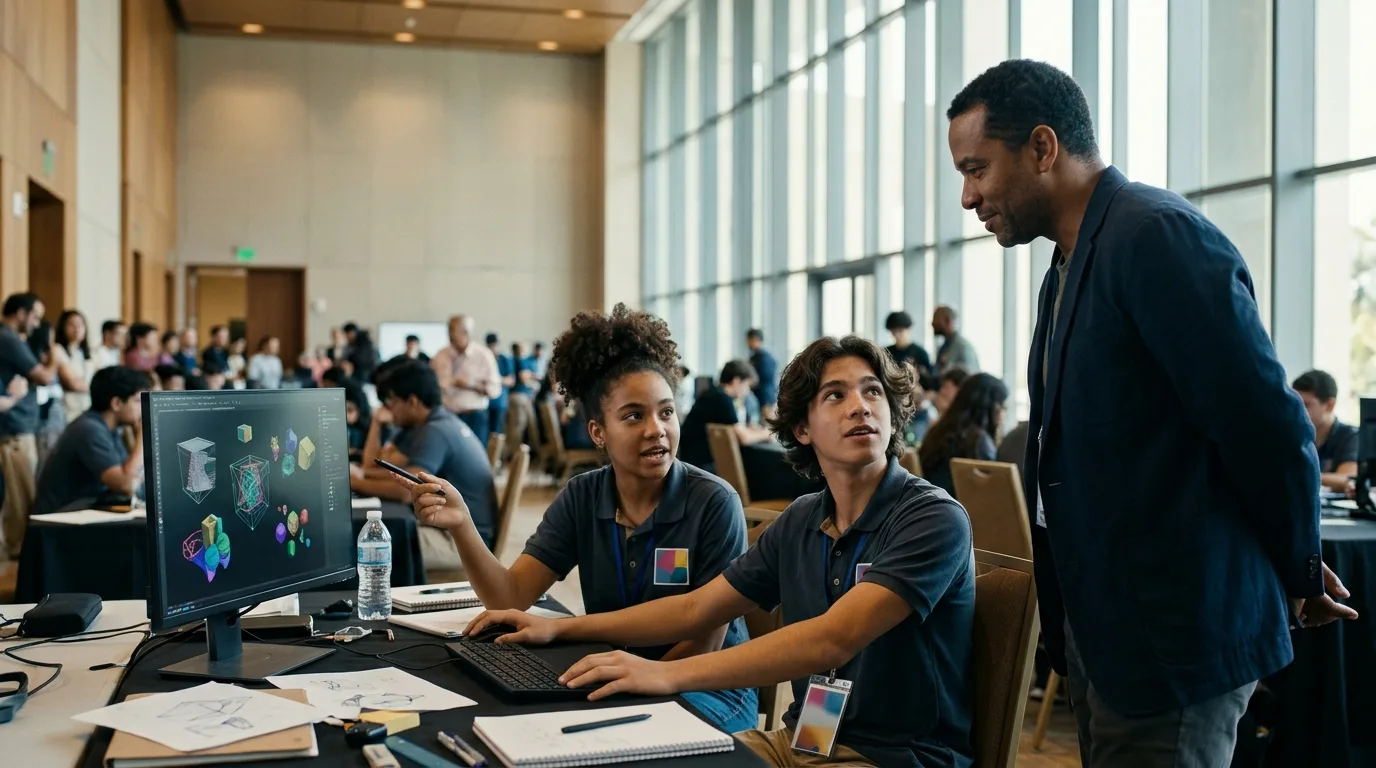 01
Educators run a full Challenge themselves as a team, hold a real defense, and practise the decisions they will have to make in the room — including the line between accompanying and doing the work. Someone who has never opened a generative tool is admitted on purpose.
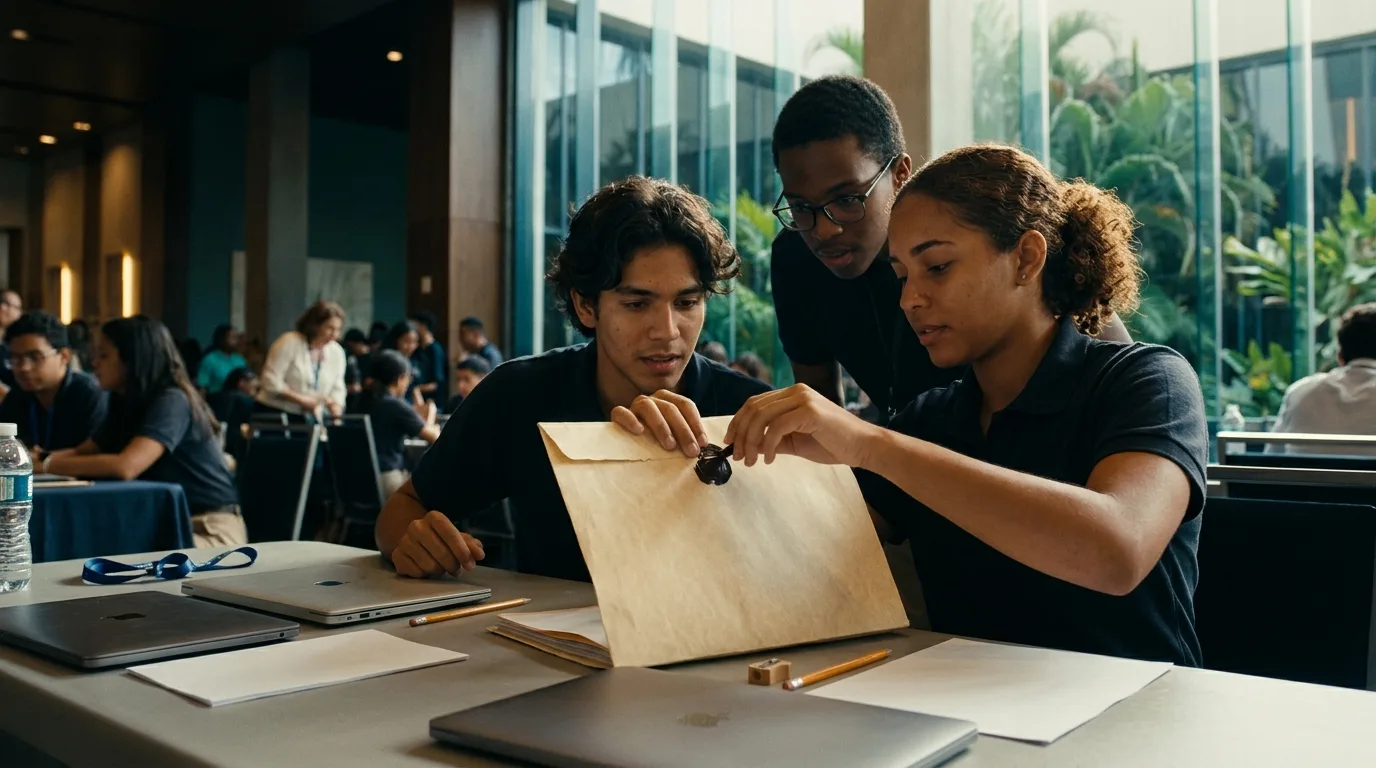 02
Short sessions with no score and no ranking, on decoy tasks deliberately unrelated to the edition, so that no team meets the format for the first time when the clock starts.
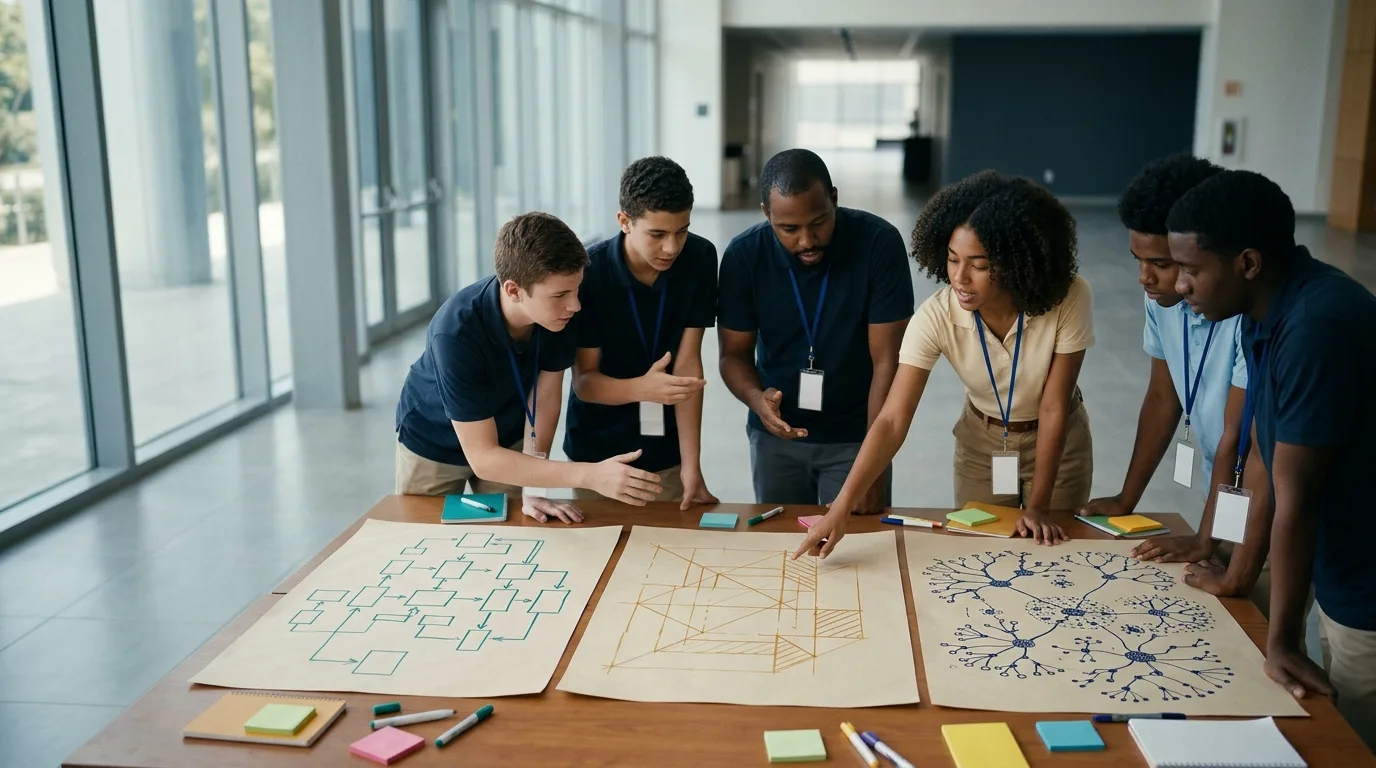 03
Teams advance on the profile of their work — the decisions they can account for, not a single number. No entry ever receives a composite score.
Taking part in the Challenge does not oblige anyone to use AI. A participant or a team who would rather solve the brief with their own intelligence may do so, and competes for the same awards.
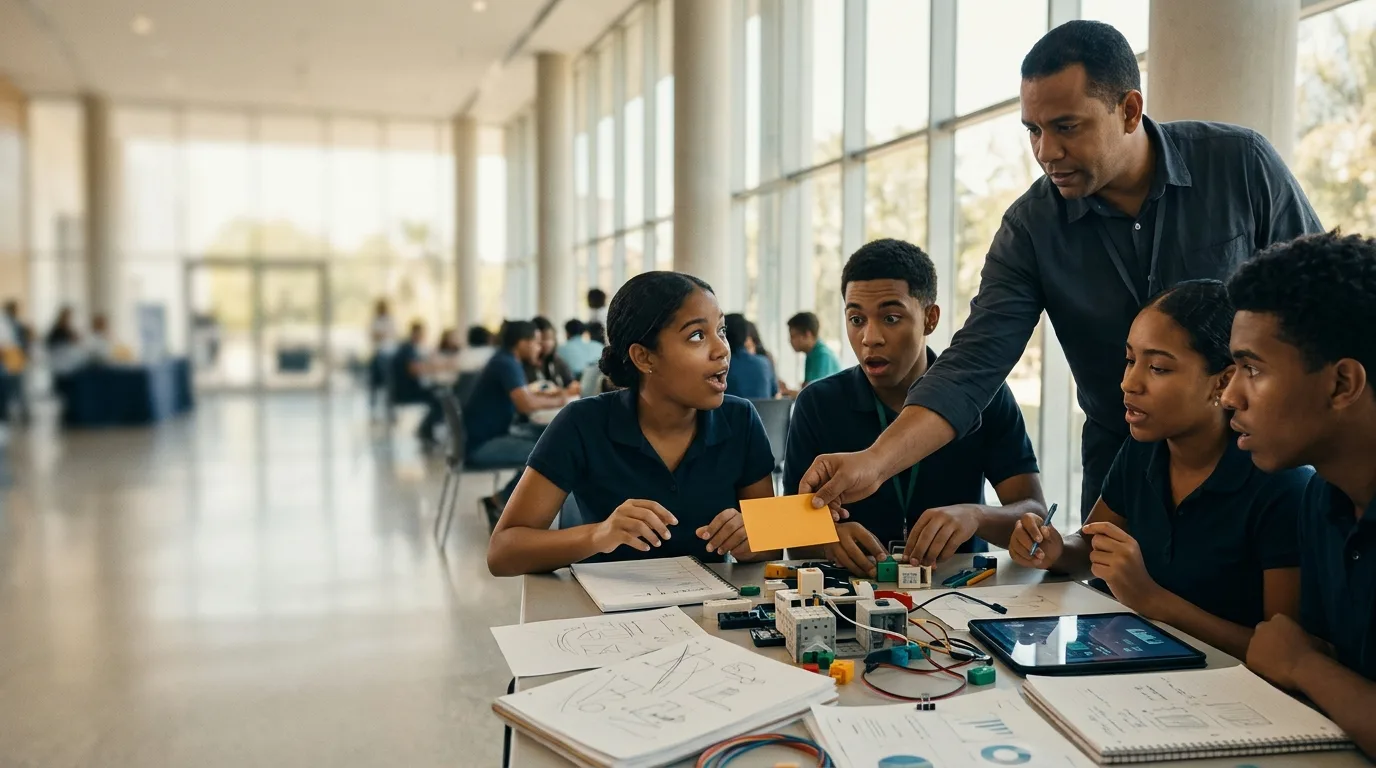
The usual mode: the person or the team works with AI tools that are free and available to everyone, audited before the event.
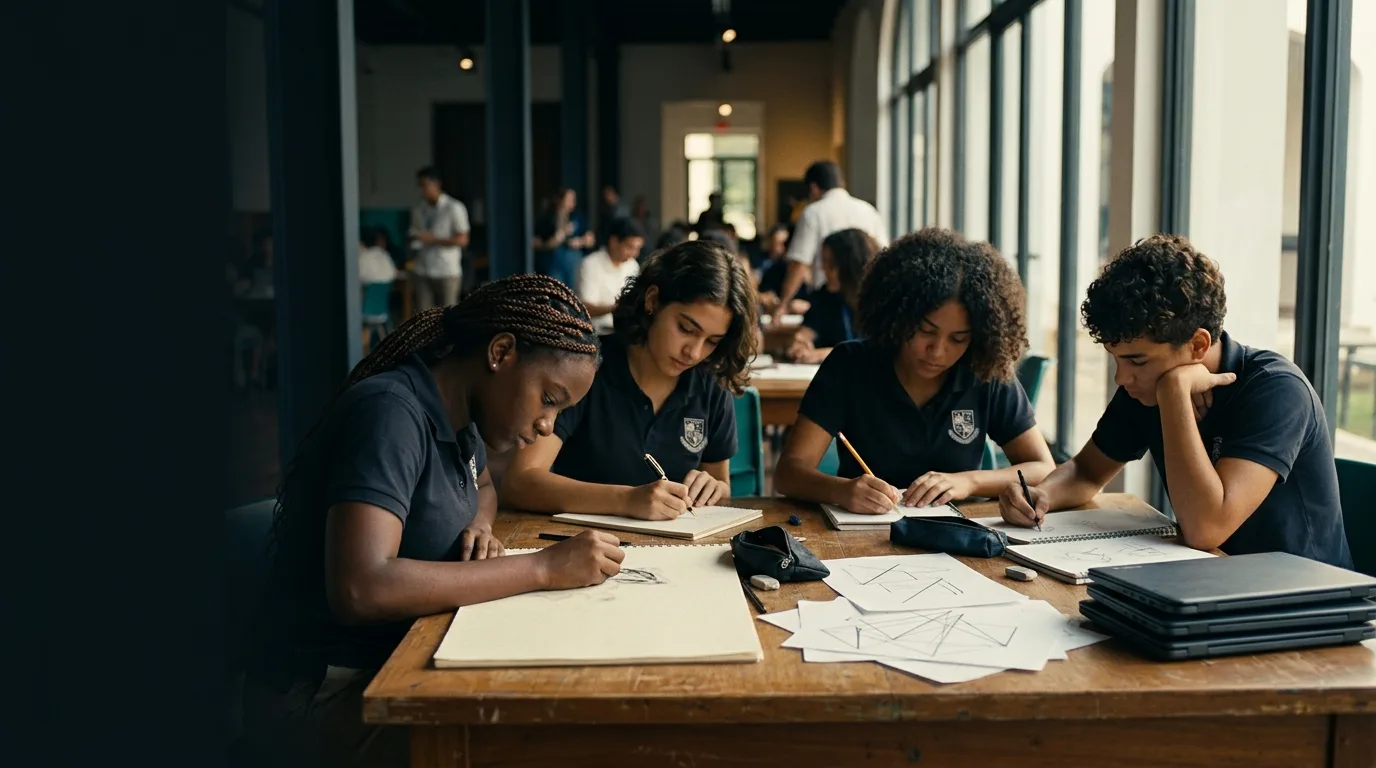
The person or the team solves the brief without AI. Same brief, same mid-course twist, same defense, same awards.
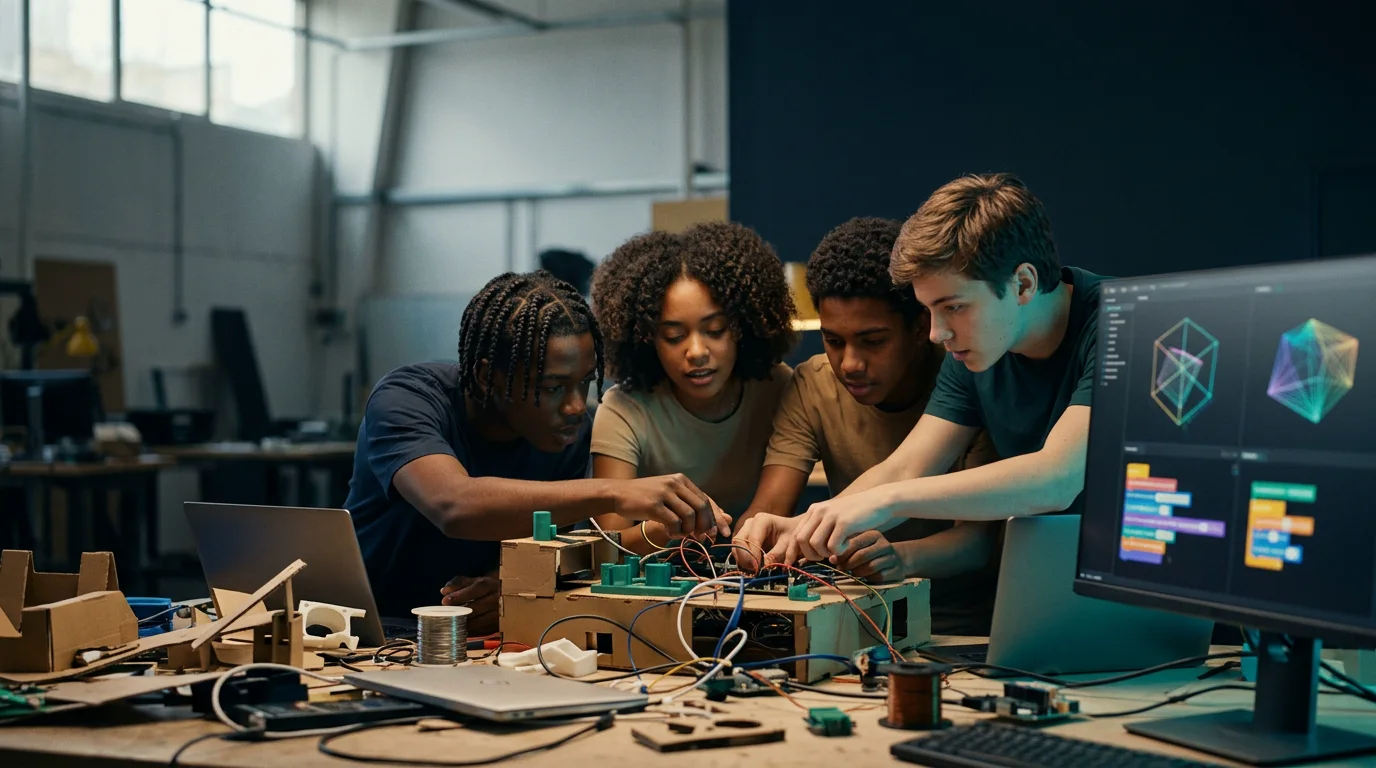
A team whose members choose differently: one or more contribute through their own Natural Intelligence while the rest work with AI.
The choice is declared at the start, together with the team’s framework declaration, and it binds for the event. A team declared Natural Intelligence that reaches for AI is re-classified — never disqualified — and the switch is logged and read as adaptation. Awards are the same for everyone, and Natural Intelligence entries that reach the finale receive a visible mention as well. There is no separate advancement category. The choice belongs to the participant: no site, school or sponsor assigns a mode, and nobody is steered into one. The full framework — the conditions in the room, the accompaniment, and how a re-classification is recorded — is published before the event.
Each finalist arrives with their team, their educators and their mentors, and they stay for the day. The work that reaches the room was built by people who prepared together for weeks, and the room is arranged so that shows.
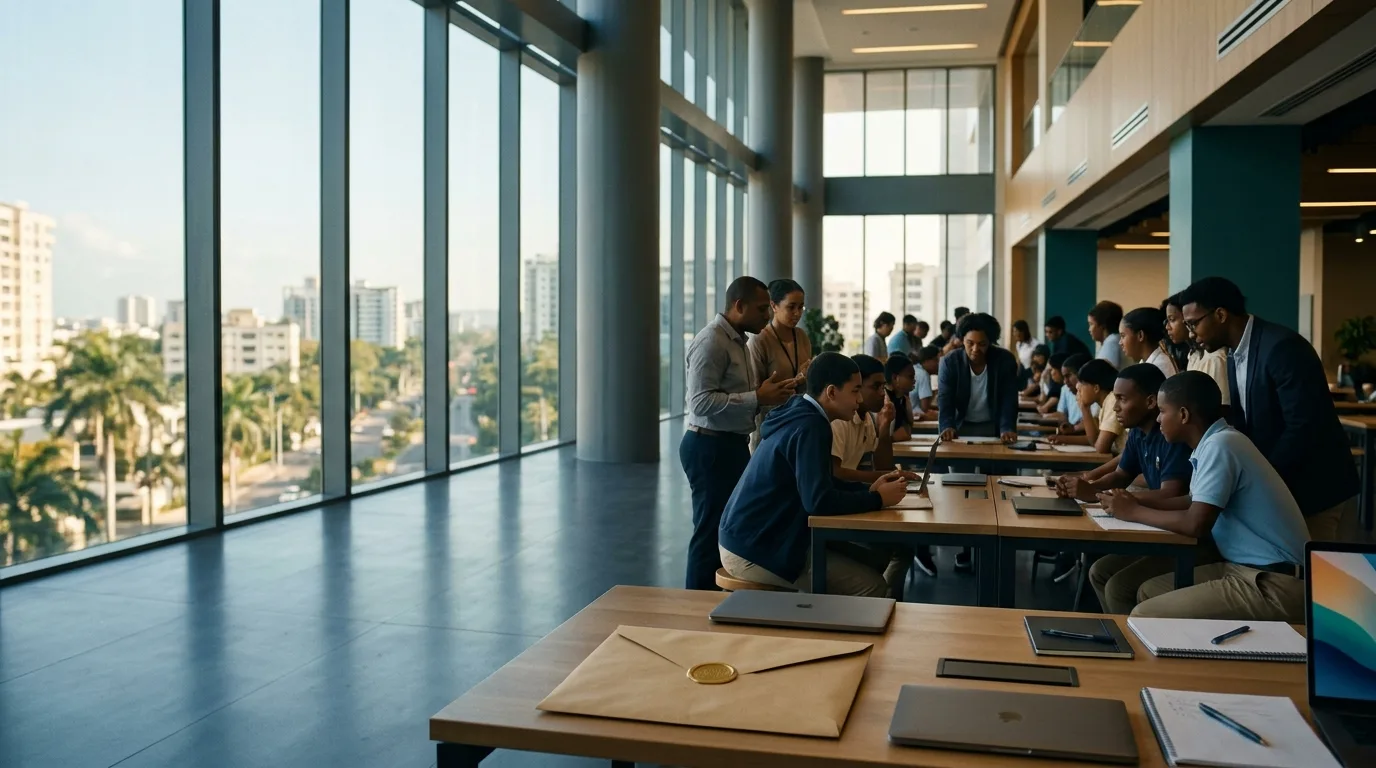
Teams can draw on two powerful extensions — free access starting 15 November 2026, with no vendor lock-in and open tool neutrality.
 Collaboration · Available from 15 Nov
Free access to six integrated educational tools across 4 deliberate moments following the Initial Human Window: Copilot Chat Educativo, the Study and Learn Agent, M365 Copilot for adults, Copilot Agents, Speaker Coach in PowerPoint, Minecraft Education, and Azure for Students Starter.
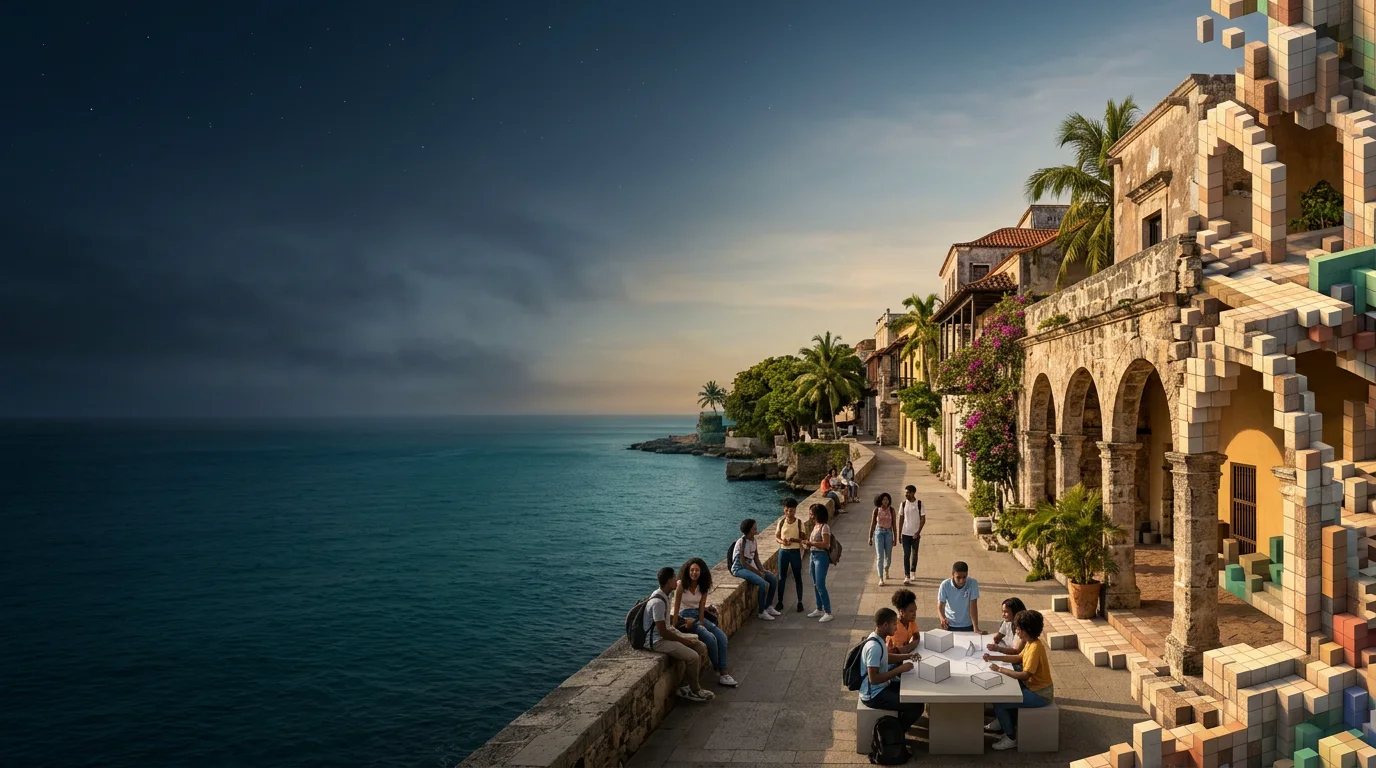 Extension · By Team Request
An optional 3D spatial testbed for sustainability, urban mobility, and Caribbean coastal resilience. Teams can use AI and real geographic data to prepare base worlds in advance, while building and defending the solution live on Challenge day.
If your school wants to take part, or you want to be in the room on 5 December, tell us and we will come back to you with the detail.
Comprehensive AI learning designed for educators, by educators. From awareness to mastery.