
Grow with AI · Educational institution
What the institution approves and supervises
A one-year Learning Program for 10th and 11th grade: one 45-minute Unit a week, in class, in teams of three. Participants learn to steer generative artificial intelligence tools toward an intention of their own: they write a prompt by hand, use it to produce a short piece, review it against explicit criteria and try again.
Hands-on, personal and fun: a year of capabilities for the future, designed and led by AI and education experts with years of classroom practice.
What is asked of the institution
- Approve the program as a one-school-year learning proposal designed for this group, open to review, adjustment and stopping at any time. Every piece is reviewed against explicit criteria; the program issues its own certificate and is not presented as a proven method.
- Name the responsible adult, known to the group and to the families, to whom anything uncomfortable is reported, including something produced by a tool.
- Review, adjust and sign the note and consent form for families in its own copy, with the bracketed fields completed by the school.
- Supervise safeguarding: no AI accounts in minors’ names, no personal data in any prompt, pieces that stay in the classroom, publication only with written consent piece by piece.
- A space and 45 minutes a week, a projector and the adult’s account. Nothing has to be bought; tools are named as categories, never as brands.
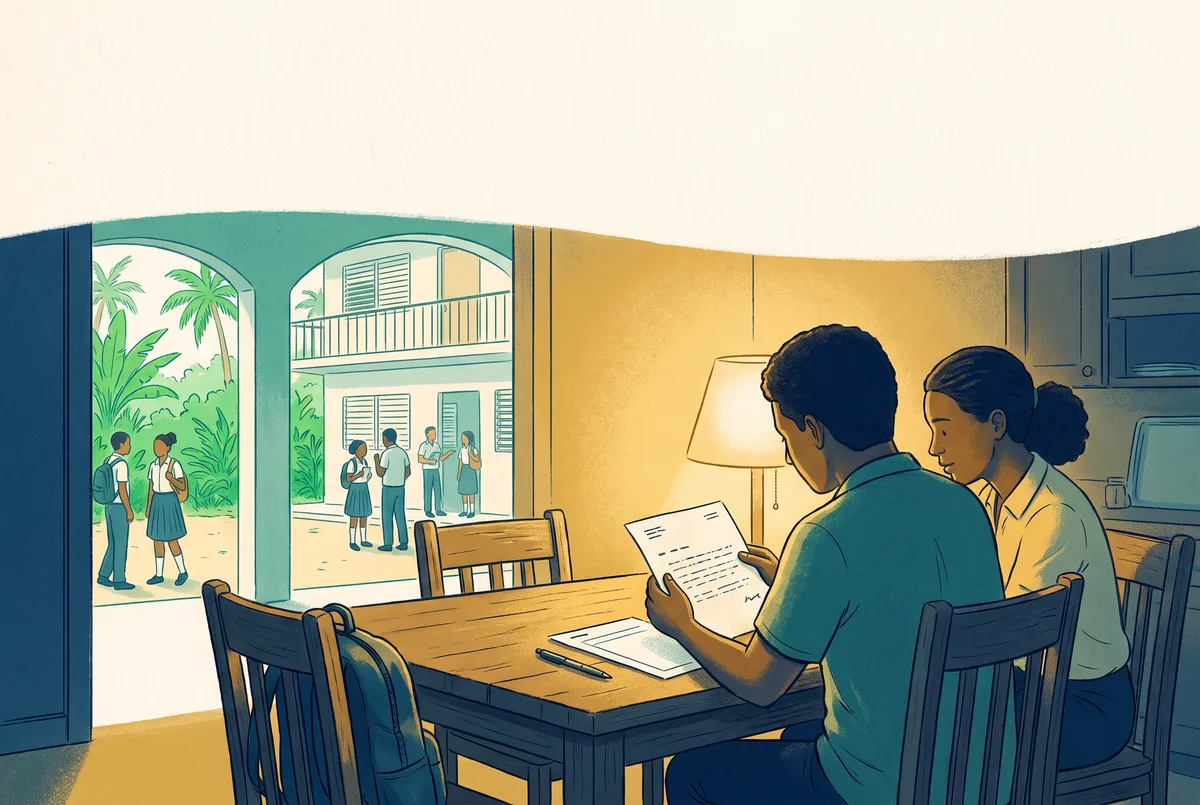 Note and consent form for familiesTemplate with downloads in PDF, Word, HTML and Markdown.
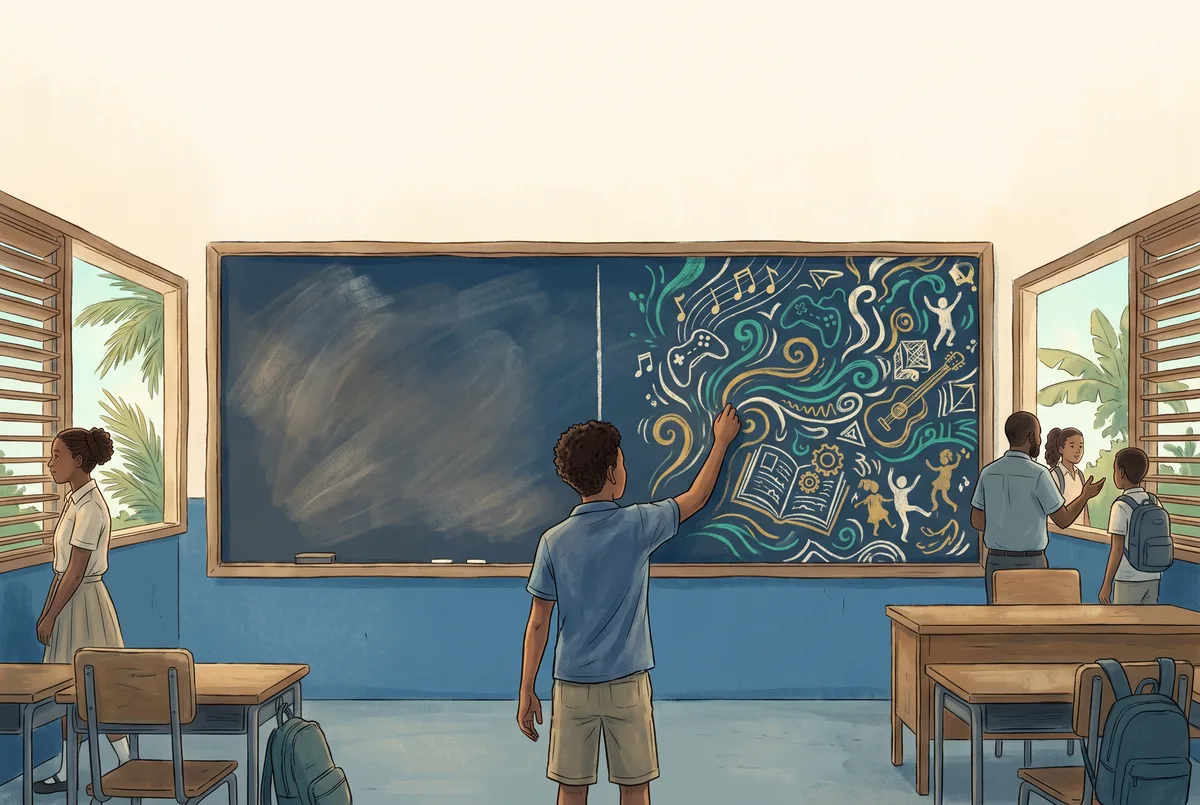 The full programWhat it is, the axis, the year in four horizons, the Experience Layer, the position.
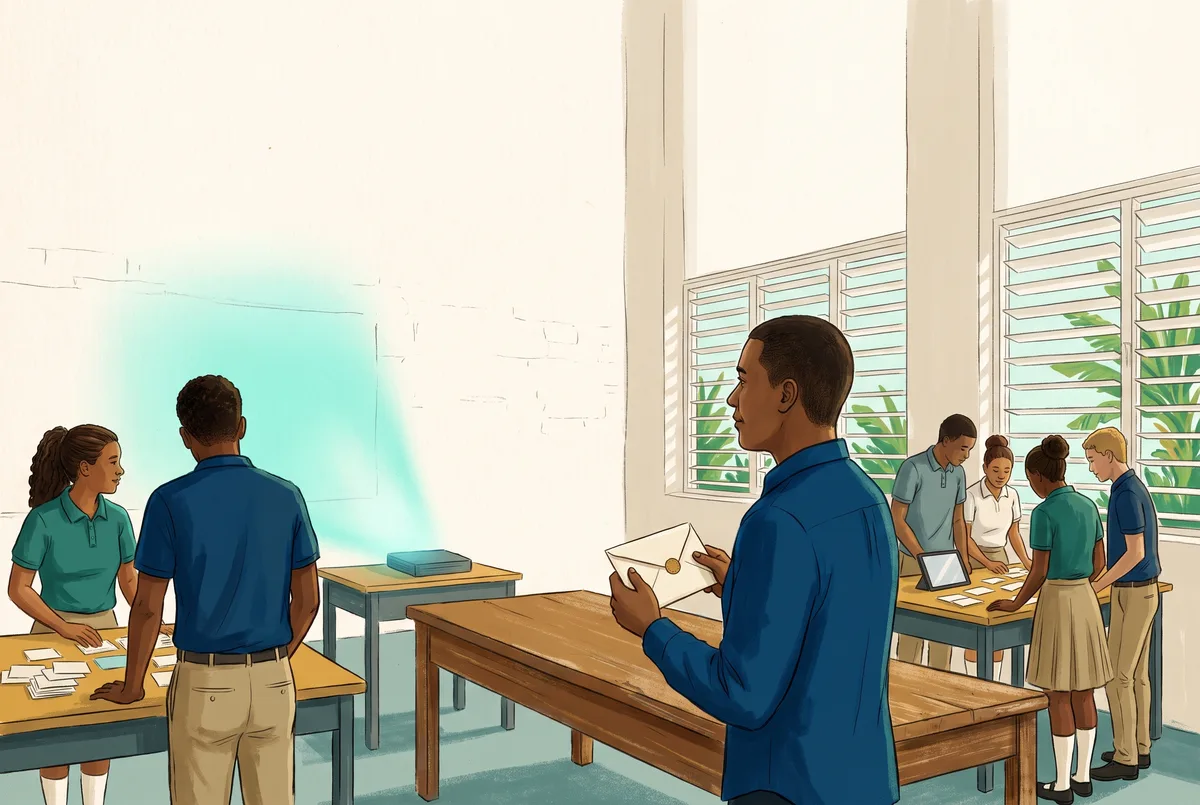 Learning Facilitator materials (in Spanish)Foundations, designed Units and sheets, for whoever supervises closely.
Four horizons
- Novemberthose thirty seconds become a full piece, with the participants’ own voices.
- Februaryanyone who wants to has something playable, with rules the team wrote itself.
- Aprilyou build a tool that solves a real problem at school: not an exercise, something someone uses.
- Junewhat you made is shown to people from outside the classroom.
Minors and AI tools
- No AI account is created in a minor’s name. Generation happens on the account and device of the adult who leads the program, projected for the whole classroom.
- No personal data goes into any prompt: no full names, no addresses, no school name, no faces, no recognisable voices.
- Pieces stay where they were made. Nothing is published outside the classroom without separate written consent, piece by piece.
- Anyone can ask for their piece not to be played in front of the group, without giving any explanation.
- The piece belongs to the team that made it. The program takes ownership of nothing.
- Tool neutrality: tools are named as categories —text, image, audio, video, code—, never as required brands, and nothing has to be bought.
- There is a named responsible adult, known to the group and to the families, to whom anything uncomfortable can be reported, including something a tool produced.
Tools and age: what was verified on 16 and 23 September 2026
Lane C. The program runs on the Learning Facilitator’s account, operated by the adult and projected for the room: no AI account is created in a minor’s name, no age is declared to any provider and no consent instrument is owed to any provider. It is a design decision that predates the review, and the review confirmed it.
What was verified on 16 September 2026 in each provider’s terms: Claude (Anthropic) requires users to be 18 or older for its consumer service, with no route for a minor, and its own offering for educators is built “for educators only”, exactly in the shape of lane C; ElevenLabs requires 18 or older; Character.AI withdrew open-ended chat for under-18s (company announcement, 29 October 2025). The only two routes that provide for someone aged 13 to 17 are the institution-administered ones, Microsoft’s K-12 education tenant and Google school accounts, not a consumer account with a permission form. The rest of the tools reviewed set a floor of 13, with a condition attached for everyone aged 13 to 17.
What was verified on 23 September 2026, in a fresh reading of the terms: D-ID and HeyGen, avatar video generators, require users to be 18 or older and are excluded, just like Claude and ElevenLabs. Grammarly offers no route through a legal representative: only someone old enough to consent by themselves may use it, 13 under most United States law and 16 under European Union law, so below that age no one gets in, not even with the family’s permission. And in Google school accounts, Gemini Notebook (formerly NotebookLM) is available to all ages under the control of the institution’s administration. None of these readings changes lane C.
These conditions change. The dates consulted are 16 and 23 September 2026, each fact with its own, and they are checked again at every tool audit. Tools continue to be named as categories, text, image, audio, video, code, never as required or recommended brands.
How it is designedThe five aspects, and what each one can claim
A Smoother design position, authored by Carlos Miranda Levy.
Wonder
The first gap in the ordinary that makes you look up.
Original, a design position, with no convergences: no study shows that a designed opening produces measurable learning beyond its first minutes in a secondary-school classroom. That an opener achieves anything later is a design position, not a finding.
Hook
The named reason this person has to keep working once the wonder fades.
The best evidenced of the five, and with conditions: relevance and purpose interventions have moved interest and grades in secondary school mostly among those who expected to fail, and one trial at the same age found no change at all. It is an equity lever, never a universal accelerator.
Play
Voluntary, low-stakes, rule-bound activity whose difficulty is the fun.
Original, a design position, with no convergences from play research with 14- to 18-year-olds. What is verified, in adults, is that material unrelated to the concept costs learning; hence the rule: the wonder must be about the concept, never beside it.
Disruption
A planned change of conditions, delivered live, that invalidates part of the plan and forces a new decision.
A declared experiment, with a stopping rule written by the Learning Facilitator before it is delivered: one per Learning Experience, bounded, brief and followed by consolidation. There is no controlled study of such a change with 14- to 18-year-olds; harm is neither documented nor ruled out, which is why it runs with a stopping rule and is measured locally.
Horizon
The concrete, reachable picture of who the learner can become by having done this.
A value the class holds, not a lever it pulls; it becomes a lever only when tied to a concrete next action. The operative variable of any role model is reachability, not excellence.
What this is, and what it is not
- The Experience Layer is a Smoother design position, authored by Carlos Miranda Levy: conviction and practice, not validated pedagogy. It sits in the same register as the Guiding Position “The Almighty Gym” and the CEMI Impact Arc.
- It is never scored. No aspect goes into a rubric, a grade or a progression decision.
- It is declared, then measured locally. What is declared is evidence of intention, never of effect: the effect is watched by the Learning Facilitator, group by group.
Comprehensive AI learning designed for educators, by educators. From awareness to mastery.