
Her case, at full strength
Lepore, a Harvard historian, wrote on 15 September 2026 against the direction her own university has taken on AI.1 She opens with a sentence from a report by an MIT committee of faculty, students and staff, a report she calls “remarkably thoughtful”: “as a community, what should worry us most is that many uses of AI deprive students of the opportunity to learn.” Against it she sets the Harvard College dean’s recommendation, as she describes it, that student use of AI in writing-intensive classes “should be not only accepted but encouraged.”
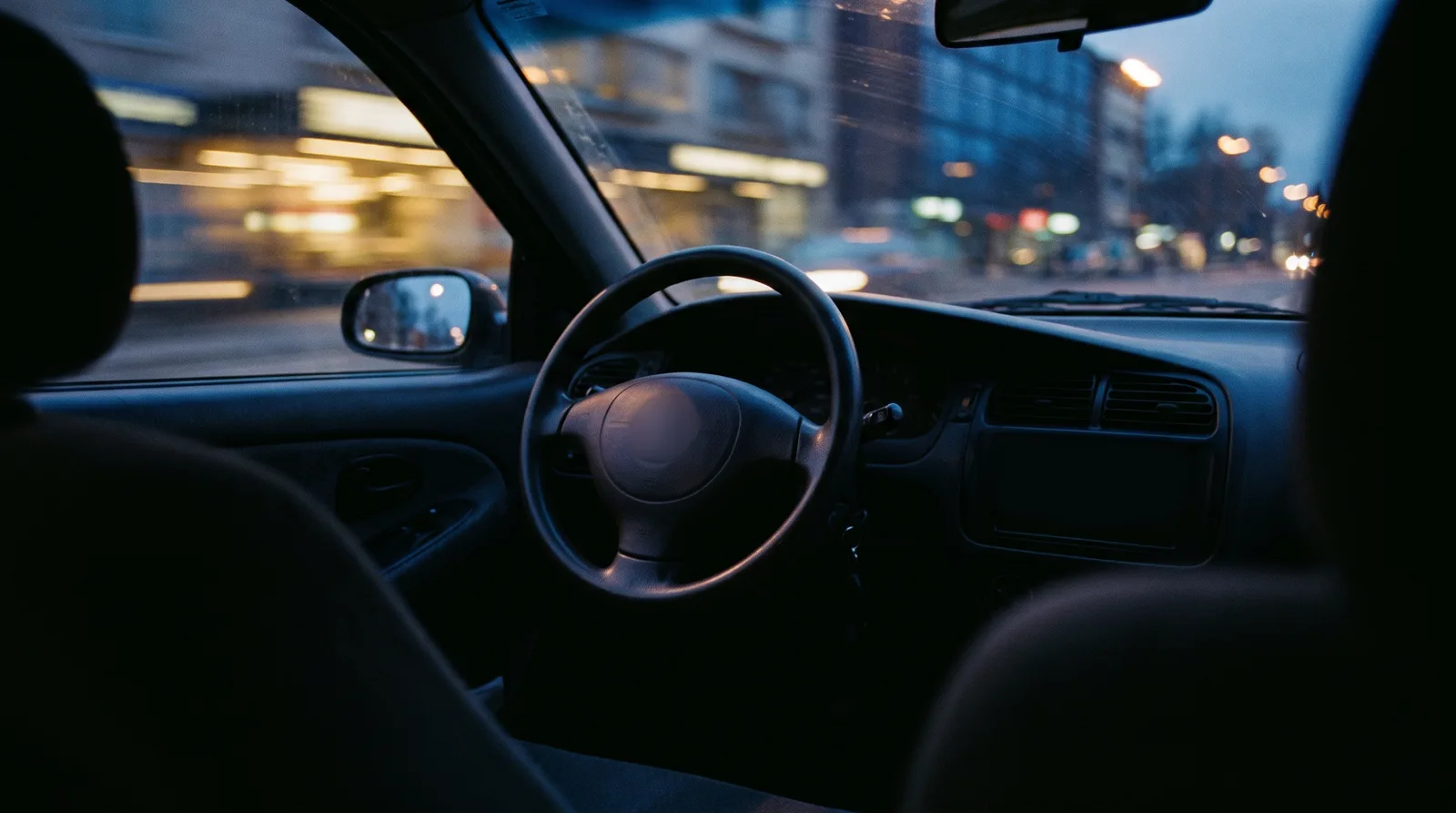
Her central image comes from Daniel Hook, who coined the “Waymo Effect”: “what happens when a technology removes the friction of dealing with another human being, and we experience that removal as pure gain — because the costs of the friction were always visible to us, while its benefits were not.”2 A driverless ride is convenient. Every ride is also an encounter with other people that did not happen. “Large language models,” Hook argues, “are the Waymo of intellectual life.”
Then the evidence. “Research into the effects of AI in education is preliminary but the results are, so far, grim,” she writes, and she cites three studies: one from Microsoft suggesting that knowledge workers who rely on generative AI engage in less critical thinking; a field study, led from Georgia Tech, that found, on average, worse learning outcomes in a ChatGPT group than in a Google group; and a study of high-school mathematics, led by researchers at the University of Pennsylvania, in which, in her words, “students with access to ChatGPT performed better on tests, but when access was taken away they performed worse than students who had never had access.”1
This is not a technophobe’s piece, and the report she leans on is not a technophobe’s report: by her account it notes “the astounding benefits of AI in many areas of academic research.” What she objects to is an institution putting “speed and efficiency by way of automation above all other considerations,” and doing it without a debate “answerable to evidence.” Her last line returns the MIT committee’s own question to the reader.
Where she is simply right

True learning requires friction. And AI is designed to remove friction. That is what a good product does, and these are very good products. Taking the friction out of a task that exists to get done is a gift. Taking it out of a task that exists to change the person doing it is a loss that feels like a gift, which is exactly Hook’s point, moved from the bus to the classroom.
The learning sciences have a name for the right kind of friction. Elizabeth and Robert Bjork call it desirable difficulty, and one sentence of theirs belongs on the wall of every school: “Conditions of learning that make performance improve rapidly often fail to support long-term retention and transfer, whereas conditions that create challenges and slow the rate of apparent learning often optimize long-term retention and transfer.”3
Put that sentence beside the Pennsylvania result as Lepore reports it. Performance rose while the tool was there; something underneath did not. I have read her account of that study, not the study, so I will not tell you it is the mechanism. I will tell you it is the shape the Bjorks describe, and the shape I keep seeing.
Further, first: the machine did not start this
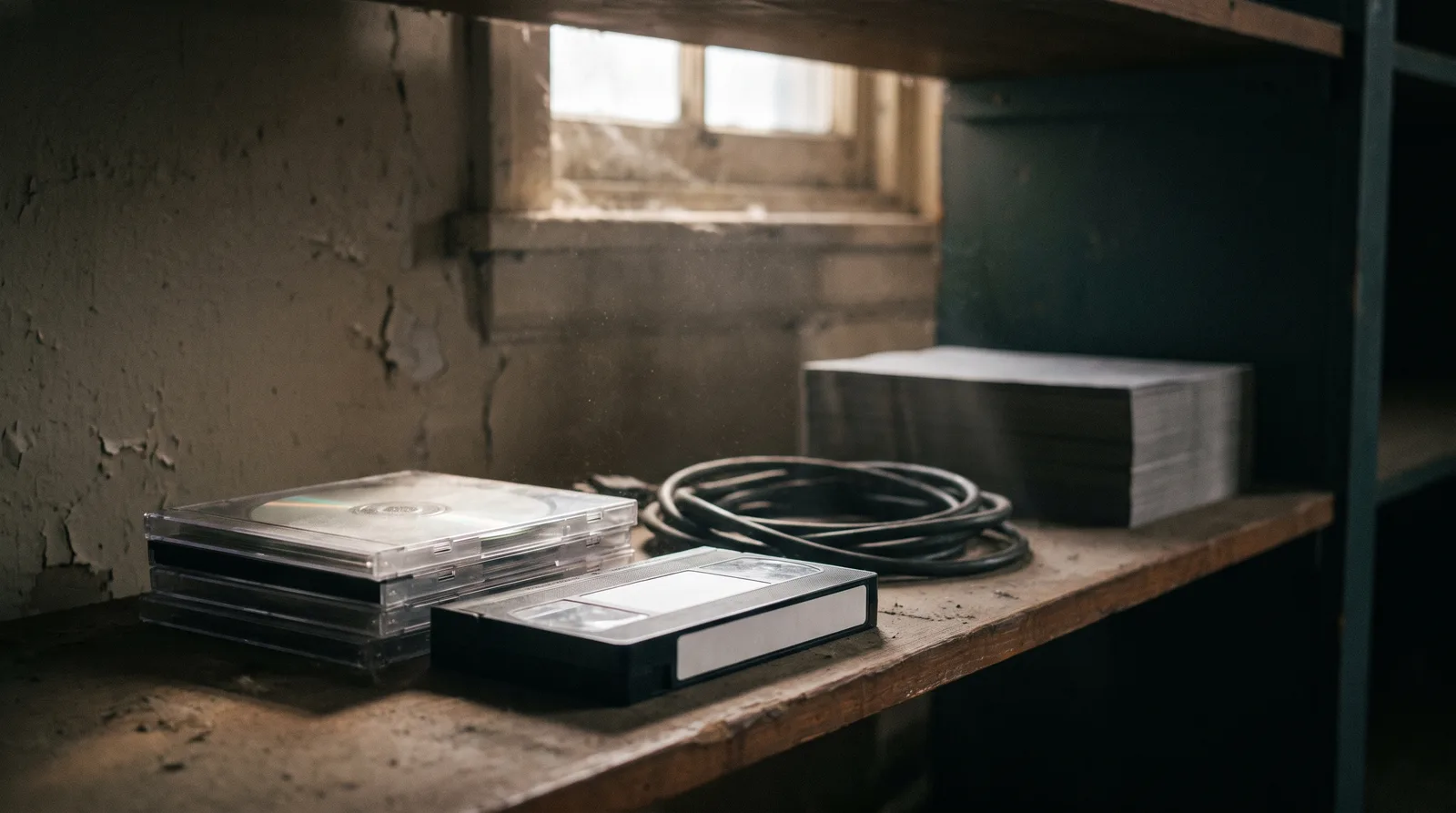
We have been removing friction from learning for decades. The photocopy replaced copying out. The multimedia encyclopedia put the answer one click away. Video replaced guided exploration with watching. The quick-find, copy-and-paste web replaced searching with finding. Template-based digital creation handed learners the form before they had the idea. AI is one more step on that road. A big step, which is why it frightens us, but the same road.
And it is not only learners who walked it. I see a cousin of the problem in some educators’ own materials: screenshots, photocopies, a list of links, handed out as if receiving them were learning. If we want learners to accept friction, we cannot keep modelling its absence.
Further, second: what came back with no screen in the room

In the hands-on AI program I run for high-school learners, nobody touches AI, or a device, until the fifth session. For the first four weeks the homework is to think, to rethink, and to decide what each of them will work on.
What came back was pages torn from notebooks, scribbled in a hurry, with no structure. Done to comply.
So the first lesson of the program turned out not to be about AI at all: our work defines us, however small the task. Writing something down, organizing it and presenting it are each a layer of reflecting on, structuring and reviewing your own thinking. A torn page skips all of them, and no machine was involved. The friction had gone missing before the machine arrived. That is the part of this debate I most want educators to sit with. It is my practice, not a study, and I offer it as such.
Where the machine can raise the bar

This is where I part company, with the conclusion her diagnosis invites rather than with the diagnosis. It is not that AI keeps us from thinking, or that we should turn down what it offers. It is that friction in learning can now be designed and sustained for every learner, not only for the ones with a tutor at their elbow.
Video games have known how for a long time. If a game is too easy, we drop it, and the same is true of learning. The games that hold us are fair: clear rules, always enforced. Each level is harder than the one before. They measure many things, never a single grade. They let you recover from a mistake; modern games rarely say game over. They pull you in with a story and through your senses. And they acknowledge your progress. Challenge and reward matter more than fun.
Every one of those can be asked of an AI in a study session: rounds that level up, a hint before the answer, the missed question that comes back later, feedback that names what to review next, and at least an hour of study agreed before it starts. One rule sits above the rest: if the AI tells you you’re ready, it doesn’t mean you are. I wrote about where that rule came from, with my son, an hour and a hundred exercises, in No Shortcuts to Mastery.
The Bjorks set the limit themselves, and it belongs here in their words: “If, however, the learner does not have the background knowledge or skills to respond to them successfully, they become undesirable difficulties.”4 Friction with no way through is a wall. That is why the hint exists and fades, and why this is design work, done by adults for learners.
The strongest objection

A reader on Lepore’s side will say this: every vendor promises the AI that makes you think harder, and what institutions actually get is the shortcut, because the shortcut is the default and defaults win. Encouraging use buys the default. And the friction Lepore names first is human, the colleague and the study group; a better-designed machine is still a machine.
On defaults, I agree, and it is why I don’t think the answer is to encourage use or to discourage it. Neither is a design. The default is what you get when the adults responsible for a learning experience have not decided what its friction is for, and that decision belongs to institutions and to the adults who facilitate learning, not to the learners. It is the work we do with schools and universities. On people, I agree too: the first four sessions of my program are people and paper. What I do not accept is that the answer is less of the tool. The answer is to decide what the friction is for, and then hold the tool to it.
Her question

What is it that we are all here together to do? To make sure friction remains part of the learning experience, and to use AI to bring that friction, and what it produces, further than any classroom has managed, so that learners can drive the future instead of being driven by it.
The pages torn from notebooks came back before any machine was in the room. Fixing that was always our job. Now we have help with it, if we ask the machine for the right thing.
Every quotation was checked word for word against its source, listed below. The practice described is my own, from a program I run, not a published study. The three studies mentioned are described only as Lepore describes them.
Next in the series: The Thinking We Hand Off, on what AI takes, what it frees, and where both should go.
Three perspectives

The piece is careful where it matters: it quotes the Bjorks’ limit along with their finding, and it does not lean on the three studies beyond what Lepore reports. Where I part ways is the confidence of the last section. The desirable-difficulties work was built mostly in laboratories, largely with adults, and nobody has yet shown that an AI study partner set up to raise friction produces that kind of durable learning in high-school learners. It is a design worth testing, with a delayed check taken without the AI. It is not yet a result.

I am closer to Lepore than Carlos is. Designed friction is real in a program run by someone who has thought about it for years; what reaches the school without such a person is the default, and the default is the shortcut. And the friction she defends first is human: supervision, office hours, the study group, the kind that is expensive precisely because a person gives it. If institutions read “AI can raise friction” as permission to buy the tool and cut the people, the learners with the least support will get the machine conversation and nothing else.

Marcus is right about defaults, which is exactly why I would not wait for policy. The study setup in this piece can be built this week: agree on the hour before you start, ask for rounds that get harder, a hint before any answer, the missed question back later, and three questions to answer tomorrow without the AI. That last one is the honest test. Waiting for the debate to settle means the shortcut stays the default for another year.
Sources
- Jill Lepore, “Artificial Education,” The Harvard Crimson, Opinion, 15 September 2026. https://www.thecrimson.com/article/2026/9/16/lepore-harvard-artificial-intelligence-education/ (quotations from ¶1, ¶2, ¶4, ¶8, ¶10, ¶11, ¶13, ¶14). The MIT report and the three studies are cited through Lepore.
- Daniel Hook, “The Waymo effect: how AI is quietly making research less collaborative,” Wonkhe, 12 September 2026. https://wonkhe.com/blogs/the-waymo-effect-how-ai-is-quietly-making-research-less-collaborative/ — quoted as Lepore quotes it (¶5, ¶6); the core wording confirmed at Wonkhe.
- Elizabeth L. Bjork and Robert A. Bjork (2011), “Making Things Hard on Yourself, But in a Good Way: Creating Desirable Difficulties to Enhance Learning,” in M. A. Gernsbacher et al. (eds.), Psychology and the Real World, Worth Publishers, pp. 56–64, at p. 57. https://bjorklab.psych.ucla.edu/wp-content/uploads/sites/13/2016/04/EBjork_RBjork_2011.pdf
- Bjork and Bjork (2011), p. 58. A conceptual chapter that synthesizes laboratory research, most of it with adults; no adolescent sample.