

There is a quiet, repeating pattern across the educational institutions that grow stronger every decade. They raise money. Not anxiously, not apologetically, not only when the tuition line shows a gap, but as a regular and structural feature of how they operate. They have an office for it. They have a calendar for it. They have a language for it. They know the names of their donors and the donors know the names of the buildings they helped build.
Then there is the larger pattern across the rest of the field. Schools and universities that teach beautifully, hold their communities together, graduate students who go on to do remarkable things — and that quietly defer their roof repairs, postpone their laboratory upgrade for the third year running, lose a faculty member to a better-funded competitor, and watch the gap widen against institutions that decided long ago that asking was simply part of the work.
This article is the opening of the Patronage Playbook. Its argument is philosophical before it is operational. Fundraising is not a sign that an institution is in trouble. It is a sign that an institution has built the muscle to grow. The articles that follow will get into mechanics — the case for support, the donor catalog, the calendar, the role of AI. But none of that mechanics will hold if the institution still believes, somewhere underneath, that the act of asking is undignified. So we start here.
1. The buildings have names. The institutional muscle has a name too.
During my time as a fellow at Stanford, I noticed something that the campus itself made impossible to ignore: the wealthiest and most prestigious institutions in the world are regularly, systematically, and almost naturally funded by sponsors and patrons. The David Packard building led the way to the Paul G. Allen Center, the Shriram Center, the Li Ka Shing Center, the Jerry Yang and Akiko Yamazaki Environment and Energy Building, and most recently the Stanford Doerr School of Sustainability — funded by John and Ann Doerr with a $1.1 billion gift. Each name on each building is a story. Each story is a relationship. Each relationship sits on top of decades of institutional discipline.
The casual reading of this is that Stanford is rich, and rich institutions attract rich donors. The deeper reading is the one that matters. Stanford is not well-funded because it is well-funded. Stanford is well-funded because it built, over a century, the institutional muscle to ask, receive, and steward. The buildings have names because the institution had the architecture to make naming possible — an advancement office, a culture that treats philanthropy as normal, a community of alumni who were cultivated long before they had anything to give, a discipline of stewardship that made the first gift the beginning of a relationship rather than the end of a transaction.
This pattern is not unique to Stanford. As Entrepreneur in Residence at the National University of Singapore, I watched every significant event on campus get sponsored and funded as a matter of course. Patronage was not a special occurrence. It was the substrate of how the institution operated. A research symposium had a named sponsor. A student competition had a named sponsor. A visiting-fellow program had a named endowment behind it. None of this required a crisis. None of this required a fundraising appeal sent in panic at the end of a budget year. It was simply the way a serious institution runs.
The pattern repeats wherever you look closely. Harvard, Yale, Oxford, Cambridge, the École Polytechnique, the great Asian research universities, the leading independent schools across North America and Europe — all of them, without exception, have built the same muscle. The buildings change. The donor names change. The discipline does not.
2. The gap that does not have to exist
Now consider the other side of the field. Across Latin America, across the Caribbean, across much of Asia and Africa, across parts of Europe and even parts of North America, there are excellent schools and universities — institutions teaching at a level the named-building world would respect — that struggle with sustainability, struggle to modernize their infrastructure, struggle to retain their best faculty, struggle to expand into the programs their students are asking for.
The gap between these institutions and the Stanfords of the world is real. But it is not the gap most people assume it is. It is not, primarily, a gap in the quality of education. Many of these institutions teach as well, sometimes better, than their better-funded peers. The gap is something more specific and more correctable. It is the gap in institutional muscle — the muscle to ask, to receive, to steward, to compound.
That distinction matters because it changes the diagnosis. If the gap were about quality, closing it would require generations of pedagogical reform. If the gap is about the fundraising muscle, closing it requires a decision and a decade. The decision is the harder part. The decade does its own work once the decision is made.
3. Why fundraising became taboo (and why it shouldn't be)
Cultural Resistance
Belief that asking for money contradicts the institution's dignity or academic mission. Confuses solicitation with begging.
Operational Resistance
No dedicated staff, no CRM, no prospect database. The function cannot exist without infrastructure.
Strategic Resistance
Leadership sets aspirational goals without building the pipeline, case for support, or calendar to reach them.
Psychological Resistance
Fear of rejection. Board members and heads avoid cultivation conversations that feel uncomfortable.
Before we can argue for fundraising as infrastructure, we have to take seriously the resistance to it. The resistance is real, it is widespread, and in most cases it is sincere. Four sources recur across nearly every institution that hasn't yet built the muscle.
The cultural resistance. "We shouldn't have to ask." In many traditions, asking for money is associated with deficiency. A serious institution, the argument goes, should be self-sustaining from tuition and operating revenue; needing donations means something has gone wrong. This view is widespread among educators who came up in systems where philanthropy was peripheral or invisible. It treats the silence around money as dignity. In practice, the silence is what produces the gap.
The operational resistance. "We don't know how." Many institutions have never had a development office, never written a case for support, never run a cultivation event, never asked a board member for an introduction. The operational know-how genuinely does not exist inside the institution. Faced with the prospect of building it from scratch, leadership defers — not because they are opposed, but because they cannot see the first step.
The strategic resistance. "If tuition were enough, we wouldn't need to." This one is often dressed up as financial rigor, but it conflates two different questions. Tuition can be enough to cover operations and still not be enough to fund the capital investments, scholarships, faculty endowments, and program expansions that move an institution from competent to excellent. Fundraising is not a substitute for operating revenue. It is the capital layer on top of it. Confusing the two is what keeps institutions stuck at competent.
The psychological resistance. Fear of rejection. Fear of looking undignified. Fear of changing the relationship with parents and alumni from "community" to "donor base." These fears are not silly. They are the human cost of doing something the institution has never done. The answer is not to dismiss them. The answer is to build the practice in a way that makes the asking dignified, the receiving graceful, and the stewardship transparent — which is what the rest of this collection is about.
All four resistances share a common root: fundraising is treated as exceptional rather than ordinary. Once it is reframed as ordinary — a normal feature of how a serious institution operates — the resistances soften. Not because the difficulty disappears, but because the moral charge does.
4. The ordinary act of giving and receiving
Here is the reframe in its plainest form. To some organizations, fundraising sounds taboo, a sign of weakness, a sustainability warning. It is none of these. It is a natural transaction and practice in education, in business, in society, in research and development, in the arts. Museums fundraise. Hospitals fundraise. Research labs fundraise. Symphonies, ballet companies, public broadcasters, libraries, scientific expeditions, religious institutions, civic organizations — every serious institution outside the pure for-profit sector raises money, and many for-profit institutions raise capital, which is the same act in a different costume.
There is no shame in asking, in receiving, or in fundraising. Much the contrary. Fundraising, asking, giving, and receiving are healthy ways of interconnecting and synchronizing our educational and social ecosystems beyond transactional process. A successful business person may want to support education beyond the tuition they pay for their child. A successful business may want to support an institution directly to see the impact of its support, beyond the diluted destination of its tax dollars. The patron may want something the institution has — recognition, association, the satisfaction of having shaped something — and the institution has something the patron needs.
This is not a transaction in the cheap sense. It is reciprocity. The donor receives meaning; the institution receives capital; the students receive the benefit; the community receives an institution that grows stronger over time. Treating this exchange as undignified is not modesty. It is a refusal to participate in one of the oldest and most generative practices of organized human life.
Reframing fundraising as ordinary is, in this sense, also a reframing of what it means to be a serious institution. The serious institution is the one that has accepted its place inside the ecosystem of giving and receiving — that no longer pretends to be self-contained, no longer treats asking as deficiency, no longer treats receiving as embarrassment.
5. The strategic stakeholders model
If fundraising is ordinary, the next question is operational: ask whom? The institutions that get this right tend to think about their stakeholders in a specific way, and it is worth naming it explicitly.
An educational institution's most important members are its students. They are why the institution exists. They are the measure of whether the institution is doing its work. Every decision should pass through the filter of whether it serves them.
An educational institution's most valuable members are its educators. They are how the work gets done. Faculty quality is the single best predictor of student outcomes, and faculty retention is the single most fragile asset most institutions hold. Investing in them is the most direct investment in the institution itself.
But an educational institution's most strategic stakeholders are its alumni, the parents of its students, and the business networks they belong to. This is the layer that is most consistently underused. Students graduate and the institution loses contact. Parents pay tuition and the institution treats the relationship as concluded. Local businesses send their children and the institution never has a substantive conversation with them about anything else. Every one of those is a missed compounding opportunity.
The patron architecture of Stanford was built by alumni and the business networks alumni connected the institution to. The named buildings did not appear because Stanford one day decided to call wealthy strangers. They appeared because alumni, parents, and the businesses connected to them were cultivated over decades into relationships in which a gift was a natural next step. This architecture does not have to remain the province of the already-wealthy. The same dynamic, scaled down, is available to a K-12 school in a mid-sized city or a regional university in an emerging market. The compounding starts earlier, the curve is gentler, but the shape is the same.
The strategic stakeholders model implies a discipline that most institutions never quite adopt: treat the alumni and parent relationships as long-term institutional assets, not as the residue of a transaction that ended at graduation or at the last tuition payment. Every graduating class is a future donor base. Every parent of a current student is a current and future stakeholder. Every business that employs your alumni is a potential partner. The institutions that internalize this stop thinking of fundraising as a separate function and start thinking of it as the natural outcome of how they manage their core relationships.
Mapping the alumni, parent, and business networks an institution already has — and building the cultivation discipline that turns those relationships into a fundraising base — is exactly the kind of work we structure inside our consulting engagements. The first audit is usually the most surprising one: most institutions discover they are sitting on a network they have never systematically engaged.
6. What systematically-funded institutions actually do
- ✗ Head/Principal (does everything)
- ✗ Board treasurer (financial only)
- ✗ No prospect database
- ✗ No case for support
- ✓ VP / Director of Advancement
- ✓ Major Gifts Officer
- ✓ Annual Fund Manager
- ✓ Alumni Relations
- ✓ Database & CRM Administrator
It is worth describing, concretely, what the institutional muscle looks like in practice. The mystique of fundraising tends to make it sound exotic. It is not. The components are well-understood, the practices are documented, and the discipline is teachable. What is rare is the decision to install them.
A systematically-funded institution typically has the following:
- An office of advancement (or its equivalent). One or more people whose job is the fundraising relationship layer. Not a marketing function, not an admissions function — a function dedicated to cultivating, asking, receiving, and stewarding. In small institutions this might be one half-time person. In large ones it is a department of dozens. The size matters less than the existence.
- An annual fund. A recurring, unrestricted appeal that asks the institution's existing community — alumni, parents, friends — for ongoing support. The annual fund is the baseline. It builds the habit of giving on both sides and produces the donor data that everything else depends on.
- A case for support. A written document — the subject of the next article in this collection — that explains, with conviction and specificity, why the institution deserves support and what the support will accomplish. Most institutions do not have one. The ones that compound do.
- A calendar of cultivation events. Receptions, lectures, campus visits, alumni gatherings — occasions on which existing and potential donors are brought into substantive contact with the institution's life. Not gala-and-ask events. Genuine moments of institutional contact.
- A menu of named giving opportunities. Buildings, rooms, scholarships, faculty chairs, programs, equipment, expeditions, prizes. The menu makes the abstract concrete. A donor does not give to "the institution"; the donor gives to something specific that bears, in some form, their relationship to it.
- A stewardship discipline. The post-gift practice that turns a one-time donor into a long-term partner. Reports on how the gift was used. Invitations to see the impact. The relationship continued, not concluded, after the check clears. Stewardship is what turns a first gift into a tenth gift.
None of this is exotic. None of this requires a billion-dollar endowment to begin. Every component on this list scales down. An institution can run an annual fund with a thousand alumni. An institution can have one staff member whose half-time job is advancement. An institution can host two cultivation events a year. The discipline is the same; the scale is what the institution can support today. The compounding is what produces tomorrow's scale.
7. The cost of not fundraising
The institutions that have not built the muscle pay a price, and the price is not abstract. It shows up in specific places, year after year, and it compounds in the opposite direction from the well-funded peers.
Facility modernization deferred. The roof gets patched instead of replaced. The science lab uses equipment from a decade ago. The library has not been refreshed since the previous head of school. Each year of deferral makes the eventual repair more expensive, and the institution's physical environment becomes a quiet signal to prospective families that the institution is, in some unspoken way, falling behind.
Scholarship pools too small. The institution cannot reach the students it should be educating. Talented children of families that cannot afford full tuition go elsewhere or do not go at all. The institution's student body narrows toward the families that can pay, and with it narrows the diversity and the social mission that often defined the institution's founding.
Faculty endowments absent. Faculty chairs and named professorships, common in well-funded institutions, do not exist. The institution cannot offer the senior faculty member the recognition or the research budget that a competitor with endowed chairs can. The best faculty leave. The remaining faculty teach harder and research less. The institution's intellectual culture thins out.
Technology refresh cycles too long. Equipment that should be replaced every five years gets replaced every ten. Software the students need is not licensed. The AI tools that have already transformed the well-funded institutions' workflows arrive late, if at all. The technology gap widens each year.
The competitive position erodes. All of the above are individually survivable. Together they are a slow loss of standing. A family comparing the institution to a better-funded competitor sees newer facilities, larger scholarships, more named faculty, better technology. The competitor's marketing does not have to say any of this. The buildings say it. The institution that did not fundraise is the institution that did not build the buildings.
The cost of not fundraising is not a single bad year. It is a quiet, decade-long compounding in the wrong direction. The institutions that decide to start break the compounding. The ones that defer continue it.
8. The ethics of patronage (and how to keep them clean)
Any honest treatment of fundraising has to acknowledge the ethical risk. Patronage can corrupt. Donors can attempt to influence curriculum, hiring, programs, or institutional direction in ways that compromise the institution's mission. Naming gifts can attach the wrong names to the wrong places. Stewardship can shade into deference. None of this is theoretical. All of it has happened, including at the most prestigious institutions in the world.
The ethics are real, and they are also manageable. The institutions that have built the muscle well have built guardrails alongside it. A few principles:
- Gift acceptance policies. A written document that states what the institution will accept and what it will not. From whom. With what conditions. The policy exists before the difficult gift arrives, so the decision is not made under pressure.
- Transparency in naming. A clear practice about how names are attached, for how long, with what reversibility. Naming is a relationship, not a permanent license.
- A wall between donors and curriculum. Donors fund. Faculty decide what is taught. The institution holds the line on this, in writing and in practice.
- Public reporting of significant gifts. Significant philanthropy should be visible. Hidden donations are the soil in which donor capture grows.
- Stewardship without deference. The institution thanks donors warmly. The institution does not subordinate institutional judgment to donor preference.
Done well, the ethics of patronage are not a constraint on fundraising. They are the foundation that makes serious fundraising possible. Donors of integrity want to give to institutions with integrity. The institutions that hold the line attract the donors who respect the line. The institutions that fold under pressure attract the donors who exploit it. The discipline is its own form of cultivation.
9. The institutions that have already started
The point of this article is not to argue that only the Stanfords of the world can do this. The point is the opposite. K-12 schools and modest higher-ed institutions are already starting to build the muscle, and the early evidence — across markets I have worked in and observed across Latin America, the Caribbean, and parts of Asia — is consistent.
A bilingual K-12 school launches its first annual fund. The first year is modest. The fifth year covers a full scholarship cohort. A regional university opens its first development office, staffed by one person reporting to the rector. Three years later the institution has named its first endowed chair. An independent secondary school holds its first alumni reception in a decade, finds the alumni delighted to be asked back, and within two years has the funding for a new arts wing.
None of these stories are mythical. They are the ordinary outcome of institutions that decided to begin. The decision is the threshold. The compounding starts on the day after.
10. What this collection covers
This article is the philosophical foundation. The rest of the Patronage Playbook gets operational.
- Part 2 — The strategy of an institutional fundraising program. How the institution moves from "we should fundraise" to a working program: the office of advancement, the annual fund, the cultivation calendar, the multi-year campaign, the role of leadership.
- Part 3 — The case for support. The single most important document an institution writes for fundraising. What it is, what is in it, how to write it, and why most institutions either do not have one or have one that does not do its job.
Beyond the core trilogy, three follow-up articles will extend the playbook: a catalog of fundraising mechanisms (annual fund, capital campaign, planned giving, endowments, sponsorships, grants, and the rest), a catalog of targets (who actually gives, why, and how the institution finds them), and a piece on how AI is reshaping the economics of fundraising — research, segmentation, personalization, stewardship — for institutions that do not have a thirty-person development office.
11. The institutional muscle is built one ask at a time
The Stanford buildings did not arrive in a single year. The Doerr School of Sustainability sits on top of a century of institutional discipline that began with a community of donors much smaller and much less obviously wealthy than the community that gave to it in 2022. The named buildings are the visible top of an invisible architecture, and the architecture is built one cultivation, one ask, one gift, one stewardship cycle at a time.
Any institution that decides to start can start. The first year will be awkward. The first ask will be uncomfortable. The first decline will sting. The first gift will arrive smaller than the institution hoped. And then the second one will arrive, and the third, and the donor whose first gift was modest will, a decade later, give the gift that funds the science wing — because the institution stewarded the first gift well, told the donor what it accomplished, brought the donor into the institution's life, and made the second ask easier than the first.
The compounding is the point. The Stanfords of the world are not a different species. They are institutions that began this work, in some form, a long time ago and never stopped. The institution that decides to begin today will not be Stanford in five years. But it will be unrecognizable to itself in twenty, in the direction it should be moving — toward stability, toward modernization, toward the students it could not previously afford to educate, toward the faculty it could not previously afford to keep, toward the standing in its community that compounding patronage produces and nothing else produces in quite the same way.
The taboo is the problem. The ordinary practice is the solution. The first ask is the threshold. The institutional muscle is built one ask at a time, and the institutions that build it never look back.
The four perspectives

A defensible ask requires a defensible claim. The institution that fundraises seriously has to be able to show, in evidence, what the gift will accomplish — what outcomes are credibly produced, what the dollar buys, how the impact is measured and reported. This is the evidentiary discipline that separates dignified fundraising from mere appeal. The case for support, the stewardship report, the impact dashboard: these are the instruments by which the institution earns the right to ask again.
Patronage privileges the institutions that have networks. Stanford had alumni who became wealthy; the school down the street had alumni who became teachers and nurses and small-business owners. Both are valuable; only one shows up easily in a capital campaign. The equity question is not whether to fundraise — it is who gets asked, who is overlooked, and whether the institutions serving the under-networked communities can build the muscle without copying the structures that excluded them in the first place.

The muscle is built by starting. There is no first-perfect-version of a fundraising program; there is the version you run this year and the version it becomes next year. The institutions that wait for the right time compound to disadvantage. The institutions that send the first awkward letter, host the first modest reception, ask the first nervous board member for an introduction — those are the ones whose curves bend up. Begin badly. Iterate. The compounding does the rest.

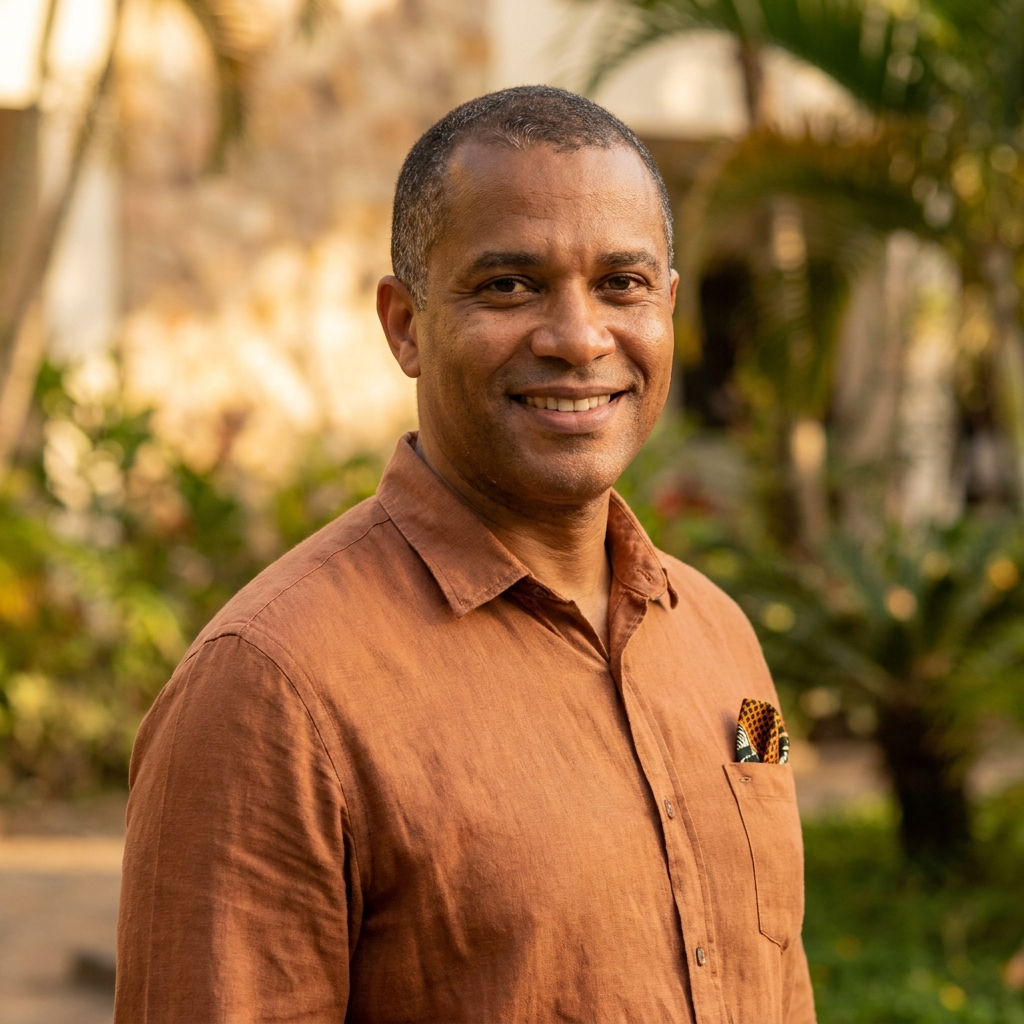
Patronage is institutional infrastructure. The buildings at Stanford are the visible top of an invisible architecture that took a century to build, and any institution that decides to begin can begin. I have watched modest schools across Latin America and the Caribbean discover that the alumni network they thought was small was actually large, and that the parents they thought were customers were actually patrons-in-waiting. The taboo is the problem. The ordinary practice is the solution. The first ask is the threshold. After that, the institution that compounds the discipline compounds the result.